Wimbledon's 17-Year Curfew and the 4pm Final Row
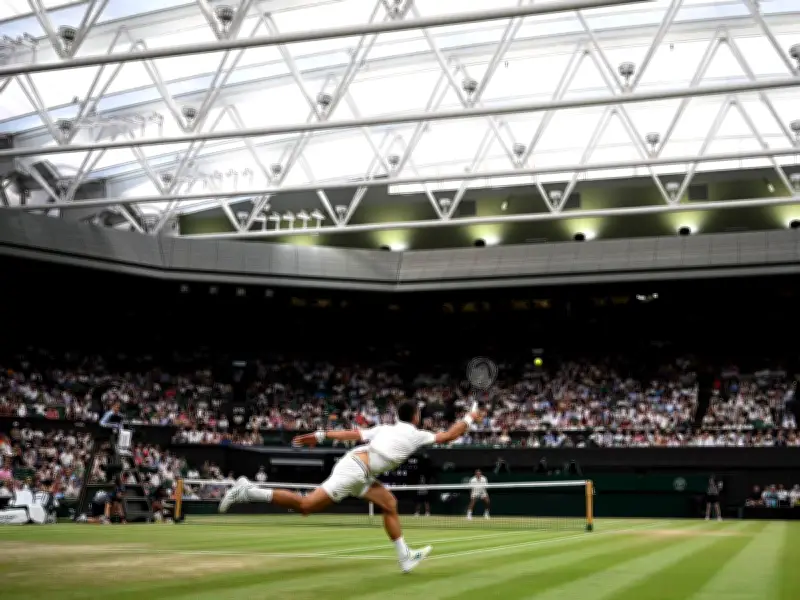
Wimbledon's traditional 11pm curfew, enforced since 2009 when the All England Club gained planning approval from Merton Council to install the retractable roof on Centre Court, has been a fixture for nearly two decades. The rule requires all tournament action on Wimbledon's courts to cease entirely by 11pm, a legally binding condition to safeguard local residents in the heavily populated SW19 residential district from late-night disturbance, floodlight pollution, and environmental disruption.
Logistical transport safety is another key reason for the strict enforcement. London Underground Tube services near the venue begin closing around midnight, meaning tens of thousands of spectators need sufficient time to reach stations safely. When a marathon match risks extending past the deadline, the chair umpire must halt the action mid-contest, forcing players to exit suddenly, break their rhythm, and return the following afternoon to finish sets.
Early Interventions to Avoid Mid-Match Stoppage
To avoid the jarring experience of stopping a live match midway, organisers frequently intervene early. Referees have proactively called off matches around 10.15pm if it becomes mathematically impossible to complete an entire final set before 11pm. This preemptive measure has been used in several late-running matches over the years.

Delayed Final Start Time Sparks Criticism
Tournament organisers recently moved the traditional singles final start time from 2pm to 4pm on the final weekend. This two-hour postponement was introduced to maximise global television broadcasting figures and capture a lucrative peak-time viewing audience. However, high-profile figures like Jamie Murray have strongly criticised the change, warning it dramatically increases the risk of natural light disappearing during an extended match. If a men's five-set epic runs late into the evening, the match must be paused simply to close the roof.
Stopping a grand slam final to switch to indoor conditions completely transforms the court's characteristics and the match's competitive rhythm. Players and purists contend it is unfair to force athletes to begin an epic outdoor final on grass and conclude it under a roof due to preventable scheduling. The controversy highlights the tension between commercial interests and the traditional integrity of the sport.