For Generation X, eating out was more than just a meal—it was an event. Birthday parties meant arcade tokens and animatronic bands, family celebrations involved endless salad bars and soft-serve machines, and Friday nights often ended in pizza parlors packed with Little League teams. Yet many of the restaurant chains that defined the 1980s and 1990s have quietly vanished from highways, shopping centers, and suburban strip malls across America. Some collapsed under bankruptcy, others were swallowed by corporate mergers, and a few simply failed to adapt as dining habits shifted. Today, their neon signs, themed interiors, and all-you-can-eat buffets live on mostly through nostalgia posts and fading childhood memories. Here is what happened to some of the most beloved restaurant chains Gen X grew up with—and whether any still survive today.
ShowBiz Pizza Place
Before Chuck E. Cheese dominated children's birthday parties, there was ShowBiz Pizza Place—the arcade-and-pizza chain famous for its animatronic house band, the Rock-afire Explosion. Launched in 1980, ShowBiz became a cultural phenomenon thanks to its combination of pizza, arcade games, carnival-style rides, and singing robotic animals performing rock hits and country tunes. The restaurants became a staple of suburban childhood throughout the 1980s. But behind the scenes, the company entered a bitter legal and financial battle with Chuck E. Cheese founder Nolan Bushnell. By the early 1990s, ShowBiz had merged with its rival and ultimately phased out the Rock-afire Explosion in favor of the Chuck E. Cheese brand. Today, ShowBiz survives mostly through internet fandoms, collectors restoring old animatronic characters, and nostalgic documentaries dedicated to the chain's bizarre robotic performers.
Ponderosa and Bonanza Steakhouse
Named after the ranch from the classic TV western Bonanza, Ponderosa Steakhouse and Bonanza Steakhouse were once among America's biggest family dining chains. At their peak in the late 1980s, the buffet-style steakhouses operated roughly 700 locations nationwide. Families flocked there for affordable steaks, unlimited salad bars, and legendary soft-serve ice cream stations loaded with toppings. The chains steadily declined after multiple ownership changes and growing competition from newer casual dining brands like Outback Steakhouse and Texas Roadhouse. Now only 16 Ponderosa and three Bonanza locations remain open in the US, making the once-dominant chains one of America's most endangered restaurant brands.

Steak and Ale
Long before upscale casual dining became standard, Steak and Ale pioneered many of the features diners now take for granted. Founded in 1966 by restaurant entrepreneur Norman Brinker, the chain helped popularize unlimited salad bars, complimentary bread baskets, and affordable steak dinners served in cozy Tudor-style dining rooms. At its peak, Steak and Ale had hundreds of locations nationwide, but the company struggled with aging restaurants and shifting dining trends. Parent company Metromedia Restaurant Group filed for Chapter 7 bankruptcy in 2008. After years of failed revival attempts, the brand finally returned in 2024 with a rebooted location in Burnsville, Minnesota—complete with the chain's famous honey wheat bread and salad bar. More locations are planned.
Bob's Big Boy
Big Boy Restaurant helped shape American fast food history by introducing one of the country's first double-decker hamburgers. Founder Bob Wian created the famous Big Boy Burger in 1936, while the smiling mascot in checkered overalls became one of America's most recognizable roadside icons. The chain expanded nationally for decades before franchising disputes and ownership sales fractured the brand. Today, only a few original-style Bob's Big Boy restaurants remain, primarily in Southern California and Michigan.

Howard Johnson's
Long before interstate exits were crowded with fast-food logos, Howard Johnson's practically invented the American roadside restaurant. Known for its bright orange roofs and '28 flavors' of ice cream, Howard Johnson's once operated more than 1,000 restaurants and motor lodges across the country. Families traveling cross-country often planned road trips around HoJo stops. The company also played a surprising role in civil rights history, with some locations serving LGBTQ+ customers during an era when discrimination was widespread. But the rise of fast-food chains and budget motels chipped away at Howard Johnson's dominance. After the brand was sold to Wyndham Hotels & Resorts, the restaurants slowly disappeared. The final Howard Johnson's restaurant in Lake George, New York, closed in 2022.
Ground Round
Also created by Howard Johnson, Ground Round was designed as a neighborhood-focused casual dining concept. The chain became famous for silent movies projected onto big screens, free peanuts tossed onto the floor, and family-friendly promotions. In the 1980s, it was one of America's most recognizable pub-style chains. But constant ownership changes saddled the company with debt, and Ground Round filed for bankruptcy in 2004. Only a handful of locations remain today.
Chi-Chi's
For many Gen X diners, Chi-Chi's was their first introduction to mainstream Mexican food. The brightly colored chain became famous during the 1980s and 1990s for sizzling fajitas, deep-fried chimichangas, and its wildly popular fried ice cream dessert. At its height, Chi-Chi's operated more than 200 restaurants across North America. The chain collapsed after a devastating hepatitis A outbreak linked to contaminated green onions in 2003, one of the largest restaurant-related outbreaks in US history. Parent company Chi-Chi's Inc. filed for bankruptcy shortly afterward. But the brand may not be gone forever. Last fall, the beloved Tex-Mex chain made an official comeback by opening a new flagship restaurant in St. Louis Park, Minnesota.
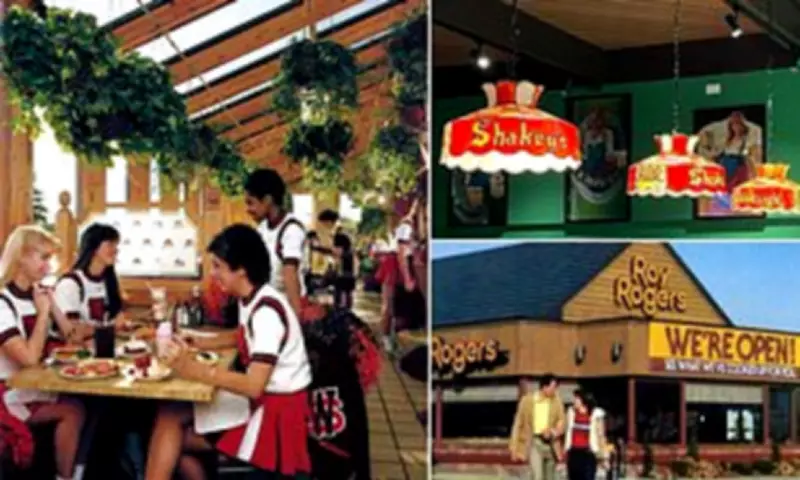
Roy Rogers
Before Arby's dominated roast beef sandwiches, there was Roy Rogers. The chain grew rapidly during the 1970s and 1980s after Marriott acquired RoBee's House of Beef and licensed the name of cowboy actor Roy Rogers. Customers loved the chain's roast beef sandwiches and self-serve 'Fixin's Bar,' loaded with toppings and condiments. But a disastrous acquisition by Hardee's in the 1990s led to widespread closures and rebranding. A small number of Roy Rogers locations still survive on the East Coast today.
Bennigan's
Irish pub-themed Bennigan's helped define casual dining in the 1980s, serving oversized burgers, loaded potato skins, and Monte Cristo sandwiches in dark wood-paneled dining rooms. The chain peaked at more than 250 locations before parent company Metromedia filed for bankruptcy in 2008. While most US restaurants disappeared, Bennigan's still operates a small number of locations domestically and continues expanding internationally.
Farrell's Ice Cream Parlour
Birthday celebrations reached peak chaos at Farrell's Ice Cream Parlour. Styled like an old-fashioned 1900s ice cream shop, Farrell's became famous for giant sundaes carried through restaurants on stretchers while staff blasted ambulance sirens. Its legendary 'Zoo' sundae was designed for groups and often arrived accompanied by cheering employees in vintage uniforms. After rapid expansion in the 1970s, the chain faded away by the 1990s. Several revival attempts followed, but all locations have now shut down permanently.
Shakey's Pizza Parlor
Long before national pizza delivery apps existed, Shakey's Pizza was where youth sports teams gathered after games. Founded in 1954, Shakey's helped pioneer the modern pizza chain concept with open kitchens, live music, and family-style dining. Named after founder Sherwood 'Shakey' Johnson—who reportedly developed a tremor after malaria during World War II—the chain became especially popular across California and the West Coast. While hundreds of locations disappeared over the decades, Shakey's still maintains a modest presence in California. It also operates over 300 restaurants in Asia. The vast majority are located in the Philippines (operated by Shakey's Pizza Asia Ventures, Inc.), with a smaller footprint of about nine locations in Japan.