Eugenie Bouchard Opens Up on Post-Wimbledon Chaos and Mental Health Struggles
Retired tennis star Eugenie Bouchard has candidly discussed the profound chaos that engulfed her life following her remarkable breakthrough at the 2014 Wimbledon Championships. The Canadian former professional, who reached the final at the tender age of 20, described how this sudden fame triggered a rebellious phase and significant mental health challenges.
A Career Defined by Early Success and Subsequent Pressures
Bouchard retired from professional tennis at the Canadian Open last summer at age 31, concluding a 16-year career that included semi-final appearances at both the Australian Open and Roland-Garros. However, the pinnacle of her tennis journey arrived remarkably early when she faced Petra Kvitova in the Wimbledon final during only her second appearance at the prestigious tournament.
Although she ultimately lost to the Czech star, Bouchard was catapulted into an entirely new realm of celebrity and expectation. "After that final, my life became chaotic: media attention, sponsors, changes on every level," she revealed to the Tennis Insider Club. "Everything around me changed, which didn't help short-term, plus the weight of expectations."

The Canadian athlete explained how her relationship with competition transformed dramatically: "Before, winning was amazing and losing normal - now winning was expected, losing a catastrophe. Anything short of a final was failure."
The Mental Health Toll of Sky-High Expectations
While the afterglow of reaching the Wimbledon final and achieving a career-high ranking of world No. 5 sustained her initially, Bouchard admitted the immense pressure took a severe toll on her mental wellbeing in subsequent years.
"After an excellent 2014, 2015 was very difficult for me," she continued. "It was tough because mental health wasn't discussed like it is today, and back then I was suffering a lot - I simply didn't dare talk about it."
Bouchard highlighted the stigma surrounding mental health during that era: "Even admitting you saw a therapist was strange. People thought you were crazy or weak. I'm happy it's become a completely normal topic, glad things have changed, but I went through a very difficult period and couldn't talk about it."
Rebellious Expressions and Professional Consequences
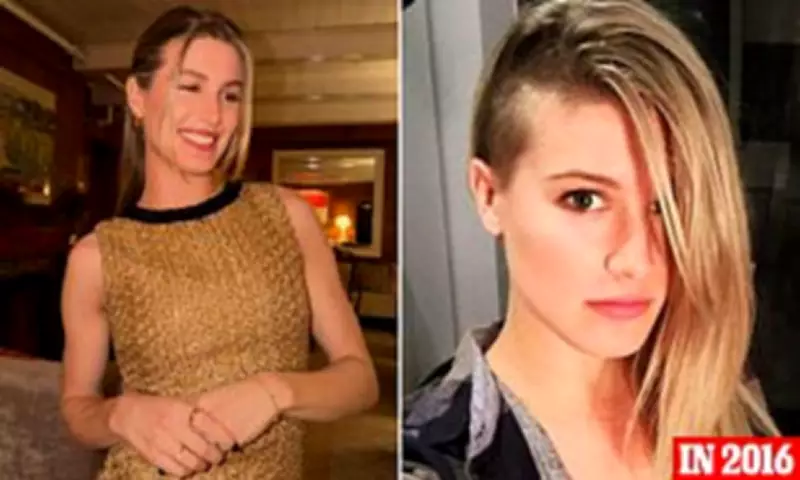
As scrutiny intensified regarding her form, Bouchard sought alternative means of self-expression. The Montreal-born star tested her rebellious streak by dramatically altering her hairstyle with an under-cut following her second-round exit at the 2016 Australian Open.
"To be fair, I wanted a very small under-cut thing," she explained on the Ok Sweetie podcast. "I don't know what happened, but it was literally half my head. I feel like I look like a cancer patient. I was like, 'this is not the look I was going for'."
This stylistic choice allegedly carried significant professional repercussions. Bouchard claimed that Rolex contacted her agent to indicate the new look "did not align" with the luxury watchmaker's public image, resulting in the non-renewal of her endorsement deal.
Navigating Public Perception and Personal Identity
During the year following her Wimbledon success, Bouchard was ranked No. 1 on SportsPro's "World's 50 Most Marketable Athletes" list. She frequently appeared in publications beyond tennis-specific media, including a Sports Illustrated Swimsuit edition.
However, Bouchard emphasized her frustration with being pigeon-holed for her appearance during her playing career: "I don't want to be just painted with a broad stroke of, 'OK, that's all she is,'" she stated. "There are layers and layers and layers. Sometimes I just feel like people would label me as 'OK, she just likes to post this on Instagram or something'... there's so much more to me."
The former professional elaborated: "There's so much more to me than that. That's not what I think about 24/7. It's a portion of my personality. Just assuming someone is only surface-level, or what they show, that's just the feeling I've gotten sometimes."

Life Beyond Tennis and Continued Influence
Since stepping away from professional tennis and transitioning to pickleball, Bouchard has maintained a substantial social media presence with over 2.3 million Instagram followers. Her reflections provide a compelling insight into the psychological challenges faced by athletes experiencing rapid fame and the evolving conversation around mental health in professional sports.