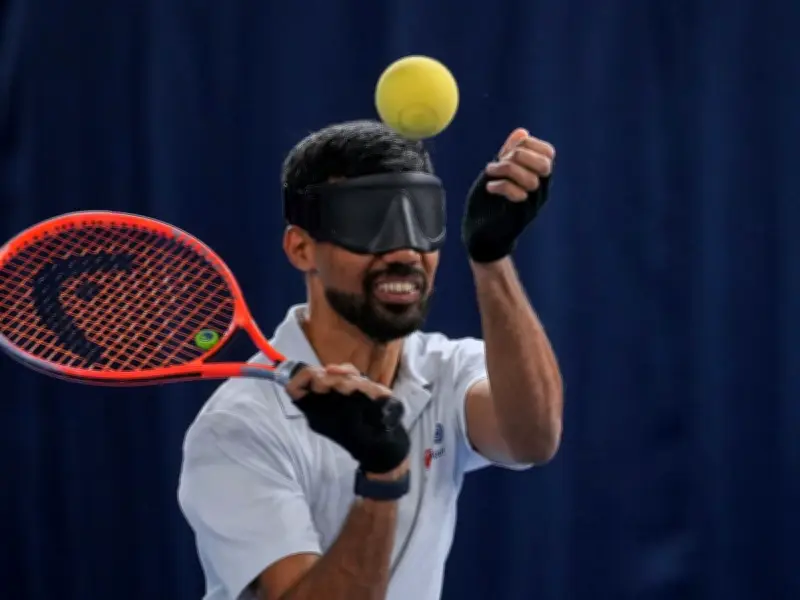
Naqi Rizvi, the world number one in blind tennis, is urging Wimbledon, the US and French Opens, and the Paralympics to include blind tennis, hoping to give the sport the same status as wheelchair tennis. Rizvi, born with congenital glaucoma and blind by age seven, has dominated blind tennis for a decade.
A Champion's Journey
“It's been an amazing journey,” the 35-year-old told The Daily Star. “It gets harder every year in some ways because you're the target for everybody else. But it's an amazing experience as well.” Rizvi started playing tennis at 25 after being introduced to adapted sports by Metro Blind Sports.
He worked his way through regional and national tournaments before reaching the international stage. Despite his success, blind tennis remains less widely known than many disabled sports. Of the Grand Slams, only the Australian Open has included it, this year introducing a “showdown” format for visually impaired players. Rizvi won that event but refuses to call himself Aussie Open Champion due to the different format and lack of prize money.
Financial Struggles
“Even when I won the World Champs, when I won the World Games, all the UK nationals that I've won, I haven't won a single penny,” he revealed. The lack of funding makes it hard for players to come through, and Rizvi himself works a 9-to-5 job in financial services to make ends meet.
Promoting Inclusive Tennis
Rizvi is an ambassador for Young Champs, a charity run by coach Chris Marshall that aims to get more people from all backgrounds into tennis. “We want to promote inclusive tennis and highlight that tennis isn't always very affordable,” said Marshall. He works with a young athlete named Sabein, 12, who comes from a London estate and struggles to access coaching and competition. Marshall runs a campaign called ACE, A Chance for Everyone, encouraging clubs to work with players from all communities.
Rizvi also highlighted the importance of physical activity for people with disabilities, noting that many lead sedentary lifestyles. During the pandemic, he felt “incredibly miserable” because he needed someone to accompany him for exercise.
Britain Falling Behind
Both Rizvi and Marshall warn that without action, Britain will keep falling behind in tennis. At the 2019 International Blind Tennis Tournament, British players won six golds out of eight. But in 2024, Rizvi said, that became “zero golds, zero silver medals.” He added: “Other countries have kept up that momentum … unless we can get our act together quickly, we're only going to keep getting further behind.”