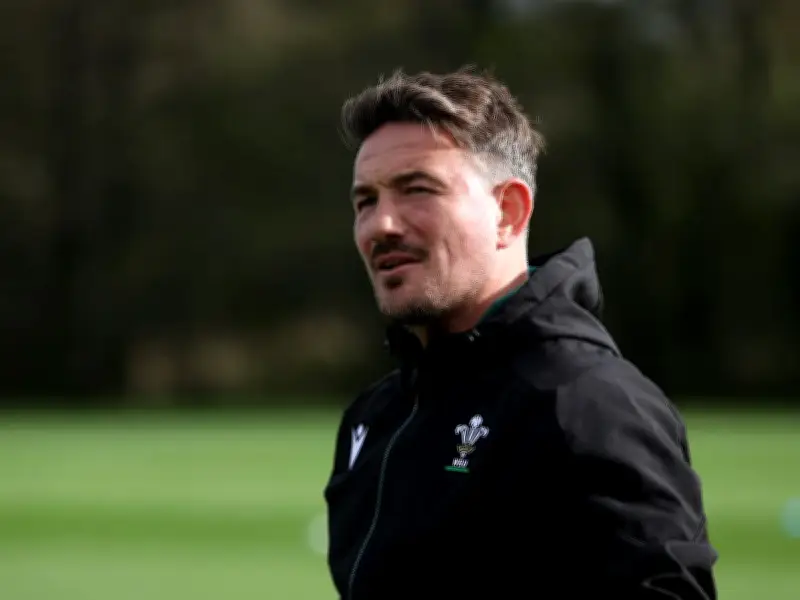
Wales' new kicking coach, Alex Davies, is prioritising being a "trendsetter" in the aerial game as he prepares for his first campaign with the national side. The 40-year-old, who joined from Leicester Tigers and started formally last month, is working alongside Wales great Neil Jenkins on a long-term kicking DNA.
Davies took over a role last held on a full-time basis by Jenkins, with Leigh Halfpenny and Rhys Patchell having covered the position on an interim basis since. He is now part of a coaching group planning long-term towards the World Cup.
Working with the regions and legends
Davies described the move from club to international rugby as "very different from the day-to-day of club rugby", noting the planning work led by Dave Reddin. His short-term responsibilities include visiting regions and working with nines, tens, kickers and the back-three on high-ball skills.
On sharing an office with Jenkins and regional coaches including Halfpenny, James Hook and Scott Sneddon, Davies said: "Honestly, it's an absolute privilege for me to be even in the same office as Jenks, who's an absolute legend. Leigh, Hooky, Snedds down at the Scarlets - to have those guys just to chat with and talk tactics and technique. They're all absolute legends."
A long-term kicking DNA
The wider kicking DNA for Welsh rugby, teased by WRU technical director Rhys Long on social media, will be implemented in stages. Davies explained that younger players aged 13 to 15 need to be competent kickers, while the tactical side develops as players progress, with U18s and U20s exposed to high-pressure environments.
"Kick strategy will change game to game depending on who your opponents are, but the underlying technical aspects, the tactical part of it pretty much remains the same," he said.
Staying ahead of the trends
Davies has already worked with Wales' half-backs and back-three around the aerial game, which remains a key part of Test rugby. He cited his time at Leicester with Freddie Steward, who was world-class at taking the high ball, as an example of how teams adapt their approach.
"I think as the game's evolving, you have to be ahead of it," said Davies. "To stay ahead of the trends, to be the trendsetter, to evolve the game." He added that Wales improved in the aerial contest from the Six Nations to the summer, and "jumped up to third in the world for getting the ball back", a trend he wants to continue.