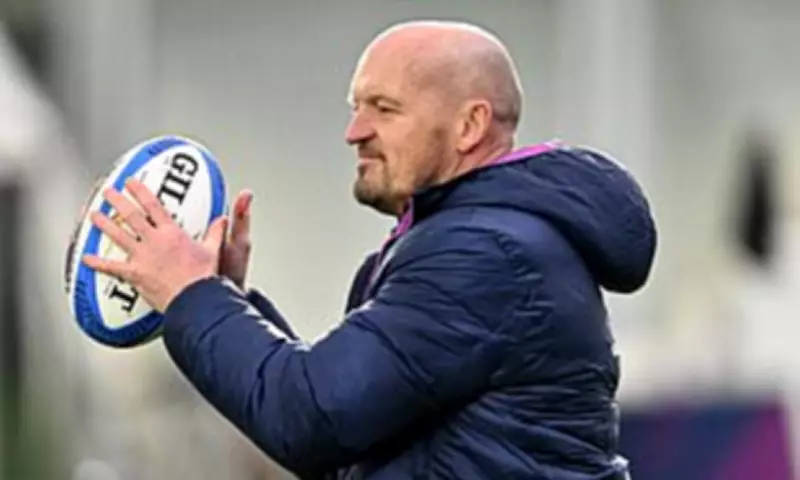
Scotland's Rugby Empire Faces Crumbling Test in Rome Showdown
In the historic heart of Rome, Gregor Townsend arrives at the Stadio Olimpico with his credentials as Scotland's commander-in-chief hanging precariously in the balance. The iconic stadium will be packed to its rafters with passionate supporters, creating a raucous and rumbustious battleground that Townsend's Scottish warriors must conquer at the outset of another Six Nations championship campaign.
The Knife-Edge Beginning for Scotland's Campaign
Should Scotland suffer defeat against Italy, it would significantly strengthen the growing perception that Townsend's rugby empire is crumbling into a state of ruin. This championship begins on a knife-edge for the head coach, with victory potentially injecting crucial positive momentum ahead of next week's Calcutta Cup clash against a rejuvenated England at Murrayfield. Conversely, a loss would leave both Scotland and Townsend staring into an abyss from which they may struggle to extricate themselves.
The national team's form has been largely disappointing over the past two years, with only two victories secured in each of the previous two Six Nations campaigns, resulting in fourth-place finishes on both occasions. Townsend desperately needs a victory in Rome, or the championship could effectively be over before it has truly begun for Scotland.

Eight Years of Stewardship and Growing Concerns
Under Townsend's stewardship, which now extends to eight-and-a-half years, Scotland increasingly resembles a team in decline rather than progression. The uncomfortable questions about his future that have emerged during the tournament build-up will only grow louder if they succumb to Italy. Scotland's last visit to Rome two years ago ended in defeat, with the team blowing a 12-point lead during a shambolic final half-hour that saw Italy score 21 unanswered points on their way to a dramatic 31-29 victory.
That devastating loss shattered any remaining notion of Scotland making tangible progress under Townsend, particularly following a disappointing World Cup performance just months earlier. In the two years since that Roman collapse, the feeling of stagnation and regression has proven difficult to shake. Last autumn provided further evidence of concerning patterns, with the team capitulating and surrendering a 21-point lead against Argentina.
A Propensity for Self-Sabotage and Distractions
Scotland implode far too frequently for these collapses to be dismissed as mere anomalies. They represent a damning reflection of the structures and systems implemented under Townsend's leadership. Perhaps unlike any other team in world rugby, Scotland maintains an insatiable capacity for self-sabotage, displaying a persistent propensity to aim metaphorical guns at their own feet and fire relentlessly.
This week, Townsend has faced fresh questions regarding reports that he will assume charge of Newcastle Red Bulls when his Scotland contract expires after next year's World Cup. What the coach seems unwilling to acknowledge is that this entire situation is largely self-inflicted. By opening the door to Newcastle discussions, he has created another layer of noise and distraction that Scotland simply cannot afford as they prepare to face a dangerous Italy side backed by 70,000 passionate supporters inside the Olimpico.
Italy's Transformation into Genuine Threat
This fixture represents a game Townsend dare not lose, particularly given Italy's remarkable transformation over recent years. This is no longer the same fixture it was fifteen or twenty years ago. Italy has evolved into a highly capable and skilled team boasting excellent players across the field. Since 2016, their list of victories over tier-one nations has grown increasingly impressive, including triumphs over South Africa, Wales on three occasions, Australia twice, and Scotland.
The Azzurri have also drawn with France during this period and would have secured victory had Paolo Garbisi not missed a crucial penalty when the ball fell from the tee as he struck it. Over recent seasons, Italy has matured significantly, now possessing the talent and experience to complement the physicality that has long been their asset since entering the Six Nations in 2000.

Scotland's Aging Stars and Championship Schedule
This championship represents Townsend's ninth attempt at Six Nations glory as Scotland head coach. While there have been notable highs, including an unprecedented period of dominance over England, these moments have become increasingly fleeting over the past couple of years. Results and performances have drifted, leaving a growing number of supporters disillusioned with the team's direction.
Scotland's squad faces questions about aging key personnel, with fly-half Finn Russell now 33 years old and centre Huw Jones aged 32. Both players have delivered electric performances for Scotland in previous Six Nations campaigns, but their remaining opportunities at international level are diminishing. Despite these concerns, Scotland's squad enters this championship in relatively good health overall, unlike last year when captain Sione Tuipulotu missed the tournament through injury.
The schedule presents challenges but remains manageable, with fixtures against Italy in Rome, England at Murrayfield, Wales in Cardiff, France at Murrayfield, and Ireland in Dublin. It remains within Scotland's capabilities to stay firmly in championship contention heading into the final two games against France and Ireland.
The Moment of Truth for Townsend's Leadership
All the surrounding noise will cease this afternoon when the first whistle sounds at the Stadio Olimpico. The moment has arrived for Scotland to either stand and deliver or stumble and fail. For Townsend, this represents a now-or-never scenario where the endless cycle of discussing 'progress' and 'learning' must finally translate into tangible results.
He commands a squad of players in the prime of their careers, making another championship yielding only two victories and mid-table mediocrity increasingly unacceptable. It is not unreasonable to suggest that the head coach should face serious scrutiny if Scotland once again finishes with merely a couple of wins. However, this would require his superiors at the Scottish Rugby Union to demonstrate backbone and hold him properly accountable.
Townsend cannot afford another false dawn in Rome. If Scotland falls to defeat against Italy, the championship could effectively be over before it has genuinely begun, potentially signaling the beginning of the end for his lengthy tenure as Scotland's commander-in-chief.