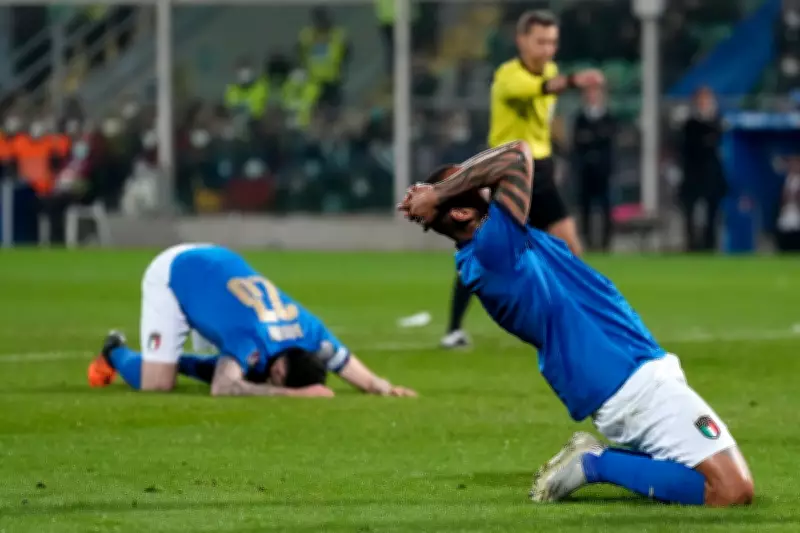
Italy's Cricket World Cup Debut: Azzurri's Rising Stars Contrast Football Decline
While Italy's celebrated football team continues to grapple with significant challenges and disappointing results, an unexpected sporting narrative is unfolding for the Azzurri. The national cricket team has achieved a historic milestone by qualifying for their first-ever World Cup tournament, marking a remarkable moment in Italian sporting history.
Historic Qualification After Decades of Development
The Italian cricket team's journey to the T20 World Cup represents the culmination of forty-five years of dedicated effort and gradual development. Luca Bruno Malaspina, Chief Executive Officer of the Italian Cricket Federation, emphasised the significance of this achievement, stating that simply participating in the global tournament represents the realisation of decades of hard work and commitment.
Cricket's roots in Italy extend much further back than many might imagine, dating to the late nineteenth century when British textile workers introduced the sport during their expatriate years. This historical connection is preserved in the names of some of Italy's most famous football institutions. Genoa Cricket and Football Club, established in 1893 as Italy's oldest football club, retains its original cricket reference, while AC Milan was originally founded as Milan Football & Cricket Club in 1899 by Englishman Herbert Kilpin.

A Diverse Squad with Global Connections
The contemporary Italian cricket team reflects the nation's evolving demographic landscape and global connections. With approximately four thousand registered male players across eighty clubs operating within a two-tier league system, the sport has established a solid foundation despite infrastructure challenges.
The fifteen-player World Cup squad showcases remarkable diversity and international heritage connections:
- Captain Wayne Madsen qualifies through his Italian grandmother despite his South African background
- Bowler Crishan Kalugamage moved to Italy from Sri Lanka at age fifteen
- Wicketkeeper Marcus Campopiano was born in England to an Italian father
- Two sets of Australian brothers with Italian family connections: Harry and Benjamin Manenti, and Anthony and Justin Mosca
This multicultural composition extends to the coaching staff, with head coach John Davison bringing experience from Canada and Australia, while assistant coach Kevin O'Brien contributes his background as a former Ireland international batter.
Capitalising on Football's Difficult Period
The cricket team's breakthrough arrives during a particularly challenging period for Italian football. The four-time football World Cup champions have experienced significant setbacks, failing to qualify for the 2018 and 2022 tournaments after unexpected playoff defeats. With the football team currently navigating another playoff campaign to reach the upcoming World Cup hosted across North America, cricket officials see a strategic opportunity.
Bruno Malaspina believes this moment represents a chance for cricket to "capitalise" on football's difficulties, increasing visibility and recognition within Italy's sporting landscape. The World Cup participation provides an unprecedented platform to introduce cricket to Italian audiences and demonstrate the sport's global significance and growing participation numbers worldwide.
Infrastructure Challenges and Future Ambitions
Despite this historic achievement, Italian cricket faces substantial infrastructure limitations that must be addressed for sustained growth. The national team currently hosts international matches in other European nations, including the Netherlands and England, due to inadequate domestic facilities. Federation officials describe existing cricket grounds as "very, very poor" and are actively working to develop at least one proper turf pitch that could serve as a spiritual home for Italian cricket.

Financial constraints and bureaucratic complexities present additional hurdles, according to federation leadership. However, ambitious plans are underway, including negotiations to establish an Italian franchise within the proposed European T20 Premier League by 2027. Educational initiatives aim to introduce cricket into Italian schools, teaching children the sport's rules and cultural aspects while encouraging participation in local clubs.
World Cup Participation and Symbolic Matches
Italy secured their World Cup place through European regional qualifying, finishing second to the Netherlands before achieving a landmark victory against Ireland last week—their first-ever win over a full member nation of the International Cricket Council. This progression stands in stark contrast to the football team's recent struggles.
At the World Cup hosted jointly by India and Sri Lanka, Italy will compete in Group C against Scotland, Nepal, England, and the West Indies. While victory against traditional cricketing powerhouses represents a formidable challenge, the match against England holds particular symbolic significance for Italian cricket development.
Bruno Malaspina acknowledges the competitive gap but emphasises the cultural importance of facing England, stating that simply competing against the nation most associated with cricket's heritage represents "the top of our story" regardless of the eventual result.
This World Cup debut marks both an endpoint for Italian cricket's long development journey and a starting point for future ambitions. As recognition grows following Associate membership status from the International Cricket Council in 1995 and subsequent acknowledgment from the Italian National Olympic Committee—enabling government funding—the sport stands poised to build upon this historic moment and establish a more prominent position within Italy's diverse sporting culture.