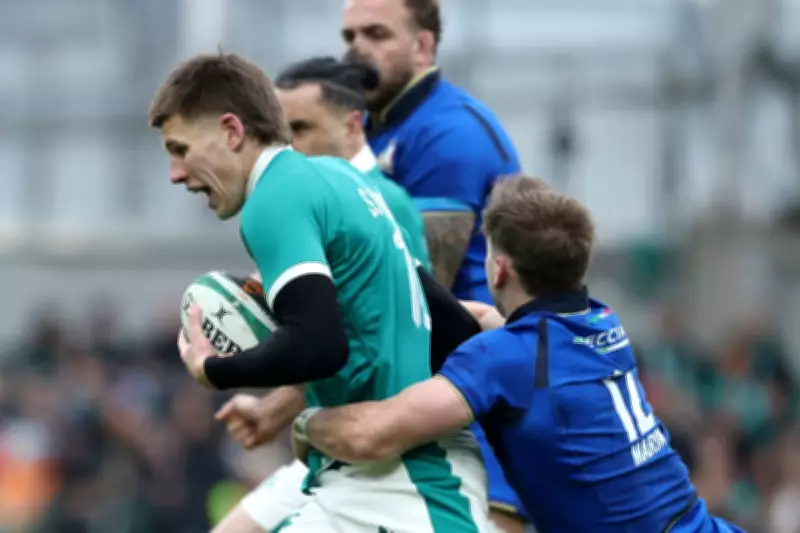
Ireland Survive Italian Scare Despite Prendergast's Struggles in Dublin
Ireland narrowly avoided a historic Six Nations defeat to Italy in Dublin, scraping an unconvincing 20-13 victory that raised more questions than it answered. The match, held at a sold-out Aviva Stadium on Saturday 14 February 2026, saw Andy Farrell's side come from behind to secure the win, but their performance did little to quell concerns about their status as a fading force in world rugby.
Prendergast's Day to Forget
Fly-half Sam Prendergast endured another outing to forget, missing two straightforward conversions and struggling with his overall game before being replaced by Jack Crowley. Crowley's introduction was met with cheers from the stands, and he promptly slotted a conversion and a penalty to help steer Ireland to victory. Prendergast's shanked conversion early in the game set a nervous tone, and his subsequent errors compounded Ireland's disjointed play throughout the afternoon.
Italy's Dominant First Half
Italy stunned the home crowd by taking a 10-5 lead into half-time. The Azzurri's try came from hooker Giacomo Nicotera, who powered over on the left after Ireland scrum-half Craig Casey received a yellow card for head-on-head contact with Lorenzo Cannone. Paolo Garbisi added the conversion and a penalty, cutting Ireland's early deficit. Ireland had opened the scoring through full-back Jamie Osborne, who raced onto a superb Stuart McCloskey offload six minutes after Azzurri wing Louis Lynagh was sin-binned for a deliberate knock-on.

Italy grew in confidence and became the dominant side, with captain Michele Lamaro almost racing clear after a fine break from full-back Lorenzo Pani. Only a huge turnover from McCloskey close to his own try line prevented Ireland from being further behind at the break.
Second-Half Revival
Andy Farrell responded to the first-half struggles by introducing fit-again prop Tadhg Furlong for the second half. Back-rower Jack Conan bulldozed over following a lineout within three minutes of the restart, but another missed conversion from Prendergast left the scoreboard level. Italy continued to cause problems, and in the 52nd minute, Tommaso Menoncello set up Lynagh to dive over on the right, but a video review showed his pass was clearly forward, sparing Ireland further embarrassment.
The crucial turning point came during a five-minute spell that swung the contest in Ireland's favour. Right winger Robert Baloucoune, making his championship debut, burst onto a basketball-style pass from McCloskey to score. Replacement Jack Crowley added the extras and then slotted a penalty to extend Ireland's lead. Another Garbisi penalty put Italy within a converted score of snatching a draw, but a series of last-ditch tackles spared Ireland's blushes in a frantic conclusion.
Broader Concerns for Ireland
This victory followed a humbling 36-14 round-one loss away to France, which had fueled suggestions that Ireland are slipping into the shadows of the world's top teams after autumn defeats to New Zealand and South Africa. Farrell made six changes to his starting XV for this match, perhaps with an eye on next week's trip to England, demanding greater intent from his side. However, Ireland lacked cohesion for large parts of the game, and their lack of conviction did little to inspire confidence.
The match also made history with Hollie Davidson becoming the first woman to referee a men's Six Nations fixture, but Ireland's performance overshadowed this milestone. Italy, who upset Scotland last weekend, were chasing a first Six Nations success in Dublin at the 14th time of asking, and they came agonizingly close to making history. Ultimately, disjointed Ireland clung on for victory, albeit without bagging a bonus point, leaving fans and pundits alike questioning their future prospects in the tournament.