Australian rugby great Michael Hooper has publicly urged rising star Max Jorgensen to closely examine the blueprint that took French icon Antoine Dupont to Olympic sevens glory, suggesting it as the ideal pathway for the young fullback to achieve similar success when the Games arrive in Los Angeles in 2028.
The Dupont Model: A Proven Path to Olympic Gold
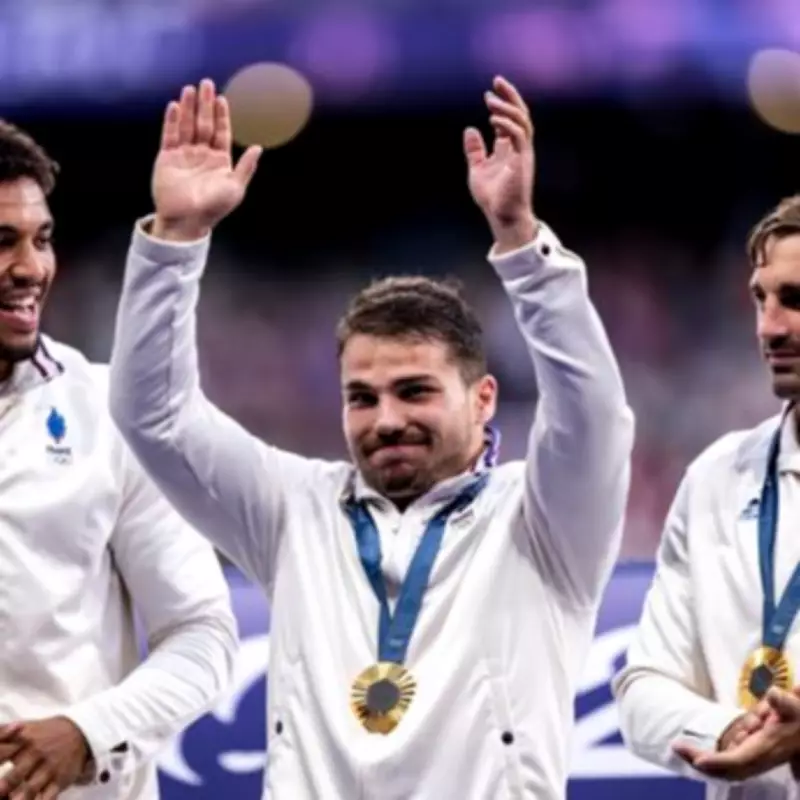
Rugby sevens secured its place in the Olympic programme over the past decade, with its debut at Rio 2016. At the most recent Paris Games, Dupont – widely regarded as the world's finest fifteen-a-side player – took several months away from his usual commitments to prepare exclusively for the sevens format. His dedication paid dividends as he starred in the final, helping France claim the gold medal and further cementing his legacy as one of rugby's all-time greats.
Hooper, speaking as an HSBC ambassador, emphasised that Jorgensen should study this approach meticulously. "Jorgo would only be 26 or 27, which must be similar to Dupont, which is a really good age," Hooper told Mirror Sport. "What I'd say to Max, who is an incredible talent and player, is to give him a proper run and look at someone like Dupont. Both have exceptional skillsets, but have a good crack at it, don't just expect to turn up – the ball moves differently in sevens."

Jorgensen's Olympic Ambitions and Current Standing
Max Jorgensen, still only 21, has already established himself as one of Australia's most exciting talents. In 2024, he scored a dramatic last-minute try to defeat England at Twickenham and has since delivered sensational individual performances against the British and Irish Lions and France. The Waratahs star recently signed a five-year contract to remain in Australia, with his versatile skillset making him ideally suited to excel in both the fifteen-a-side and sevens formats.
Jorgensen himself has acknowledged that an Olympic appearance is "not off the table" when the time comes. Hooper believes that following Dupont's example – particularly his commitment to playing several tournaments to properly adapt to the sevens game – is crucial. "Dupont gave himself a few tournaments to really get that right and they hit the maximum," Hooper noted. "So Max should look at that if he's going to give it a crack."
Hooper's Personal Experience with the Sevens Transition
Michael Hooper speaks from personal experience about the challenges of switching codes. The former flanker, who made 125 appearances for Australia – more than any other captain – attempted the transition to sevens late in his career with the Paris Olympics in mind. Ultimately, injuries and the demanding nature of the switch prevented him from making the final squad.
"I probably didn't have that appreciation," Hooper admitted. "Like I was a fit fifteen-a-side player, had a good engine, but the demand on the body at 32 was significant. I didn't appreciate the type of nick I needed to be in to be a fit sevens player. It was a steep learning curve and there were only three tournaments to try and get right and have a shot at the Olympics in Paris. It didn't work out, but I loved the challenge."
The Growing Trend of Code-Switching
The movement of players between fifteen-a-side rugby and the sevens format is becoming increasingly common, driven largely by the Olympic spotlight. With Brisbane set to host the Games in 2032 following Los Angeles in 2028, the incentive for Australian stars to pursue sevens glory is stronger than ever.
Hooper believes that Jorgensen's global recognition will ultimately depend on sustained success. "Max has burst onto the scene, he's scoring some phenomenal tries, and if he does it for one or two more years I've no doubt he's in that category," he said. "I think it also comes with that notoriety of winning tournaments. We had a little bit of success – we got to a World Cup final in 2015, won Super Rugby with the Waratahs in 2014."
The Hong Kong Sevens and Rugby's Global Appeal
Hooper made these comments while attending the Cathay/HSBC Hong Kong Sevens, an event celebrating its 50th anniversary this year. The tournament remains a cornerstone of the rugby calendar and has served as a launching pad for numerous stars. Its vibrant party atmosphere makes it a major social occasion, with the sport dominating conversations throughout the city.

"There's just a buzz around town," Hooper observed. "A real buzz in terms of what HSBC brings in during the week, but you start a conversation and it ends with rugby. Whether that's the state of the game in the world, the international landscape with the World Cup next year."
When asked what makes the Hong Kong Sevens such a perennial success, Hooper highlighted its unique geographical and historical appeal. "Geographically, it seems like it's one flight for everyone. It is almost like the world can converge here pretty easily, then you have the history of Hong Kong and all that brings to it. History is tough to beat, mate."
This year, HSBC has introduced a new platform called 'Let’s SVNS This City', which will feature across all legs of the international series. The initiative celebrates the network of cities that host sevens events, spotlighting the unique qualities of each tournament and the passionate fans who attend.