The Indianapolis Colts have made a strategic decision that harks back to a bygone era of NFL contract negotiations. In a move not witnessed since 1996, the Colts have opted to use the transition tag on quarterback Daniel Jones, drawing a direct parallel to the Atlanta Falcons' approach with Jeff George nearly three decades ago.
Understanding the Transition Tag Mechanism
On Wednesday, the Colts officially placed the transition tag on Jones, a mechanism that differs subtly but significantly from the more common franchise tag. While the franchise tag for a quarterback in 2026 would command approximately $43.9 million, the transition tag carries a lower valuation of $37.8 million for Jones. This financial distinction is just the beginning of the nuanced strategy.
The transition tag permits Jones to actively engage in negotiations with other NFL franchises regarding a long-term contract. Should he reach an agreement with an external club, the Colts retain the right to match the offer and retain his services. However, if Indianapolis chooses not to match, they would lose the veteran quarterback without receiving any draft compensation in return—a stark contrast to the franchise tag, which typically yields draft picks if a player departs.

Historical Precedent and Jones' Recent Journey
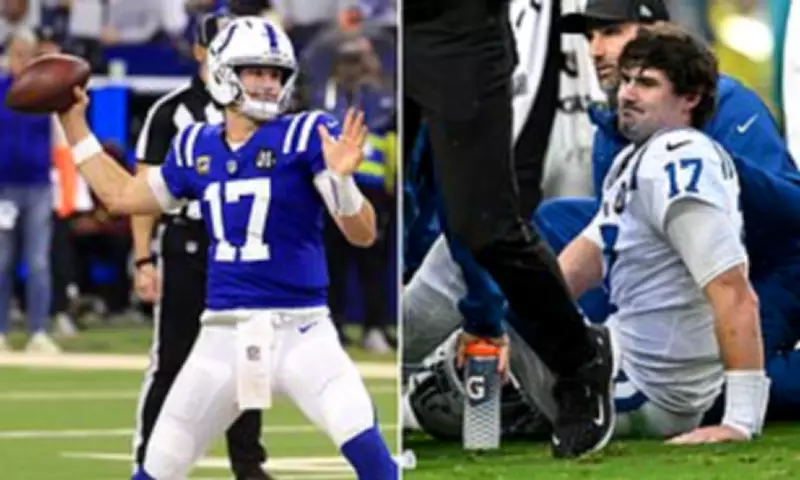
This tag has been dormant since 1996, when the Falcons employed it to retain quarterback Jeff George, who, interestingly, also began his career with the Colts. Jones' own path has been tumultuous. After a disastrous conclusion to his tenure with the New York Giants in 2024, he found rejuvenation with the Colts in 2025. He thrived in this fresh environment, leading the team to an 8-4 record before his season was abruptly ended in Week 14.
The catastrophic injury occurred during a December 7 matchup against the Jacksonville Jaguars, where Jones suffered a torn Achilles tendon. This setback not only concluded his personal campaign but also derailed the Colts' season. The team proceeded to lose six consecutive games, missing the postseason entirely as a result.
Future Contract Talks and Backup Quarterback Dynamics
Despite the injury, the Colts' management evidently saw sufficient promise in Jones' performances when healthy. NFL Insider Tom Pelissero reported on Monday that discussions are ongoing between Jones and the Colts regarding a long-term agreement to keep him in Indianapolis. The financial terms remain undisclosed, though his 2025 deal was a one-year contract worth $14 million.
Concurrently, the quarterback landscape in Indianapolis is shifting. According to NFL Network's Cameron Wolfe, backup quarterback Anthony Richardson and the Colts have mutually agreed to pursue a trade this offseason. Richardson's tenure has been marred by injuries, limiting him to just 17 appearances over three seasons, and accuracy issues, with a completion rate of only 47.7 percent in 2024.
The former first-round selection from Florida attempted merely two passes in two games last year, completing one, after being relegated behind Jones on the depth chart. His season was further complicated by a fractured orbital bone sustained in a peculiar pregame incident, which sidelined him from mid-October onward.
Organizational Confidence and Roster Implications
Looking ahead, the Colts express confidence in 2025 sixth-round pick Riley Leonard as a capable backup, suggesting that opportunities for Richardson would have been scarce in the upcoming season. This organizational faith underscores their commitment to building around Jones, provided a long-term deal can be finalized.
The use of the transition tag represents a calculated gamble by the Colts, balancing financial prudence with the risk of losing a key player without compensation. As the NFL offseason unfolds, all eyes will be on Indianapolis to see if this nostalgic strategy pays dividends in securing their quarterback of the future.