Winter Olympics: The Geopolitical Divide in Sports Participation
The International Olympic Committee (IOC) upholds a principle of equal opportunity for all nations to compete at the Games, yet the reality at this Winter Olympics reveals a stark contrast. Over 3,500 athletes from 93 countries are vying for glory across 16 disciplines, with 195 medals available. However, global politics continues to cast a shadow over the sporting spectacle, as it has in previous editions.
Palestine's Historic Absence from Winter Games
Despite having a National Olympic Committee recognized by the IOC since 1993, Palestine has never fielded athletes at a Winter Olympics. This absence persists even as Palestinian delegations have participated in every Summer Olympics since 1996, including a record eight-strong team at the Paris Games in summer 2024. The reasons are multifaceted and deeply rooted in both conflict and climate.
The ongoing war between Israel and Hamas, which began in October 2023, has devastated Palestine's infrastructure, including sporting facilities and clubs. This destruction has made training nearly impossible for athletes. Additionally, the Palestinian Football Association reports that at least 800 athletes and sporting officials have been killed since the conflict started, with over 100 children among the casualties. More than 90 percent of Gaza's population remains displaced, further hindering athletic development.

Funding shortages also plague Palestine's ability to support elite athlete development. Historically, Winter Olympics have been dominated by Nordic nations and countries with cold climates, such as Norway, which has topped the medal table in the past three Games. While the Olympic Movement has tried to expand winter sports beyond this traditional heartland, Palestine's warm climate presents an additional barrier to breaking into disciplines like skiing or curling.
Israel's Participation Amid Conflict
In contrast, Israel is allowed to field a delegation at these Winter Olympics, despite its invasion of the Gaza Strip. Hostilities were formally paused by a ceasefire in October last year, but strikes and killings have continued. The IOC has defended this decision by stating that the Israel-Palestine conflict is "not comparable" to the situation between Russia and Ukraine.
Russia and its ally Belarus were suspended by the IOC in October 2023 due to Russia's war on Ukraine, specifically for violating the territorial integrity of Ukraine's National Olympic Committee by taking over sporting authorities in occupied regions. This suspension cut off Olympic funding and barred Russian and Belarusian athletes from representing their countries at the Paris Games, though some competed as neutral athletes without contributing to the official medal table.
An IOC spokesperson emphasized before the Paris Games that the Israel-Palestine scenario differs because "the relevant NOCs did not extend their area of jurisdiction over that of another NOC or outside their own area of jurisdiction." The IOC added that reacting to conflicts between countries is "beyond our remit" and falls into the "pure realm of politics." In September 2025, the IOC confirmed Israel would not face a ban from the Milano Cortina Olympics, citing a belief in resolving differences through dialogue rather than violence.
Controversy and Double Standards Allegations
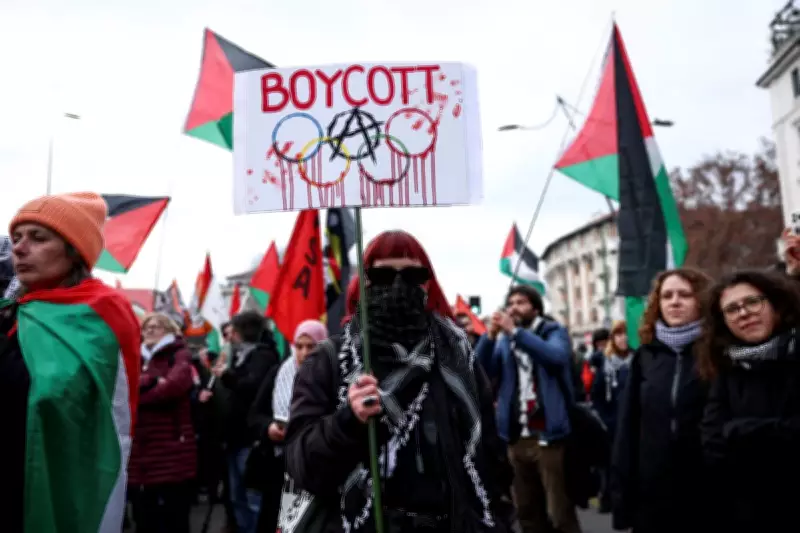
The IOC's stance has sparked significant controversy. The Palestinian National Olympic Committee sent a letter to the IOC prior to the Paris Olympics, accusing it of "double standards." This anger stems from the perception that geopolitical factors are influencing sporting decisions unevenly.
In a statement, the IOC expressed concern over disruptions to competitions worldwide, restrictions on athlete access to host countries, and boycotts due to political tensions. They argued that such actions "deprive athletes of their right to compete peacefully and prevent the Olympic Movement from showing the power of sport." This highlights the ongoing challenge of balancing sports with global politics, as the Winter Olympics continues to navigate these complex issues.