Winter Olympics 2026: The AIN Athlete System and Russia's Ongoing Ban
The Milano-Cortina Winter Olympics, which commenced on 6 February 2026, showcases competitors from 92 nations, yet two countries are notably absent: Russia and Belarus. Both nations remain suspended by the International Olympic Committee (IOC) due to violations of the Olympic Charter, prohibiting their official participation. However, a limited number of individual athletes from these countries are permitted to compete under a neutral banner, known as Individual Neutral Athletes (AIN).
Why Russia and Belarus Are Banned from the Winter Olympics
In March 2022, the IOC recommended that international sports federations ban Russian and Belarusian athletes in response to Russia's invasion of Ukraine, with Belarus supporting the aggression. This recommendation followed the Beijing Winter Olympics but preceded the Paralympics, where both countries were banned after threats of boycotts. The IOC formalised the suspension in October 2023 after the Russian Olympic Committee annexed sporting organisations in Ukrainian territories, including Donetsk, Kherson, Luhansk, and Zaporizhzhia. The IOC deemed this action a breach of the Olympic Charter, violating Ukraine's territorial integrity. Consequently, the suspension halted Olympic funding and barred Russian and Belarusian athletes from representing their nations at the Paris 2024 Olympics and now the Milano-Cortina 2026 Games.
What Are AIN Athletes?
Despite the ban, a small cohort of athletes is allowed to compete as Individual Neutral Athletes (AIN), an abbreviation from the French "athlètes individuels neutres." This system, introduced at the Paris Olympics, continues for Milano-Cortina 2026. AIN athletes do not represent Russia or Belarus; instead, they compete under a neutral teal flag with an 'AIN' emblem. They are also prohibited from using their national anthems, with the IOC providing an instrumental alternative. At the Paris Games, these athletes were excluded from the Opening Ceremony, and their medals did not contribute to the overall medal table, a policy expected to persist.

Eligibility and Restrictions for AIN Athletes
AIN athletes face stringent criteria and limitations. They are barred from team events like ice hockey or curling, as the IOC rules that a group of Individual Neutral Athletes cannot constitute a team. To qualify, athletes must first gain approval from their sport's governing body, followed by vetting by an IOC-appointed panel. This process excludes individuals with ties to the Russian military or those who have expressed support for the war in Ukraine. Notably, high-profile Russian skater Kamila Valieva, who returned from a doping ban in late 2025, missed the qualification window for these Olympics.
Which AIN Athletes Have Qualified for the Winter Olympics?
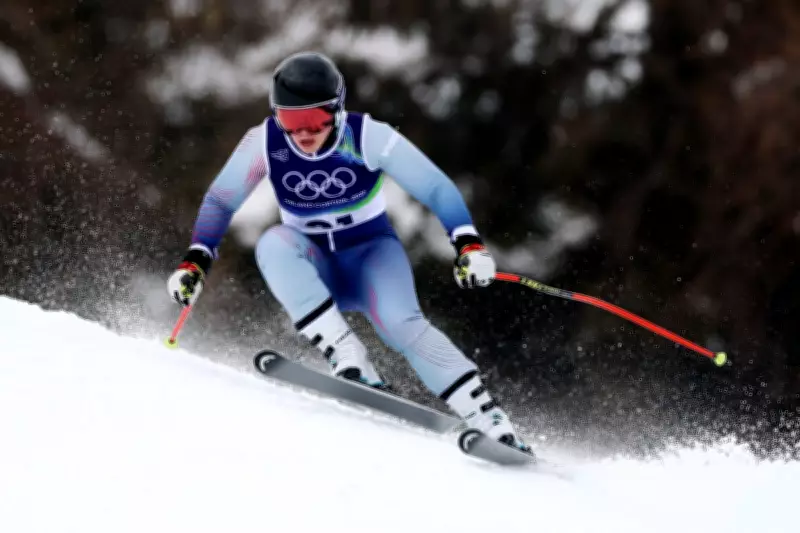
For Milano-Cortina 2026, 13 Russian and 7 Belarusian athletes have accepted IOC invitations to compete as AIN participants. The list includes:
- From Russia: Yulia Pleshkova and Simon Efimov in Alpine skiing; Savelii Korostelev and Daria Nepriaeva in cross-country skiing; Petr Gumennik and Adeliia Petrosian in figure skating; Daria Olesik and Pavel Repilov in luge; Ivan Posashkov and Alena Krylova in short-track; Nikita Filippov in ski mountaineering; Kseniia Korzhova and Anastasiia Semenova in speed skating.
- From Belarus: Marina Zueva in speed skating; Hanna Karaliova in cross-country skiing; Viktoriya Safonova in figure skating; Maria Shkanova in Alpine skiing; Anastasiya Andryianava, Anna Derugo, and Hanna Huskova in freestyle skiing.
This arrangement underscores the complex balance between upholding Olympic principles and allowing individual athletes to compete amidst geopolitical tensions.