Lindsey Vonn's Olympic Dream Ends With Severe Leg Injury and Amputation Risk
American skiing icon Lindsey Vonn's participation in the Milan Cortina Winter Olympics concluded in devastating fashion, with the 41-year-old sustaining a severe complex tibia fracture during the women's downhill final. The harrowing incident has prompted a leading orthopedic specialist to issue a stark warning: Vonn's immediate priority must be to avoid having her leg amputated.
Specialist Surgeon Outlines Grave Prognosis and Long Recovery
Dr Bertrand Sonnery-Cottet, a knee specialist based in Lyon, France, provided a sobering assessment of Vonn's condition to RMC Sport. He emphasized that the timeline for recovery remains unpredictable, with months required before Vonn can walk normally again. The primary objective is now preserving the limb and regaining basic mobility, with any return to elite skiing appearing distant.
"Her goal now is first and foremost to keep her leg and be able to walk," Dr Sonnery-Cottet stated. "I think we're not yet at the stage of returning to high-level skiing. We're not there yet, but some injuries like hers can end in amputation."

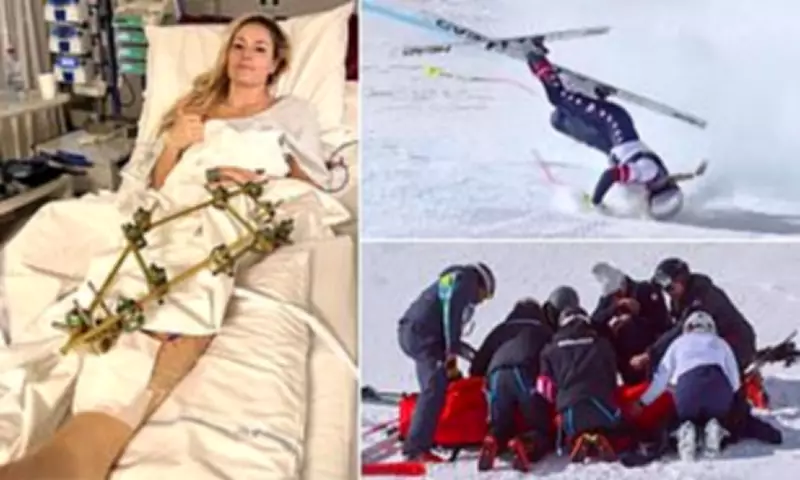
The surgeon further explained that even if amputation is avoided, Vonn will likely contend with lifelong difficulties stemming from the injury. He pointed to the external fixator—a substantial pin visible in recent social media posts—as evidence that the fracture has not been fully repaired despite multiple successful surgeries. This device is currently temporary but underscores the injury's extreme severity.
Vonn Provides Personal Update and Reflects on Olympic Journey
From her hospital bed, Vonn shared an emotional update with fans via Instagram, confirming she has already undergone three surgical procedures. She described the fracture as stable but requiring further operations for proper fixation. The skiing great was unequivocal in stating that a pre-existing ACL tear, sustained just days before the Games, played no role in the catastrophic crash.
"My Olympic dream did not finish the way I dreamt it would," Vonn wrote. "It wasn't a story book ending or a fairy tale, it was just life. I dared to dream and had worked so hard to achieve it."
She detailed the crash's mechanics, noting that in downhill racing, the margin between a strategic line and disaster can be mere inches. Vonn believes she was approximately five inches too tight on her line, causing her right arm to hook inside a gate, which twisted her body and precipitated the fall.
Despite the physical agony and shattered Olympic aspirations, Vonn expressed no regrets. Standing in the starting gate represented a victory in itself, she affirmed, acknowledging the inherent dangers of elite ski racing. Her message concluded with an inspirational call to embrace risk and courage in life.
Graphic Details of the Crash and Immediate Aftermath
During her final Olympic run, Vonn sped over a hill and collided with a plastic track marker before violently hitting the ground. Her right leg appeared to absorb the initial impact, sending a cloud of powder into the air. The veteran athlete then tumbled forward, seemingly striking her shoulder against the slope before coming to rest.
The Cortina crowd fell into silence as medical teams rushed to her aid. Organizers attempted to mask Vonn's audible cries by playing background music while she was placed on a stretcher. The event was suspended, and Vonn was eventually airlifted from the mountain for emergency treatment.
Vonn's Illustrious Career and Historical Context
Lindsey Vonn's career achievements render this injury particularly poignant. In the 2010 Vancouver Olympics, she made history by becoming the first American woman to win gold in the downhill. Her career statistics are monumental:

- 45 World Cup downhill victories
- 28 super-G wins
- One of the most decorated speed specialists in alpine skiing history
Dr Sonnery-Cottet provided additional medical context, noting that such severe tibia fractures are more commonly associated with high-impact traffic accidents, particularly involving motorcyclists, rather than sporting incidents. This comparison underscores the extraordinary forces involved in Vonn's crash.
The road ahead for Lindsey Vonn is fraught with uncertainty. While her fighting spirit remains evident, medical experts caution that the path to recovery will be prolonged and challenging, with the specter of amputation and permanent disability looming over her future.