US Skater's Banned Backflip Stuns Olympics Crowd in Historic Gold Performance
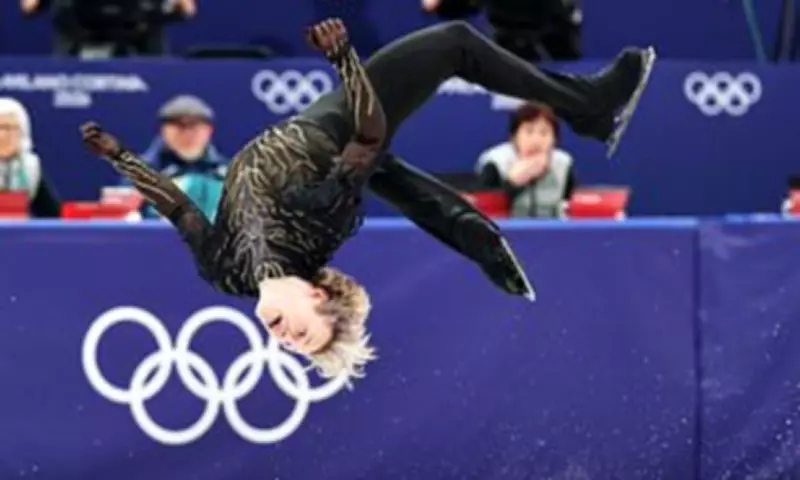
American figure skater Ilia Malinin delivered a breathtaking and historic performance at the Winter Olympics, stunning the Milan crowd with an incredible backwards somersault during Team USA's gold medal-winning free skate on Sunday night. The 21-year-old athlete packed his routine with trademark quadruple jumps before punctuating it with a dramatic backflip, landing perfectly on just one skate to rapturous applause from spectators.
The Controversial Move That Earned No Points
The spectacular backflip, while visually stunning, earned Malinin absolutely nothing on the official scoresheet. This peculiar scoring situation stems from the move's long and controversial history within competitive figure skating. For decades, skating's governing body, the International Skating Union, had banned the backflip entirely over legitimate fears of serious head and neck injuries to athletes attempting the dangerous maneuver.
That prohibition was finally lifted in 2024, meaning skaters no longer automatically lose points for attempting the acrobatic feat. However, in a curious twist of competitive rules, the backflip still does not count toward a skater's technical score because it is not classified as a required element in official programs. This creates the unusual scenario where a crowd-pleasing, physically demanding move contributes nothing to the athlete's final tally.

Malinin's Gymnastic Background and Historic Achievement
Malinin, who trained extensively in gymnastics during his youth, first debuted the backflip in competition in 2024, coinciding perfectly with the year the ISU lifted its longstanding ban. Before initially performing the trick, the skater expressed his excitement about its potential impact, stating, 'I think I can find a way to make it really cool and kind of scare the audience.'
Sunday's Olympic display proved both jaw-dropping and genuinely historic, making Malinin the first skater in five full decades to legally land a backflip at the Olympic Games. Reflecting on the crowd's reaction during his performance, Malinin described the atmosphere, saying, 'It's honestly such an incredible roar-feeling in the environment. Once I do that backflip everyone is screaming for joy and they're just out of control.'
The skater also noted the move's potential to attract new viewers to the sport, explaining, 'The backflip is something that I'm sure a lot of people know the basics of … so I think just having that really can bring in the non-figure skating crowd as well.'
The Bonaly Legacy and Racial Controversy
The backflip is widely known within skating circles as the Bonaly flip, named after French figure skater Surya Bonaly who famously defied the rules to perform a one-blade backflip during her final Olympic performance at the 1998 Nagano Games. While Malinin received widespread praise for his athleticism, some observers on social media questioned whether Bonaly's pioneering achievement had been unfairly eclipsed.
Ari Lu, a 49-year-old commentator on TikTok, was among those suggesting the skating world owed Bonaly a significant apology. In a text message to The Associated Press, Lu highlighted what she perceived as racial double standards, stating, 'Something a Black person used to be derided for is now celebrated when done by a white person.' She added that historical critiques of Bonaly often appeared related more to her appearance than her actual skating skill.
The first skater to ever land a backflip at the Olympics was former US champion Terry Kubicka back in 1976, although he came down on two skates rather than one. The International Skating Union responded to Kubicka's move by swiftly banning it as too dangerous, a prohibition that remained in place for decades.
Bonaly's Defiant 1998 Performance and Lasting Impact
More than twenty years after the initial ban, at the 1998 Nagano Games, Bonaly knowingly defied the rules and executed her iconic one-blade backflip during her final Olympic performance. The crowd erupted in cheers, with one television commentator exclaiming at the time, 'I think she's done that because she wants to, because it's not allowed. So good on her.'

Bonaly understood she could not score high enough to win but remained determined to make her mark on the sport. The illegal move technically cost her points, yet it ultimately cemented her legacy, particularly as a Black athlete competing in a sport that has long faced substantial criticism over its lack of diversity and inclusion.
Reflecting on her groundbreaking performance years later, Bonaly said in 2020, 'I appreciate more and I feel more proud of myself now, today, than years ago for when I did it.' For decades following her Olympic appearance, her backflip was seen only in exhibition performances until the ISU finally lifted its ban two years ago in a deliberate effort to make figure skating more exciting for younger audiences.
Changing Times and Skating Evolution
Malinin, already renowned for his high-flying jumps, soon incorporated the backflip into his competitive programs following the rule change, culminating in Sunday's gold medal-winning free skate that featured the historic move. Bonaly, who finished her professional career placing tenth at the Nagano Games, spoke from Minnesota on Monday about seeing someone finally perform the backflip legally on Olympic ice.
She expressed enthusiasm for the development, noting that skating needs to be taken to higher levels of athleticism and spectacle. Reflecting on the criticism she faced during her competitive years, Bonaly suggested she was 'born too early' and arrived at a time when audiences were not accustomed to seeing something truly different in figure skating.
'I broke ice for other skaters,' Bonaly stated emphatically. 'Now everything is different. People welcome anyone as long as they are good and that is what life is about.' Her pioneering spirit and defiant performance paved the way for athletes like Malinin to incorporate once-banned elements, demonstrating how figure skating continues evolving while grappling with its complex history of rules, safety concerns, and representation.