Ukrainian Skeleton Athlete Concedes Olympic Dream Is Over Despite Appeal
Ukrainian skeleton star Vladyslav Heraskevych has admitted his Olympic aspirations have definitively ended, even as he pursues an appeal against his disqualification from the Milan Cortina Games over a helmet controversy. The athlete was barred from competition on Thursday after insisting on wearing a helmet adorned with images commemorating more than 20 Ukrainian athletes and coaches killed since Russia's invasion four years ago.
"This Train Has Left": Heraskevych Acknowledges Futility
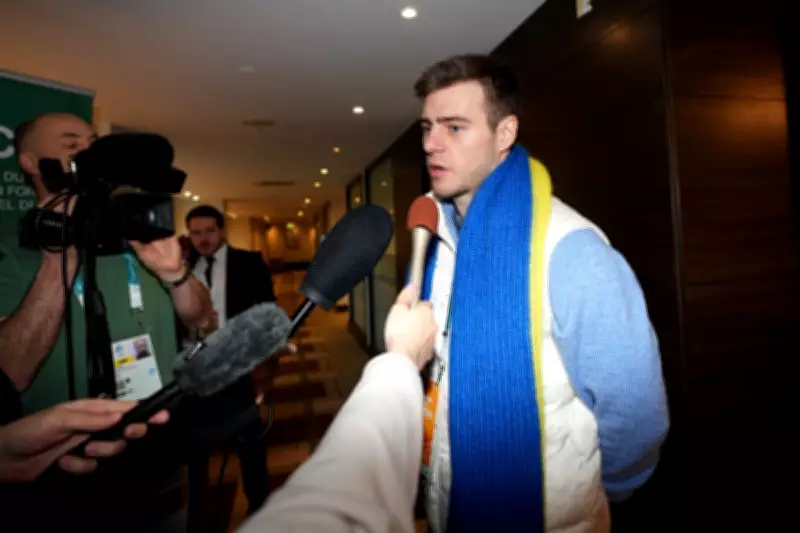
"Looks like this train has left," Heraskevych stated, acknowledging the practical impossibility of racing despite his ongoing legal challenge. He maintained, however, that the hearing before the Court of Arbitration for Sport in Milan, which lasted approximately two and a half hours, remained "worth winning." Draped in a Ukrainian flag, the athlete expressed unwavering confidence in his position, saying: "From Day 1, I told you that I think I'm right. I don't have any regrets."
IOC Defends Decision Amid Emotional Response
The International Olympic Committee and the sport's federation blocked Heraskevych from competing, citing strict rules against bringing personal messaging onto the field of play. IOC President Kirsty Coventry reiterated on Friday that the disqualification was justified, explaining that Olympic guidelines require "the focus on the field of play during competitions and official ceremonies must be on celebrating athletes' performances." Coventry, who revealed the decision moved her to tears, added: "I think that he in some ways understood that but was very committed to his beliefs, which I can respect. But sadly, it doesn't change the rules." The IOC contends such regulations are essential to protect athletes from external political pressures and maintain competitive neutrality.

Logistical Realities Render Return Impossible
Despite the potential for a favourable ruling from CAS later on Friday, Heraskevych's opportunity to compete has irrevocably vanished. He has already departed the Olympic Village in Cortina d'Ampezzo and has no plans to return. The skeleton competition commenced on Thursday morning, shortly after his disqualification, and concludes on Friday evening. Even if CAS were to rule in his favour, the logistical hurdles—including the significant distance between Milan and Cortina and the fact that half the competition had already concluded—would make his participation completely unfeasible.
Athlete Questions Consistency and Impact
Heraskevych expressed bewilderment at the IOC's handling of the situation, stating: "I never expected it to be such a big scandal," and suggesting the Olympic committee amplified the issue by banning what he termed "the memory helmet." He also found it puzzling when his accreditation was briefly revoked then swiftly returned on Thursday, describing the episode as "a mockery." The Ukrainian athlete believes his disqualification was fundamentally unfair and potentially advantageous to Russian propaganda, noting the presence of Russian flags at other Olympic events despite official prohibitions. He has previously criticised the IOC's decision to allow some Russian and Belarusian athletes to compete as "neutral" participants.
IOC Clarifies Distinction in Tribute Cases
Heraskevych questioned perceived inconsistencies in how tributes are treated, citing several examples:
- US figure skater Maxim Naumov displaying a photo of his late parents
- Italian snowboarder Roland Fischnaller featuring a small Russian flag image on his helmet
- Israeli skeleton athlete Jared Firestone wearing a kippah honouring victims of the 1972 Munich Games
The IOC clarified that Naumov's tribute occurred in the kiss-and-cry area rather than during competition, Fischnaller's flag was part of a broader tribute to past Olympic sites, and Firestone's kippah "was covered by a beanie," thus not violating field-of-play rules or the Olympic Charter. The Olympic committee had offered Heraskevych alternative ways to pay tribute, such as wearing a black armband or making his statement in the mixed zone, but not on the field of play during competition.

Historical Judgment and Legal Resolution
Heraskevych concluded with a pointed assessment: "I think it's the wrong side of history for the IOC." CAS director general Matthieu Reeb confirmed the tribunal would endeavour to issue its decision promptly, though the ruling will now primarily address the principle of the matter rather than any practical reinstatement. The case highlights ongoing tensions between athlete expression and Olympic protocol in an increasingly politicised sporting landscape.