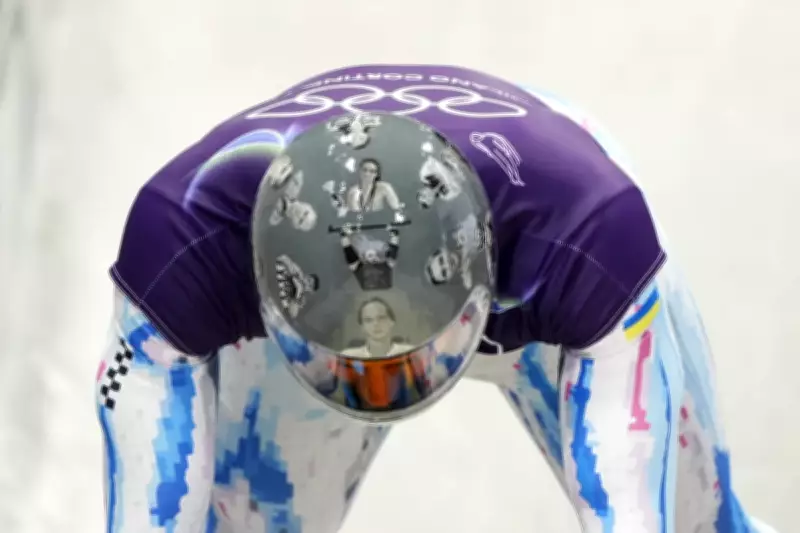
Ukrainian Skeleton Athlete Vows to Wear Banned War Victim Helmet at Winter Olympics
Ukrainian skeleton athlete Vladyslav Heraskevych has defiantly pledged to compete wearing a helmet featuring images of people killed during Russia's invasion of Ukraine, despite the International Olympic Committee ruling it violates regulations against political statements during competition.
Defiance Against IOC Regulations
The International Olympic Committee has determined that Heraskevych's painted helmet, which displays athletes and children who have died since Russia's full-scale invasion began, contravenes rules governing political expressions within the field of play. Instead, officials have offered a compromise allowing the athlete to wear a black armband when his event commences on Thursday.
However, Heraskevych remains resolute in his decision to wear the helmet regardless of potential consequences. "I will not betray these athletes," he declared emphatically. "These athletes sacrificed their lives and because of this sacrifice, I am able to be here, so I will not betray them."

Training Run and Technical Concerns
The Ukrainian competitor wore the controversial helmet during a training run on Wednesday, where he posted the fastest time. Heraskevych argues that his helmet does not actually breach regulations and maintains that he would not have adequate time to adapt to any replacement equipment, even if he were willing to accept one.
IOC spokesperson Mark Adams has insisted that rules will "ultimately be enforced" regarding the matter, but Heraskevych has criticized the organization's handling of the situation, describing it as a "big mess" and suggesting that "if the IOC wants to blame someone, they should blame themselves in the first place."
Criticism of IOC Comments
Heraskevych took particular issue with comments made by Adams during a Tuesday press conference, where the IOC spokesperson acknowledged athletes' desires to remember war victims before adding "it is the same for other conflicts around the world."
"I don't want to downsize any conflicts in the world, but conflicts, we can measure them," Heraskevych responded. "We can measure them by victims, we can measure them by destructions and there's no other conflict which is close to the conflict that we have now in Ukraine. And to say it in so casual a manner, it's very rude, I would say, towards Ukrainians."
Medals Versus Meaning
The Ukrainian athlete admitted that the value of an Olympic medal has diminished for him within the context of the ongoing war. "A medal is always a great achievement for athletes – an Olympic medal is huge," he acknowledged. "My whole life I am training and it was, since my childhood, a big dream. But in this time of full-scale war, some things are really more important than medals."
Heraskevych elaborated further, stating: "At this point, I would say that a medal is worthless in comparison to people's lives and I believe also in comparison to the memory of these athletes."
Ukrainian Government Support
Matvii Bidnyi, Ukraine's sports minister, has urged the International Olympic Committee to reach a "fair decision" regarding Heraskevych's case. "Vladyslav Heraskevych reminded the world of the truth about the price we pay every day for freedom and the will to be Ukrainians," Bidnyi stated.
The minister continued: "We pay with our lives on the front line, in homes without electricity and in cold sports halls. Olympic values teach fairness and integrity – not compromises with one's conscience. We expect the International Olympic Committee to take an honest stance and make fair decisions."
The confrontation between the Ukrainian athlete and Olympic authorities highlights the ongoing tension between sports governance and political expression during international competitions, particularly as conflicts continue to affect participating nations.