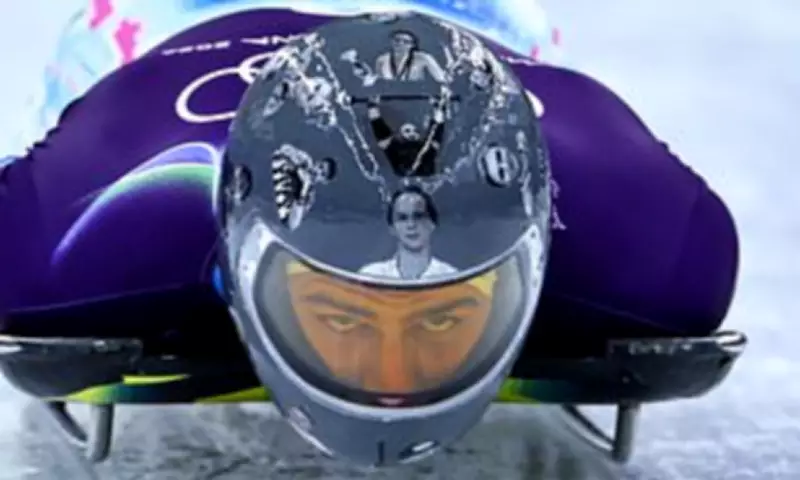
Ukrainian Skeleton Athlete Condemns Olympic Committee Over Helmet Ban
Ukrainian skeleton competitor Vladyslav Heraskevych has launched a fierce condemnation of International Olympic Committee officials, accusing them of profound betrayal following their decision to prohibit him from wearing a distinctive helmet during official training sessions and competitions. The helmet in question features powerful imagery of Ukrainian athletes and sports figures who have tragically lost their lives since the Russian invasion began in February 2022.
Emotional Tribute Deemed Political Statement
Heraskevych, who proudly carried the Ukrainian flag during the opening ceremony last week, had been training with the emotionally charged helmet earlier this week before receiving notification from IOC representatives. The officials visited him at the athletes' village to deliver the difficult news that his tribute violated established Games regulations concerning political statements and demonstrations.
'The IOC has banned the use of my helmet at official training sessions and competitions,' Heraskevych revealed in an emotional Instagram post. 'A decision that simply breaks my heart. The feeling that the IOC is betraying those athletes who were part of the Olympic movement, not allowing them to be honoured on the sports arena where these athletes will never be able to step again.'

Selective Enforcement of Rules Questioned
The Ukrainian athlete expressed particular frustration about what he perceives as inconsistent application of Olympic regulations. 'Despite precedents in modern times and in the past when the IOC allowed such tributes, this time they decided to set special rules just for Ukraine,' he stated pointedly. Heraskevych's helmet serves as a moving memorial to seven individuals from Ukraine's sporting community, including teenage weightlifter Alina Perehudova, boxer Pavlo Ischenko, ice hockey player Oleksiy Loginov, and dancer Daria Kurdel.
Olympic officials cited Rule 50.2 of the Olympic Charter as justification for their decision, which explicitly states: 'No kind of demonstration or political, religious or racial propaganda is permitted in any Olympic sites, venues or other areas.' The Ukrainian delegation has formally appealed against the helmet prohibition, though the IOC has not yet issued any public commentary on the specific case.
Pattern of Peaceful Protest
This incident represents the latest chapter in Heraskevych's history of using Olympic platforms to advocate for peace in his homeland. During the Beijing 2022 Winter Games, just days before Russia launched its full-scale invasion, the 26-year-old athlete famously displayed a 'No War In Ukraine' sign that drew international attention but resulted in no sanctions from Olympic authorities at that time.
Reflecting on that earlier protest, Heraskevych noted the changing landscape: 'Four years ago at the 2022 Olympic Games. Unfortunately, over these years this call for peace has only become even more relevant. Also over these four years, the IOC has changed dramatically.' He contrasted the treatment of his memorial helmet with what he described as visible displays of Russian flags in spectator areas and on other athletes' equipment during current competitions.
Broader Context of Russian Participation
The helmet controversy emerges against a backdrop of increasing scrutiny regarding the IOC's position toward Russian and Belarusian athletes. At these Games, thirteen Russian and seven Belarusian competitors are participating under neutral status, while IOC President Kirsty Coventry has recently suggested that further restrictions against Russian athletes might soon be eased.
This perceived softening toward Russia has drawn criticism from athlete advocacy organizations. Global Athlete published an open letter stating: 'Russia's aggression against Ukraine has only intensified since 2022. The fact that the IOC is easing restrictions against Russia suggests that even under the new presidency of Kirsty Coventry, it remains influenced by the very political forces it claims to stand apart from.'

Heraskevych concluded his public statement with a plea for fairness: 'The truth is on our side. I hope for a fair final decision from the IOC.' The outcome of Ukraine's appeal and the broader implications for athlete expression during international sporting events remain uncertain as the competition continues.