Ukrainian Skeleton Athlete Appeals Olympic Disqualification Over Tribute Helmet
Ukrainian skeleton racer Vladyslav Heraskevych has launched an appeal against his disqualification from the Milan Cortina Winter Olympics, yet he acknowledges that any chance of competing in the Games has definitively ended. Speaking on Friday, Heraskevych expressed that even if the Court of Arbitration for Sport overturns the ban, logistical barriers and the timing of the competition render a return to racing impossible.
Appeal Heard Amidst Emotional Backdrop
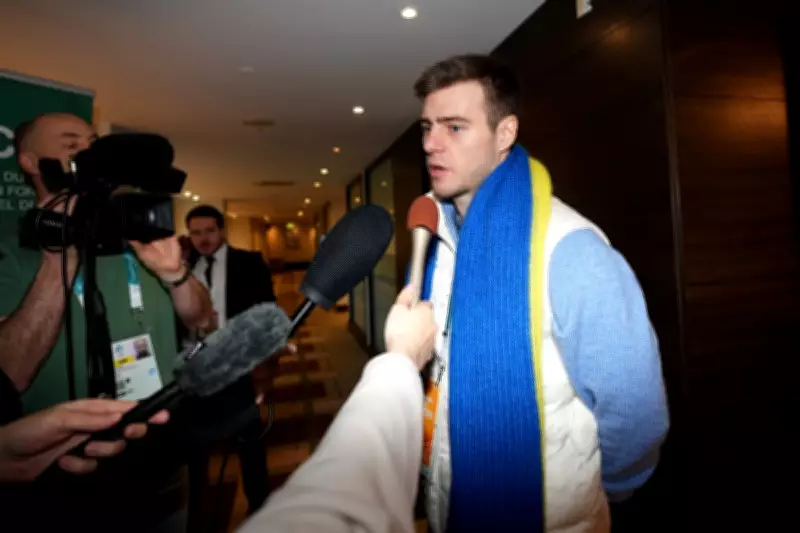
The appeal was heard by the Court of Arbitration for Sport in Milan, with proceedings lasting approximately two and a half hours. Heraskevych, draped in a Ukrainian flag, maintained his stance that he was right to insist on competing with a helmet displaying images of over 20 Ukrainian athletes and coaches killed since Russia's invasion four years ago. "Looks like this train has left," he remarked, referring to his lost Olympic opportunity, but added that winning the appeal remains crucial for principle.
He was disqualified by the International Olympic Committee and his sport's federation for violating guidelines on athlete expression, which state that the focus during competitions must be on athletic performance. Heraskevych trained in the helmet but never reached the official starting line, with the skeleton competition having begun on Thursday and concluding on Friday evening.

IOC Defends Decision Amidst Controversy
IOC President Kirsty Coventry reiterated that the disqualification was justified to prevent political statements on the field of play, a rule designed to protect athletes from external pressures. "I think that he in some ways understood that but was very committed to his beliefs, which I can respect," Coventry said, "But sadly, it doesn't change the rules." She noted that the IOC offered alternatives, such as wearing a different helmet or making tributes in interview areas, but Heraskevych declined.
Heraskevych criticized the IOC's handling, calling it "a mockery" after his accreditation was briefly revoked and then returned. He argued that the ban feeds into Russian propaganda, pointing out that Russian flags have been seen at events despite Olympic rules against them. He also questioned why other tributes, like U.S. figure skater Maxim Naumov's photo of his late parents, were permitted without penalty.
Logistical Hurdles and Future Implications
Even if CAS rules in his favor, Heraskevych has already left the Olympic Village in Cortina d'Ampezzo and has no plans to return. The distance between Milan and Cortina, combined with the competition being half over when his appeal was heard, presents insurmountable logistical challenges. CAS director general Matthieu Reeb indicated a swift ruling is expected, but neither Coventry nor IOC spokesman Mark Adams speculated on the outcome.
Heraskevych concluded, "I think it's the wrong side of history for the IOC," emphasizing his belief that the tribute helmet was a matter of memory and respect. The case highlights ongoing tensions between athlete expression and Olympic regulations, with broader implications for future Games.