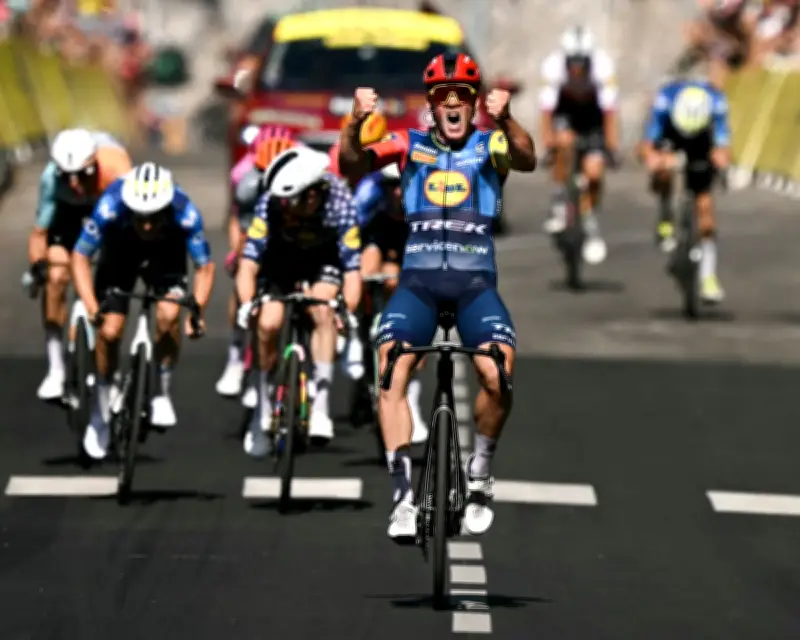
Torstein Træen, a Norwegian rider who survived testicular cancer, seized the yellow jersey in the Tour de France stage four on Tuesday, building an eight-minute lead over four-time champion Tadej Pogacar. The stage, held in 40°C-plus temperatures, saw Mads Pedersen win the sprint into Foix.
Emergency Measures for Extreme Heat
Tour de France organisers implemented emergency measures to combat the crushing heatwave, including extra water bottles and more drinks motorbikes than usual. The UCI and ASO decided to “soften the provisions governing rider feeding in light of the extreme heat forecast over coming stages of the Tour”.
The peloton endured 40°C-plus conditions over 181 gruelling kilometres and four categorised climbs through the Aude and Ariège regions. Pedersen, the former world champion, sped clear to win the sprint into Foix with ease.
Træen’s Remarkable Journey
Træen, 30, was diagnosed with testicular cancer in 2022 after a random doping control showed abnormalities. He underwent immediate surgery and returned to racing later that season with a clean bill of health. After his successful surgery, he posted: “I got 99 problems, but cancer ain’t one of them (any more).”
“Most of all I am grateful to perform at the Tour,” Træen said after taking the maillot jaune. “It’s a pleasure to be here.” Ninth overall in the Vuelta a España last year, he now leads the world’s biggest bike race by almost eight minutes from Pogacar and Jonas Vingegaard, who are on the same time overall.
Rider Reactions to Heat
Pedersen said: “When we go to France or Spain we all know it’s going to be hot and we have a good cooling protocol. I’m pretty sure if it was dangerous or unhealthy there would be no racing.” Træen noted that being in the breakaway made it easier to get drinks, saying, “Sometimes it’s better to be in the breakaway than in the peloton, as it’s easier to get drinks up to you.”
However, the UCI faced criticism for not going far enough. Pascal Chanteur of the professional riders’ union said: “It’s the least worst option. It’s not fixing the problem. When the temperature goes over 40 degrees, the government takes measures to protect the public. The riders are in the population, they’re working outside, exposed to the conditions. We can no longer race in conditions like this.” He called for race start times to be changed from June to September to avoid the most dangerous impacts of climate change.
Historical Context and Future Changes
Heatwaves have long been part of the Tour’s tradition, but that may change. Riders have previously fallen victim to extreme heat, including British former world champion Tom Simpson, who collapsed and died in 1967 due to heat exhaustion and amphetamine use. Since late May, professional racing has been staged in furnace conditions, with increasing numbers of influential figures lobbying for a change to high-summer races.
Jonathan Vaughters, manager of Ben Healy’s EF Education-EasyPost team, said: “This is something that will change racing. Some riders will deal well with it, some won’t. Some teams won’t too.” Richard Plugge, Vingegaard’s manager, said the heat posed a greater threat to spectators than riders, but also suggested that moving stages to significantly earlier start times would lose the Tour’s essential appeal. “People watch it at four or five in the afternoon, as they finish work, after school. If it starts at nine in the morning, they can’t do that.”