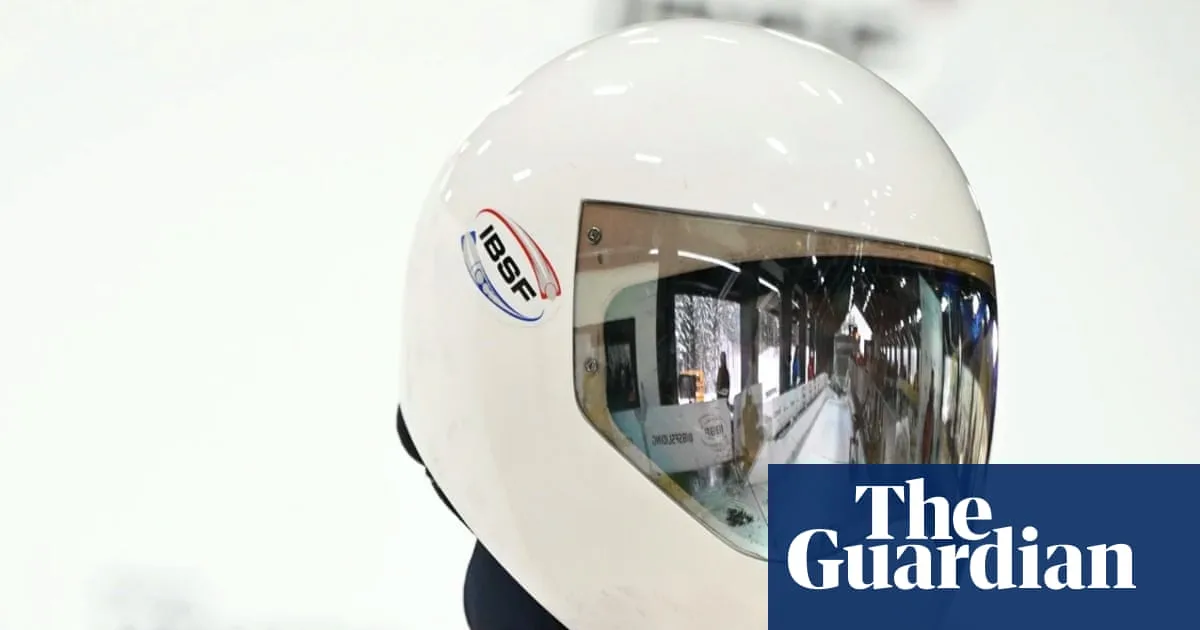
Team GB's Banned Skeleton Helmet Sparks Olympic Controversy
The British Bobsleigh and Skeleton Association faces a significant setback just days before the Milano Cortina 2026 Winter Olympics, as their revolutionary new skeleton helmet has been banned by the International Bobsleigh and Skeleton Federation. The controversial decision has ignited debate about innovation versus regulation in elite winter sports.
The Innovative Design and Sudden Ban
Matt Weston, Britain's top skeleton athlete, has passionately defended the helmet design, calling it "the pinnacle of sliding innovation." The 28-year-old world champion explained that the helmet's aerodynamic ridges represent exactly the kind of marginal gains that national governing bodies constantly pursue in this sport where victories are determined by hundredths of seconds.
However, the International Bobsleigh and Skeleton Federation has prohibited the helmet, claiming its design does not comply with existing sport regulations. This last-minute decision has created uncertainty about whether British athletes will be able to debut their new equipment during Olympic competition.
Team GB's Response and Appeal
The British Bobsleigh and Skeleton Association has lodged an immediate appeal with the Court of Arbitration for Sport to challenge the ban. With competition rapidly approaching in Cortina, the timing of this controversy could hardly be worse for the British team.
"They could have timed this differently," Weston acknowledged, though he remains remarkably philosophical about the situation. "It's not getting in the way of anything. The equipment that I have been using all year is exactly what I can use at the Olympics, and that hasn't gone too badly for me this season."
Weston's Olympic Journey and Confidence
Weston enters his second Olympic Games following a remarkable transformation since his disappointing 15th-place finish at Beijing 2022. In the intervening four years, he has captured two world titles, two European championships, and made history on the World Cup circuit—all achieved while wearing his previous helmet.
"I'm in the best condition that I could possibly be in at the moment, and my sliding is the best that it has ever been," Weston revealed. "There is added pressure and there's a lot of talk around me, so the anxiety of things like that is a bit higher, but my confidence is also higher."
Training Success on the Cortina Track
Despite the helmet controversy, Team GB's skeleton athletes have demonstrated exceptional form during training sessions at the new Cortina Sliding Centre. The venue hosted its maiden World Cup event in November 2025, where Weston immediately claimed gold on the challenging track.
Team GB's Marcus Wyatt provided encouraging news from training: "We slid for the first time [on Wednesday] and the track is in fantastic condition. Already in training, we went quicker than the race in the World Cup." He described the track as "quite tricky" with "really quirky bits at the top," while the bottom section requires flowing, relaxed movement to maximize speed.
Medal Prospects Unaffected by Equipment Controversy
Weston remains bullish about Team GB's medal chances regardless of the helmet decision. "[The helmet] would just be the icing on the cake," he stated, emphasizing that his recent success proves equipment is just one factor in elite performance.
The British team approaches these Olympics with multiple medal contenders in skeleton, and their training performances suggest they have adapted exceptionally well to the Cortina track. While the banned helmet represents a potential innovation advantage, Weston's indifferent attitude suggests confidence runs deeper than equipment specifications.
As the Olympic competition approaches, all eyes will be on whether the Court of Arbitration for Sport overturns the ban, and whether Team GB can convert their strong form into podium finishes in what promises to be one of the most competitive skeleton events in Winter Olympic history.