Jordan Stolz Dominates 500m Final with Olympic Record at Milano Cortina Games
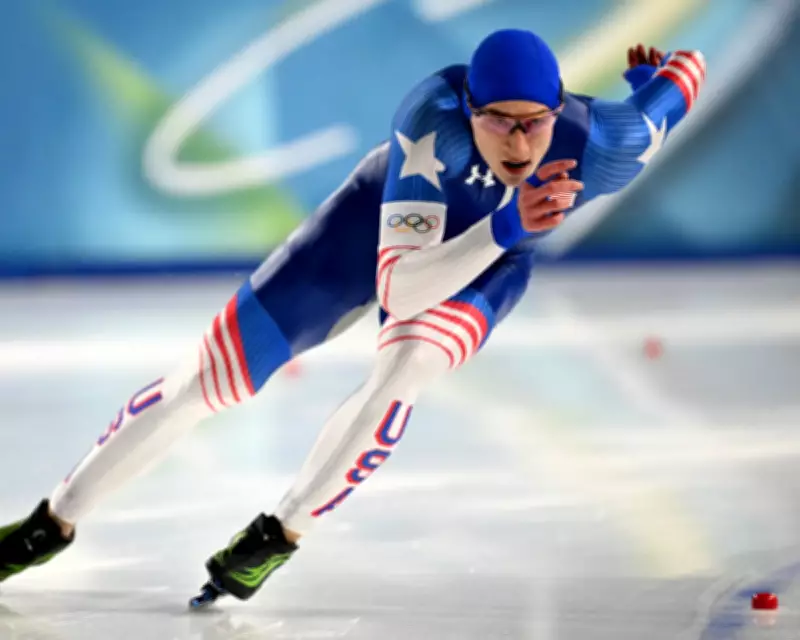
In a stunning display of speed and precision, American speed skating sensation Jordan Stolz continued his quest for four gold medals at the Milano Cortina Olympics by winning the men's 500m final on Saturday. The 21-year-old star shattered the Olympic record with a time of 33.77 seconds, securing his second gold of the Games and solidifying his status as a defining figure in these Winter Olympics.
Historic Podium Performance in Unforgiving Sprint Event
The men's 500m is widely regarded as one of the most challenging events in speed skating, requiring athletes to deliver peak performance over just one and a quarter laps with no room for error. Stolz mastered this unforgiving race at a temporary venue in Milan's western suburbs, where he not only set a new Olympic benchmark but also led a podium where all medalists finished below the previous record. The Netherlands' Jenning de Boo took silver in 33.88 seconds, while Canada's Laurent Dubreuil claimed bronze in 34.26 seconds.
This victory marks Stolz's second gold and second Olympic record in as many races at the Milano Cortina Games, following his earlier triumph in the 1000m. His winning margin of 0.11 seconds represents the largest gap in an Olympic 500m since 1988, underscoring his dominance in a discipline often decided by hundredths of a second.

Technical Mastery and Strategic Execution
Stolz's success in the 500m was not achieved through a single dominant phase but through a balanced combination of elite skills. He executed a flawless start, maintained near-perfect mechanics through the first corner, and preserved exceptional speed down the back straight. In modern sprint skating, where aerodynamic drag and ice friction penalize even minor inefficiencies, such phase-to-phase consistency is rare and crucial for victory.
Skating in the third-to-last heat of 15, Stolz faced off against De Boo, who had ended his two-year world title reign in the 500m last March. This marquee matchup demanded immediate perfection, and Stolz delivered, showcasing the technical stability that has characterized his rapid rise in the sport.
Building on a Meteoric Trajectory
Stolz's performance builds on the momentum from his 1000m gold earlier in the week, where he won by the largest Olympic margin at that distance since 1984. His journey since the Beijing Olympics has been remarkable; at 17, he finished 13th in the 500m and 14th in the 1000m, but four years later, he is dictating the competitive narrative in long-track speed skating.
Raised in Kewaskum, Wisconsin, and trained at the Pettit National Ice Center in Milwaukee, Stolz approaches speed skating as a systems problem, focusing on blade setup, ice density, and aerodynamic efficiency to gain what he terms "free speed." The fast conditions at the Milan track have complemented this mindset, contributing to some of the quickest times in Olympic history.
Historical Context and Future Prospects
With this win, Stolz joins American legend Eric Heiden, who was in attendance on Saturday, as only the second man to complete the Olympic 500m-1000m double. Heiden holds the men's record for most speed skating gold medals at a single Olympics with five from Lake Placid in 1980, a benchmark that now looms as a potential target for Stolz.
The Olympic schedule now shifts to Thursday's 1500m, where Stolz could become the second American to win three gold medals at a single Winter Olympics. The mass start event follows later in the program, offering further opportunities for medal success. The last man to win three speed skating golds at a Winter Games was Norway's Johann Olav Koss in 1994, adding another historical milestone within Stolz's reach.
By conquering the 500m, considered the toughest of his individual events, Stolz has removed a major threat to his campaign. With two gold medals already secured and records falling around him, the possibility of a historic Olympic medal haul is unfolding in real time, captivating fans and redefining expectations for speed skating at the Milano Cortina Games.