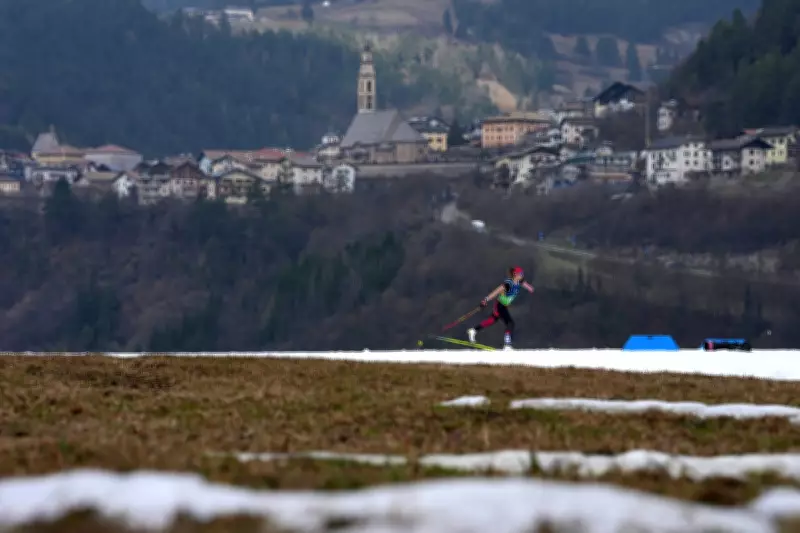
Paralympians Ski in Summer Attire as Warm Weather Fuels Debate Over Timing
At this month's Milan Cortina Paralympics, a striking sight has emerged: athletes competing in shorts, T-shirts, and even tank tops on the slopes. The unseasonably warm conditions have prompted some participants to question whether the Games should be held earlier in the year when colder weather is more reliable.
"Tropical" Conditions and Safety Concerns
One skier described the environment as "tropical," while a snowboarder complained that soft, slow snow put him at a competitive disadvantage. Beyond performance issues, safety has become a paramount worry.
"I'm here to represent the disability community on a snowboard, and I want to give the best show that I can," said three-time Paralympic gold medalist Brenna Huckaby of the United States. "But I'm not going to kill myself in the process. I've got two kids at home, and I'm already disabled. I'm not trying to disable myself more."

Calls for Schedule Changes
The warm weather throughout the Paralympics, which concluded on Sunday, has led athletes to advocate for moving the event to earlier in the winter season. "If it were my decision, I would absolutely move the Olympics and Paralympics," stated American Para snowboarder Zach Miller.
Miller, who finished sixth in the snowboard cross finals, explained that lighter riders like himself struggle to maintain momentum in softer snow. He expressed frustration that the conditions detract from showcasing the sport's true nature.
Climate Change's Impact on Winter Sports
Shel Winkley, a meteorologist at Climate Central, noted that the early March warmth would be "almost impossible" without the influence of climate change. Researchers warn that locations capable of reliably hosting a Winter Games will diminish due to global warming.
The International Olympic Committee is considering rotating the Games among a permanent pool of suitable venues and scheduling them earlier, as March becomes increasingly warm for Paralympic events. The International Paralympic Committee is collaborating with the IOC to evaluate potential date changes.
Safety Risks for Para Athletes
Medical professionals highlight that changing weather conditions pose greater challenges for Para athletes. Dr. Jaap Stomphorst, a sports physician at Isala hospital in the Netherlands, emphasized that poor snow quality significantly increases injury and accident rates among Paralympians.
For instance, sit-ski racers require excellent snow for safe descents, as they cannot adjust for ruts by shifting their weight. Similarly, visually impaired skiers face heightened risks from bumps on the course.
Organizational Adjustments and Athlete Adaptations
Organizers cancelled training sessions for skiing and snowboarding to preserve course integrity and safety. Some race starts were rescheduled to earlier times or different days to mitigate weather effects, including forecasted rain.
Despite the challenges, athletes praised efforts to maintain decent course conditions. "We're making it work, but it's not ideal," remarked American Para Alpine skier Andrew Haraghey. "I think it's as safe as it's going to be. People are pushing the limits."
Looking Ahead
Craig Spence, the IPC's chief brand and communications officer, acknowledged the long-term issue, stating, "Clearly climate change is not going to go away. We're very conscious of its impact on not just winter sports, but also summer sports."
As temperatures continue to rise at Paralympic Winter Games, the conversation around adapting schedules and locations gains urgency, ensuring both athlete safety and the future of winter sports for athletes with disabilities.