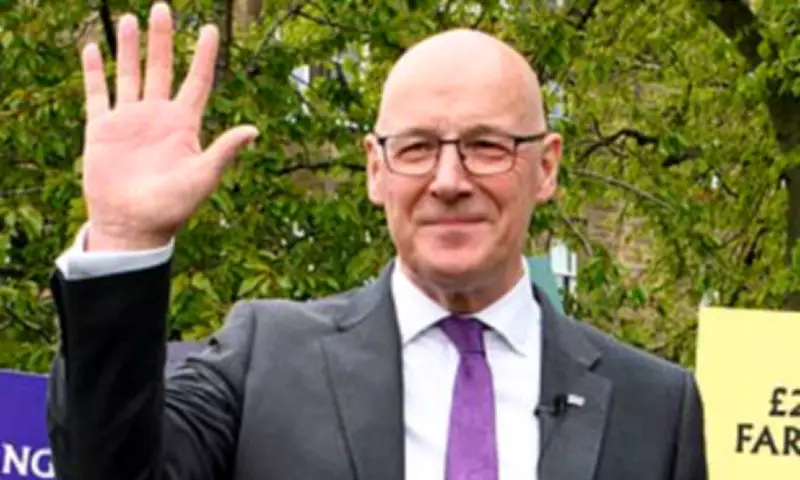
John Swinney’s call for another independence referendum following last week’s Holyrood election has been rejected by the UK Government. Labour ministers said yesterday that their position ‘remains exactly the same’ and that they will not support another vote on Scotland’s place in the UK.
The UK Government urged the SNP to focus on ‘delivery, not division’ and on efforts to boost the economy and tackle the cost of living crisis. It follows Mr Swinney’s claim that he had secured a ‘pro-independence mandate’ despite falling short of the SNP majority which he previously said was needed to force another referendum.
Political Reactions
Labour MP Catherine West launched a stalking horse threat to force the prime minister out of office. SNP minister Mairi McAllan raised the threat of more taxes on hard working Scots. Scottish Labour leader Anas Sarwar vowed to stay on and ‘hold his party together’ following his Holyrood election humiliation. Two senior SNP figures defended the demand for another vote and denied that their party had shifted the goalposts on a mandate.

UK Government Statement
Asked about Mr Swinney’s claim that he has secured another mandate for an independence referendum, a UK Government spokesman said: ‘Our position remains exactly the same — we have been clear that we do not support independence or another referendum. In 2014, the people of Scotland made a clear and democratic choice to remain part of the United Kingdom. John Swinney claimed at the weekend that the addition of 15 Green MSPs means there is a ‘pro-independence mandate’. People need and want their governments focused on the issues that really matter — economic growth, the cost of living, and public services. Our focus must be on delivery, not division.’
The power to hold an independence referendum is reserved to Westminster under the Scotland Act. After the SNP won a majority in its landslide election victory in 2011, then Prime Minister David Cameron agreed to a ‘section 30 order’ giving the SNP Government the power to hold a one-off independence referendum in 2014.
Election Results and Mandate Claims
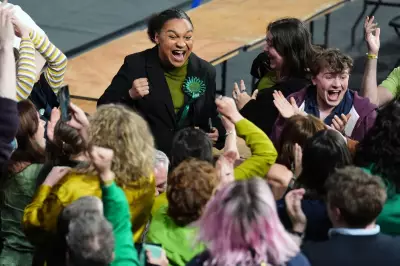
Throughout the Holyrood election campaign, Mr Swinney said he needed to secure an SNP majority to force another independence referendum. After the results were counted following last Thursday’s Holyrood election, the SNP won 58 seats – seven short of a majority. Despite this, Mr Swinney claimed at the weekend that the addition of 15 Green MSPs means there is a ‘pro-independence mandate’. Only 40.5 per cent of votes cast in the constituency ballot went to the SNP or the Greens, and 41.2 per cent of those on the regional list.
SNP Figures Defend Position
SNP Westminster leader Stephen Flynn, who was elected to Holyrood last week in the Aberdeen Deeside and North Kincardine constituency, told the Sunday Morning With Trevor Phillips programme on Sky News: ‘I think it’s perfectly reasonable based upon the result of the election where, as you’ve quite rightly highlighted, we now have more pro-independent MSPs coming into Holyrood than ever before, to make clear to Westminster that the people of Scotland should have the chance and the opportunity to decide their own future. To look at broken Brexit Britain or look at a hopeful, aspirational, independent Scotland, which can grow its economy, use its energy wealth to the benefit of the people who live here, and be a prosperous place for our young people.’
He highlighted nationalist leaders in Wales and Northern Ireland, and said: ‘The constitutional landscape within the UK has been shattered and it is time for Westminster to wake up to the reality that they now face.’

Asked on the BBC’s The Sunday Show if Mr Swinney had ‘shifted the goalposts’ on the mandate for a referendum, Housing Secretary Mairi McAllan said: ‘Well, look, that’s democracy isn’t it? We absolutely did believe and put forward, and continue to believe, that an SNP majority is the quickest and most effective way to break the logjam and the impasse that we’re in as a country. The people of Scotland went to the polls, they did not return an SNP majority. What they have returned is the single largest pro-independence majority across the parliament that we’ve ever had. I tend to believe that when people go to the polls and make their voices heard, that is democracy. It must be respected and anyone who does not believe that has to explain why.’
She dismissed the fact that a minority of voters backed pro-independence and cited that it is ‘the largest ever pro-independence majority’. The 33-year-old, who is tipped as a contender to become Deputy First Minister when Mr Swinney unveils his new Cabinet, also faced ridicule for citing Margaret Thatcher’s poll tax – introduced four years before she was born – as a reason for independence.
Asked about Mr Swinney now citing the prospect of Nigel Farage entering Downing Street as a trigger for independence after the SNP previously arguing the same about Boris Johnson as Prime Minister and Brexit, she said: ‘All those things are. We could cast our minds back to Thatcher’s poll tax and work our way forward and point to all the ways that the democratic deficit in Scotland has made life more difficult and held us back. But the prospect of Nigel Farage, I think, is something that will have a particular resonance for people in Scotland because they can see how damaging that would be for minorities, for our NHS – which he has said he wants to privatise – and for the Scottish Parliament, which I understand he wants to see abolished.’
Conservative Response
Scottish Conservative deputy leader Rachael Hamilton said: ‘Mairi McAllan and Stephen Flynn were defending the indefensible - and proving once again that the SNP only care about breaking up the UK. John Swinney was clear during the election that achieving a majority was his “mandate” for another referendum. He failed to achieve that, yet within 24 hours he brazenly shifted the goalposts. McAllan and Flynn’s attempt to justify a push for another divisive referendum shows their utter contempt for voters. The Scottish Conservatives are the only party that can be trusted to oppose the SNP’s relentless obsession with independence and hold them to account for ignoring the real priorities of the Scottish people.’