Kirsty Muir's Olympic Agony: A Second Fourth-Place Finish in Livigno
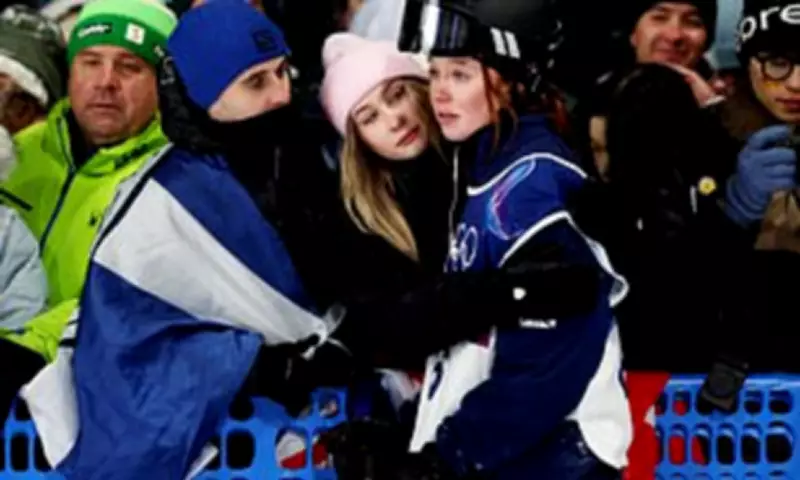
Standing motionless amidst the swirling blizzards of Livigno, a 21-year-old Scottish athlete was left to grapple with a crushing sense of déjà vu. For the second time in just eight days, Kirsty Muir had missed out on an Olympic medal by the narrowest of margins. The emotional toll of this brutal repetition will likely take considerable time to process fully.
A Painful Pattern of Fourth-Place Finishes
Team GB's most promising freestyle skier mirrored her fourth-place result from the slopestyle competition last Monday with another heartbreaking fourth in the Big Air event. The outcome was sealed with a dramatic crash during her final jump—a high-risk, high-reward maneuver that ultimately proved her undoing. The question lingers: is there any more agonizing position in sport than fourth place at the Olympics?
Muir now possesses unfortunate expertise on this subject, having finished behind gold medalist Megan Oldham of Canada, China's celebrated Eileen Gu, and world champion Flora Tabanelli of Italy. Remarkably, Tabanelli achieved her podium position despite having torn the cruciate ligament in her right knee merely four months prior to competition.

The Dramatic Finale That Decided Everything
The path to Muir's disappointment unfolded with intense theatricality. With only four jumpers remaining in the third and final round—herself included—the Scottish athlete was positioned for bronze. Then came Tabanelli's turn. The 18-year-old local, who trains regularly at Livigno's premier snow park, delivered what would become the highest score of the entire evening: an astonishing 94.25 points.
This phenomenal performance presented Muir with a simple yet devilish equation: she needed approximately 92 points on her final attempt to reclaim the medal position. Soaring high into the snowy Italian sky, she attempted a trick she had never successfully landed in competition before. The gamble ended with her touching down on her backside, failing to improve her score, and ultimately missing the podium by a mere 3.5 points.
Muir's Emotional Response to the Bittersweet Outcome
"I'm a bit up and down at the moment," Muir confessed afterward. "I'm not really sure how to feel. I put it all out there so I'm really proud of that. On the third run I went for a trick I haven't landed before and gave it my all and I'm taking that with me."
"At that point, I had to go for it and I'm stoked that I tried it. It's really bittersweet. I came into this competition today feeling really grateful and I think I'm still at that point."
Just as occurred following her slopestyle disappointment, tears flowed freely—a poignant reminder that the Olympic arena can be both breathtakingly beautiful and profoundly cruel in equal measure.
The Technical Breakdown of Muir's Performance
In this instance, the margin separating Muir from a medal was exceptionally subtle. Unlike her slopestyle performance where she fell below her personal standards, this Big Air competition saw her edged out by the superior quality of three exceptional competitors. The challenge began with a sluggish start during a first round that was delayed by 75 minutes due to severe snowstorms.
Employing a conservative approach relative to her rivals, Muir scored 81.75 points initially, placing her eighth in the standings. She immediately faced pressure from impressive scores by Lara Wolf (93.5), Oldham (91.75), Gu, and Tabanelli (both 90).
The second jump carried enormous significance, and Muir responded magnificently. Executing a spectacular corkscrew maneuver featuring four and a half rotations with a reverse landing, the judges awarded her 93 points—suddenly propelling her into second place behind Oldham alone. The transformation was visible; in local parlance, she appeared genuinely stoked. The competition was truly alive.
Yet her rivals refused to yield. First, defending champion Gu surpassed her score, followed by Tabanelli's exceptional performance. When Muir's final turn arrived, she launched herself high and ambitious once more, only to descend to that familiar, painful position: fourth place.

This dual fourth-place finish at the Winter Olympics represents both a testament to Muir's elite consistency and a heartbreaking narrative of what might have been. As the snow settles in Livigno, the young Scot will carry forward the pride of her courageous attempts alongside the acute disappointment of coming so tantalizingly close to Olympic glory.