Dave Ryding's Olympic Farewell: A Unique British Skiing Legacy
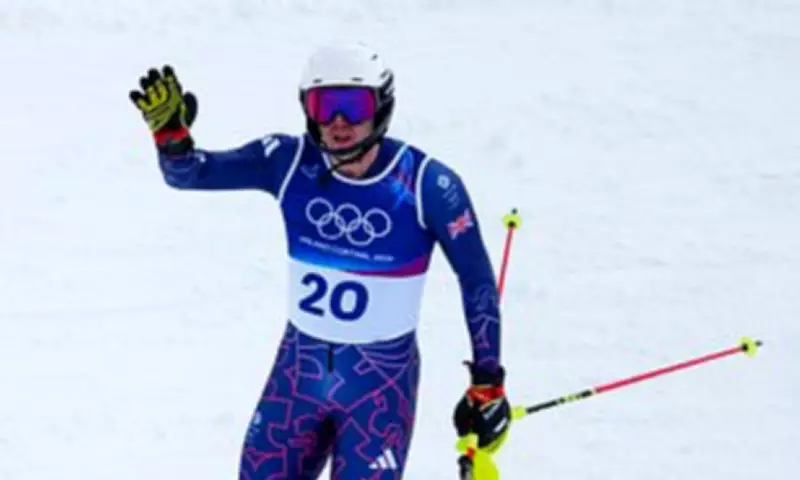
At precisely 1:52 PM on Monday, Dave Ryding completed his fifth and final Olympic appearance. In the slalom event's running order, he crossed the finish line momentarily holding the gold medal position, allowing him to conclude his career with a gracious bow to the grandstand, which was predominantly filled with Italian spectators.
A Moment of Triumph Amidst Shifting Results
Judging by the enthusiastic roar from the crowd, it ultimately did not matter that Ryding dropped to silver position within three minutes, then to bronze within six, and finally settled at 17th place when the competition concluded an hour later. As four-time Olympian Chemmy Alcott explained moments before Ryding's second run, "Anywhere you go in places that follow this sport, Dave is everyone's second favourite skier."
Alcott, who competed for Team GB in four Winter Games, possesses unique insight into British skiing's challenges. She understands better than most that no athlete from the British Isles has accomplished what Ryding has achieved on skis.

The Respect of Alpine Nations
While Ryding concludes his career at age 39 without the ultimate prize of Olympic gold—unlike British contemporaries Matt Weston, Tabitha Stoecker, Charlotte Bankes, and Huw Nightingale from these Games—he departs with something equally significant: the utmost respect from skiing powerhouses Switzerland, Norway, and Austria.
"That respect is a challenging thing for a British athlete to achieve," Alcott noted. "I remember at the beginning, people would say to me, 'Are you the Eddie the Eagle of skiing?' Eddie is great, but I don't think people say things like that now and it's because of what Dave's done."
An Improbable Journey from Lancashire
Ryding's story represents a remarkable sporting narrative. Unlike many elite skiers, he was not born into wealth in mountainous regions. His mother worked as a hairdresser, his father as a market trader selling ladies' underwear, and the family resided in Lancashire—far from snowy slopes.
The family's passion for skiing initiated Ryding's journey on a dry slope in Pendle. He did not train on genuine snow until age 13. For perspective, Switzerland's Loic Meillard, who claimed gold on Monday, began skiing at just two years old.
Perseverance Against the Odds
Ryding persevered despite financial constraints for equipment and travel. A telling anecdote from his long-time associate illustrates his determination: during his professional breakthrough at the 2013 Europa Cup, Swedish competitors were astonished to see Ryding waxing his own skis the night before the race. Their athlete had a team of ski technicians yet lost to Ryding, who gradually earned respect from Nordic and Scandinavian nations.
Ryding himself acknowledged hearing comparisons to Eddie the Eagle early in his career. Initially, fellow competitors admired his perseverance, then his growing success. Top-20 finishes evolved into top-10s, then top-fives. His first World Cup podium on Kitzbuhel's iconic slopes in 2017 marked Britain's first skiing podium since 1981.
A Career of Milestones
Five years later, Ryding secured a World Cup gold medal, eventually accumulating seven top-three finishes. This raises an intriguing question: what carries greater weight—gold in niche sports where geographical disadvantages can be mitigated through investment and technology, or reaching the pinnacle in a sport where birthplace and funding genuinely determine success?
Ryding possessed neither geographical advantage nor substantial funding. He also leaves without an Olympic medal, his best Games finish being ninth place in slalom—though ninth in slalom differs significantly from ninth in skeleton events like those contested by some British teammates.
A Satisfied Champion
Characteristically modest, Ryding never framed his achievements in comparative terms. At career's end, he expressed contentment with his accomplishments. "I have no regrets," he stated. "I gave it my all until the last gate and I think that's the sort of representation of my career. I know my story was totally unique."

He reflected further: "I did it a totally different way and you probably say it was a one in a million shot. But I proved that you can do it." Dave Ryding's legacy extends beyond medals—it demonstrates that improbable dreams can become reality through unwavering dedication.