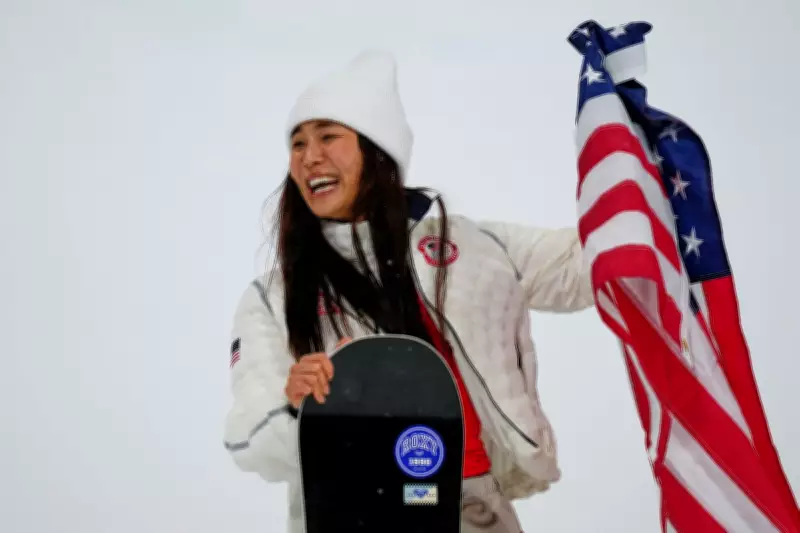
Chloe Kim's Olympic Halfpipe Loss Sparks Debate on Judging Fairness
Chloe Kim remained silent on the matter, but her narrow defeat to Gaon Choi in the Olympic halfpipe has ignited a significant debate over judging decisions in snowboarding. The new silver medalist expressed genuine happiness for her competitor, yet the razor-thin margin of victory has raised questions about the subjective nature of scoring in what is often considered the most relaxed of judged Winter Olympic sports.
The Core of the Controversy: Difficulty Versus Execution
At the heart of the discussion is the fact that Chloe Kim successfully landed the double-cork 1080, widely regarded as the hardest trick in snowboarding, while Gaon Choi did not attempt it. Todd Richards, a former Olympic snowboarder and NBC commentator, highlighted this point, noting that the risks associated with Kim's trick are substantially higher than those of Choi's switch-backside 900. Richards elaborated on Instagram, where his analysis garnered over 100 responses, including insights from insiders like 1998 bronze medalist Shannon Dunn-Downing, who described the runs as a toss-up.
Despite this, the result falls short of a full-blown controversy, unlike recent incidents in figure skating where biased judging has been more apparent. Gaon Choi's winning run was praised for its beauty, difficult spins, and varied approaches, whereas Kim's performance, though featuring two upside-down maneuvers, lacked the switch-backside 9 that is considered one of the toughest directions in the sport.

How Halfpipe Judging Works: A Matter of Feel and Ranking
In halfpipe scoring, judges do not assign specific points or deductions for individual tricks. Instead, they evaluate the entire package, considering factors such as jump height—Choi's biggest air was about eight inches higher than Kim's—difficulty, variety, aesthetics, and an element called progression, which rewards athletes for innovation in trick combinations. Scores range from 1 to 100, but they are not simply additive; rather, they aim to rank runs relative to each other. For instance, a perfect 100 is rarely given early to allow room for potentially better performances later.
Chloe Kim scored 88 on her first run but fell on her subsequent attempts, including after Choi's winning score of 90.25. Richards suggested that if Kim had delivered her 88-point run later in the competition, she might have taken the lead, illustrating how top riders are often judged against their own standards.
The Ongoing Debate: Style Versus Flipping in Snowboarding
This event has reignited the long-standing debate in snowboarding over whether priority should be given to jumping and flipping or to spins, backward riding, and stylistic grabs. A glimpse into the judges' perspective can be seen in the close call between third and fourth place, where Japan's Sara Shimizu, the only other rider besides Kim to land a double cork in a complete run, finished just one point behind teammate Mitsuki Ono for bronze.
The discussion is expected to extend into the men's contest, where Scotty James's technical prowess will be weighed against the sport's growing obsession with triple corks. In the women's event, the judging panel did not automatically award the title to the rider with the most flips, emphasizing a balanced approach. Ultimately, Kim expressed contentment with the outcome, and no complaints were heard, reflecting the sport's generally non-cutthroat ethos.
The International Ski Federation, which oversees the competition, declined to facilitate media access to the judges, leaving many questions unanswered. As snowboarding continues to evolve, the balance between difficulty and style remains a pivotal and subjective element in Olympic judging.