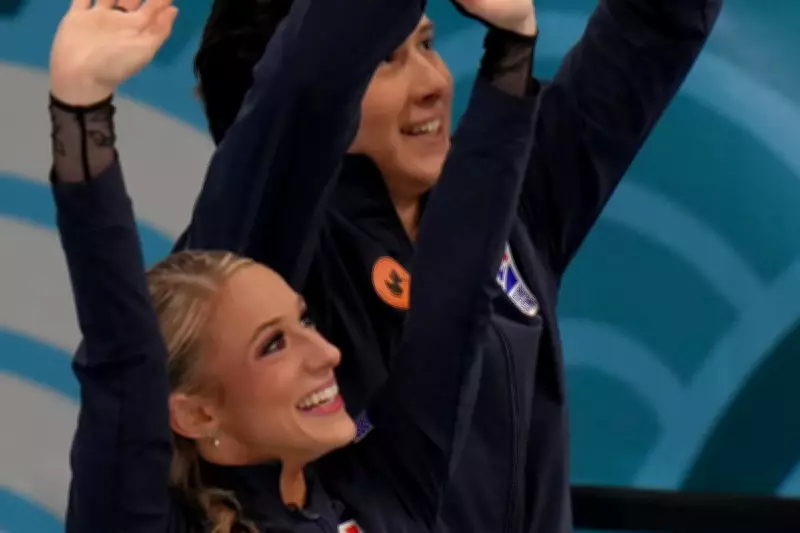
The path from Montreal to Milan has been a defining journey for figure skater Christina Carreira, culminating in her recent attainment of US citizenship just in time for the Winter Olympics. The International Olympic Committee mandates that athletes must hold citizenship of the nation they represent, a rule that has shaped Carreira's career and personal life over many years.
A Familiar Face at the Border
Christina Carreira became so well-known to border officials at the Blue Water Bridge, connecting Port Huron in Northern Michigan with Sarnia, Canada, that they would greet her by name and inquire about her training progress. These frequent crossings were part of her daily commute from Port Huron to her training base in London, Ontario, alongside her long-time ice dance partner, Anthony Ponomarenko.
"Most of them were very friendly," Carreira recalls, reflecting on the countless trips that became a routine part of her life as she balanced her athletic ambitions with the bureaucratic hurdles of immigration.

The Long Road to Citizenship
In November, after years of paperwork and dedication, Carreira's efforts paid off when she officially became a US citizen, having been born in Montreal. This milestone cleared the way for her to compete for the United States at the upcoming Winter Games in Milan Cortina.
"The process of becoming an American was pretty tough, and it took forever," Carreira admits. "It was very, very stressful." Her experience underscores the challenges faced by athletes seeking to represent the US, where expedited citizenship through sports migration is rare compared to other nations.
Contrasting Cases in Figure Skating
While Carreira succeeded, not all athletes are as fortunate. Pairs skater Alisa Efimova, despite support from US Figure Skating and political figures, was unable to secure her passport in time for the Olympics, a significant blow to the US team as she and her partner are reigning national champions.
"We were waiting for a last-minute miracle to make it happen," says Misha Mitrofanov, Efimova's partner, highlighting the precarious nature of such citizenship processes.
In contrast, other skaters have navigated nationality switches more smoothly. For instance, Laurence Fournier Beaudry, also born in Montreal, obtained French citizenship within eight months to partner with Guillaume Cizeron, with IOC approval following swiftly. This reflects a broader trend in figure skating, where athletes like Anastasia Golubeva, Olga Mikutina, and Deanna Stellato-Dudek represent countries different from their birthplaces.
Daily Dedication and Personal Sacrifices
To ensure her application was flawless, Carreira avoided staying in Canada for extended periods, instead making the two-hour drive each way daily, regardless of bridge closures or roadworks. "I would listen to podcasts. I'd listen to music. I'm a huge 'Dance Moms' fan," she shares with a laugh, finding small comforts in the grueling routine.
Her commitment mirrors that of other athletes, such as Vadym Kolesnik, a Ukrainian-born ice dancer who gained US citizenship last summer after nearly a decade in the country. "I have a car. I have a house. I have a dog. I feel very honored to represent the U.S. at such a high level," Kolesnik expresses, embodying what his partner Emilea Zingas calls "the American dream."
Geopolitical Context and Olympic Reception
Carreira and Kolesnik acknowledge that their citizenship achievements come during a complex geopolitical era, with actions like those of the Trump administration affecting international perceptions. As they prepare to perform at the Milano Ice Skating Arena, there is uncertainty about how they will be received by global audiences.
Nevertheless, Carreira remains steadfast: "No matter what, it's an honor for me to represent the U.S. I've lived here for half of my life. I really consider it my home." This sentiment captures the profound personal and professional significance of her journey, from border crossings to Olympic dreams.