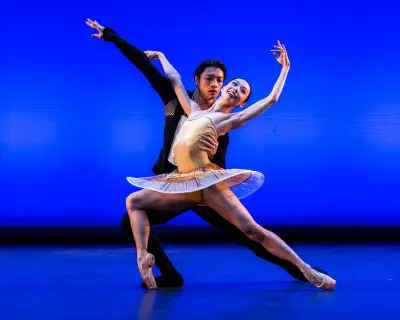
Milano Cortina 2026 Opening Ceremony Breaks Tradition with Multi-Venue Spectacle
The opening ceremony for the 2026 Winter Olympics in Milano Cortina has redefined the concept of Olympic pageantry by staging an event that unfolded simultaneously across four distinct Italian venues. This groundbreaking approach transformed the traditional single-stadium spectacle into a geographically dispersed narrative, linking Milan, Cortina, Livigno, and Predazzo into a cohesive and innovative broadcast experience.
A Ceremony Stretched Across Half a Country
The most remarkable aspect of the opening ceremony was not any individual prop, celebrity appearance, or choreographic sequence, but rather its unprecedented geographical scope. For the first time in Olympic history, an opening ceremony effectively occurred across multiple live venues concurrently, with each location contributing to a unified narrative structure. This created a sensation less akin to watching a show within a stadium and more like observing an entire nation performing itself in real time.
The organizing principle of "Armonia" – the idea that diverse elements can move in concert without sacrificing their individual identities – served as more than mere branding; it fundamentally shaped the ceremony's execution. Spectators at Milan's San Siro stadium were continually aware that, at any given moment, another chapter of the story was unfolding elsewhere. This innovative format generated a unique sense of scale, simultaneously intimate and enormous.

In an era where global attention is fragmented across countless screens and digital platforms, Italy presented a powerful counterpoint: a ceremony built upon the principles of simultaneity, connection, and shared rhythm.
A Tapestry of Four Intimate Ceremonies
Departing from the traditional, slow-motion parade of nations within a single stadium – often an emotional endurance test – the athlete procession was deliberately fragmented. Ice athletes were featured in Milan, freestyle and snowboard athletes in Livigno, Nordic athletes in Predazzo, and sliding and biathlon athletes in Cortina.
This logistical decision minimized travel burdens while fundamentally altering the event's emotional rhythm. While it sacrificed the gradual, building crescendo of delegations marching into a unified space, it gained a more intimate and contemporary feel, reminiscent of watching four distinct opening ceremonies seamlessly woven into a single broadcast.
The execution felt unmistakably Italian, with visual design heavily emphasizing aesthetics. Banners were styled to resemble blocks of ice, and team uniforms drew as much from fashion logic as from sporting tradition. The result was less a traditional "march of nations" and more a carefully curated visual sequence. It may have lacked the overwhelming, wall-of-flags impact of a consolidated stadium parade, but it arguably offered a portrayal closer to the modern reality of global sport: distributed, simultaneous, and networked.
Parade Delivers a Major Fashion Statement
The Olympics consistently deliver two distinct pleasures: the sudden, dopamine-fueled interest in obscure sports and the spectacle of athletes showcasing national kits that double as instruments of soft power. During Friday night's ceremony, the latter was palpable.
Italy's team elicited one of the loudest reactions, their snow-white EA7 Emporio Armani uniforms – among the final projects associated with the late Giorgio Armani, who passed away in September aged 91 – gleaming under the stadium floodlights. The United States delegation followed in Ralph Lauren's polished interpretation of winter Americana, featuring flag knits and winter whites that were instantly recognizable.
Mongolia's opening ceremony attire, designed by Goyol Cashmere, became a major topic of conversation, featuring heavy ceremonial silhouettes rooted in traditional deels, complete with fur trim, prioritizing historic resonance over technical specifications. Haiti's Stella Jean-designed uniforms also sparked considerable curiosity and discussion. The original concept featured revolutionary leader Toussaint Louverture, but Olympic regulations prohibiting political symbolism necessitated a redesign centered on his galloping horse.

This marks the second consecutive Olympics hosted in a global fashion capital, and brands are not retreating from the exceptionally high standard set at the Paris Summer Games two years prior.
Olympic Unity Collides with Real-World Politics
Quiet concerns had circulated throughout the week that the American delegation – or the politicians accompanying it – might face a hostile reception. Reports of US security analysts linked to Immigration and Customs Enforcement operating around the Games intersected with broader tensions regarding Washington's foreign policy stance.
For much of Friday evening, these fears appeared exaggerated. The American athletes received a full-throated, enthusiastic welcome as the sizable delegation entered San Siro, a roar typically reserved for medal favorites and host nations. However, moments later, a routine television cutaway to US Vice-President JD Vance and Second Lady Usha Vance prompted an unmistakable wave of boos from large sections of the crowd.
The shot lasted barely three seconds before the broadcast returned to the athletes, but it was sufficient to noticeably shift the atmosphere inside the stadium. Earlier, a smattering of boos had met Israel's four representatives, occurring amid calls from some quarters for Israel's exclusion from the Games due to the Gaza conflict following Hamas's deadly October 2023 attack. The Olympics promote a promise of global unity. For a brief moment, the crowd's reaction suggested a degree of skepticism.
Peaceful Protests Echo Through the Streets
A few blocks away from the meticulously choreographed ceremony, a different kind of assembly was taking shape. In a square near San Siro, several hundred demonstrators – including public-housing tenants, student activists, and campaigners from Il Comitato Insostenibili Olimpiadi (the Unsustainable Olympics Committee) – staged a protest directed less at the ceremony itself and more at what it symbolizes.
Some participants carried banners accusing the government of prioritizing Olympic expenditure over affordable housing and essential public services, alongside an "anti-Olympic torch" parodying the official relay. Others focused on broader geopolitical grievances, with chants critical of Israel and supportive of Palestinians cutting through the sound of whistles and flares.
The mood was organized rather than chaotic, resembling a civic rally more than a flashpoint. The march proceeded peacefully despite heavy security presence and extensive street closures around the stadium. These protests are part of a wider pattern of dissent that has accompanied the Games to Milan, ranging from environmental demonstrations targeting Olympic sponsors to marches opposing reported US security coordination and the presence of American immigration agents involved in athlete protection.
For most fans heading toward the stadium, it was background noise. Nevertheless, it served as a reminder of a persistent Olympic reality: the opening ceremony presents one narrative about a host city, while the streets often tell another, more complex story.