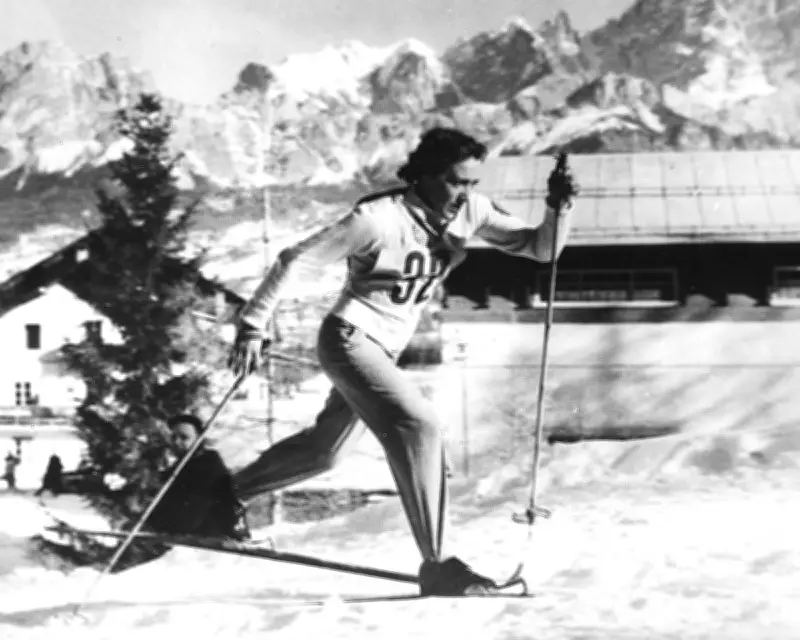
The 1956 Winter Olympics, held in the picturesque Italian resort of Cortina d'Ampezzo, stands as a landmark event in the annals of winter sports, not merely for its scenic backdrop but for the sheer number of records that were shattered across various disciplines. This edition of the Games, officially known as the VII Olympic Winter Games, unfolded from January 26 to February 5, 1956, and became a crucible of athletic excellence where boundaries were pushed and new benchmarks established.
Alpine Skiing: A New Era of Speed and Precision
In the realm of alpine skiing, Cortina 1956 witnessed performances that redefined what was possible on the slopes. The men's and women's events saw skiers from nations like Austria, Switzerland, and the United States breaking previous time records, thanks to advancements in equipment and technique. The downhill and slalom competitions, in particular, showcased unprecedented speeds and agility, setting records that would stand for years and inspiring a generation of skiers to aim higher.
Speed Skating: Ice Rinks Alight with Record-Breaking Feats
The speed skating events at Cortina were another highlight, with athletes gliding across the ice to smash existing records. Competitors from the Soviet Union, which made its Winter Olympics debut here, and traditional powerhouses like Norway and Sweden, delivered stunning times in distances ranging from 500 metres to 10,000 metres. These achievements not only highlighted individual prowess but also signaled a shift in the global balance of winter sports, as new nations emerged onto the podium.

Figure Skating: Artistic Excellence Meets Technical Mastery
Figure skating at the 1956 Games saw records broken in terms of scores and technical difficulty. Skaters from the United States and Canada, among others, performed routines that incorporated more complex jumps and spins, earning higher marks from judges and setting new standards for artistic expression. The pairs and singles events were particularly notable, with performances that captivated audiences and pushed the sport into a new era of innovation.
Legacy and Impact on Winter Sports
The record-breaking feats at Cortina d'Ampezzo had a profound and lasting impact on winter sports. By setting new benchmarks, athletes elevated the level of competition globally, encouraging improvements in training, coaching, and sports science. The Games also boosted the profile of Cortina as a premier winter sports destination, cementing its place in Olympic history. Moreover, the successes seen here paved the way for future innovations in equipment and techniques, influencing subsequent Winter Olympics and shaping the evolution of disciplines like alpine skiing and speed skating.
In retrospect, the 1956 Winter Olympics in Cortina was not just a sporting event but a catalyst for change, where records were not merely broken but reimagined, leaving an indelible mark on the world of winter athletics.