Russell Edges Hamilton in Thrilling Chinese GP Sprint Battle
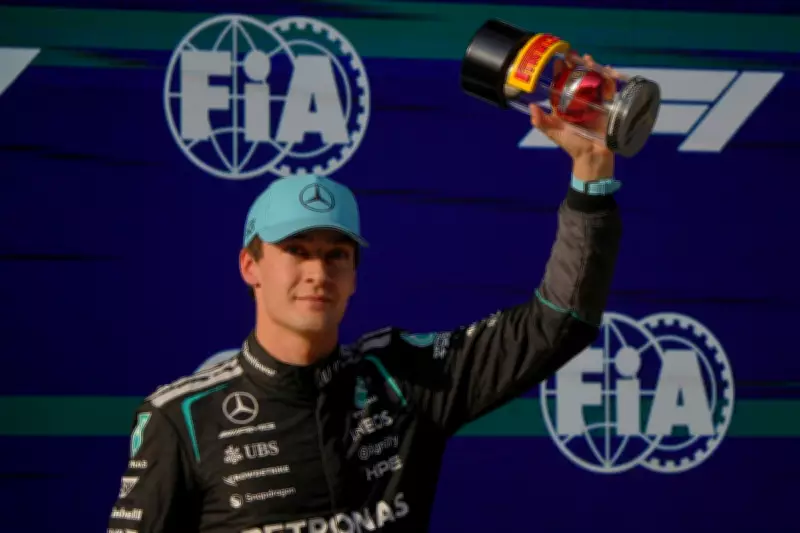
George Russell emerged victorious in a dramatic sprint race at the Chinese Grand Prix, narrowly defeating his compatriot Lewis Hamilton in a fierce on-track duel. The two British drivers exchanged the lead an impressive six times within the opening five laps at the Shanghai International Circuit, with Russell ultimately securing the win to maintain his flawless start to the 2026 Formula One season.
Russell, who triumphed in Australia just six days prior, crossed the finish line a mere 0.6 seconds ahead of Ferrari's Charles Leclerc, with Hamilton forced to settle for third place. Reflecting on the intense battle, Hamilton acknowledged the challenge, stating: "It was a close battle and their speed on the straights was a little bit too much. I put up a good fight, but I killed my tyres."
Championship Standings and Qualifying Prospects
Lando Norris finished in fourth position, one place ahead of Russell's Mercedes teammate, Kimi Antonelli. Max Verstappen experienced a disappointing race, starting from eighth and finishing ninth after a poor start left him languishing in 16th place early on. With this victory, Russell now leads Antonelli by 11 points in the championship standings, solidifying his position at the top of the leaderboard.

Attention now turns to qualifying, where Russell is the clear favourite to secure pole position once again after putting his Mercedes on pole for the sprint race. The stage is set for another exciting session as drivers vie for optimal grid positions for the main Grand Prix event.
F1 Set to Cancel Bahrain and Saudi Arabian Grands Prix
In a significant development off the track, Formula One is poised to cancel the upcoming Grand Prix events in Bahrain and Saudi Arabia next month due to escalating tensions in the Middle East region. Bahrain's capital, Manama, has been targeted by Iranian missile attacks, with similar incidents reported in Saudi Arabia. According to the state-owned Bahrain News Agency, 32 people were injured near Manama following an Iranian drone attack earlier this week.
With less than a month until the scheduled races—the Bahrain Grand Prix on 12 April at the Sakhir circuit and the Saudi Arabian Grand Prix in Jeddah on 19 April—cancellations now appear inevitable. Sources indicate that official confirmation of the cancellations is expected within the next 48 hours, coinciding with the ongoing Chinese Grand Prix weekend in Shanghai.
Logistical Challenges and Potential Replacements
Speculation has arisen regarding potential replacement races, with circuits in Italy, Turkey, and Portugal suggested as possible venues for a mid-April date. However, the last-minute nature of these arrangements presents substantial logistical hurdles. Consequently, it is understood that the sport will face a five-week gap between the Japanese Grand Prix on 29 March and the Miami Grand Prix on 3 May, disrupting the calendar significantly.
The cancellations also impact other motorsport series. The World Endurance Championship event in Doha, originally scheduled for late March, has already been postponed to October. MotoGP's Qatar round in April is unlikely to be rescheduled, while Formula Two faces potential delays, with its next race possibly not occurring until Monaco in June if the Bahrain and Saudi rounds are cancelled without replacement.
Financial Implications and Leadership Responses
The cancellations carry substantial financial repercussions for Formula One, as Bahrain and Saudi Arabia are among the highest-paying hosts. Saudi Arabia reportedly pays approximately £30 million ($55 million) in hosting fees, matching Qatar as the joint-highest, while Bahrain contributes an estimated £24 million ($45 million).
F1 team principals have emphasised that safety remains the paramount concern. Mercedes team principal Toto Wolff commented: "Formula 1 in a way becomes the second priority. It's such an important topic in the region... I leave it to Stefano [Domenicali, CEO] to manage that situation." F1 CEO Stefano Domenicali stated that decisions will be made collectively as the situation evolves, underscoring the complexity of the geopolitical landscape affecting the sport.