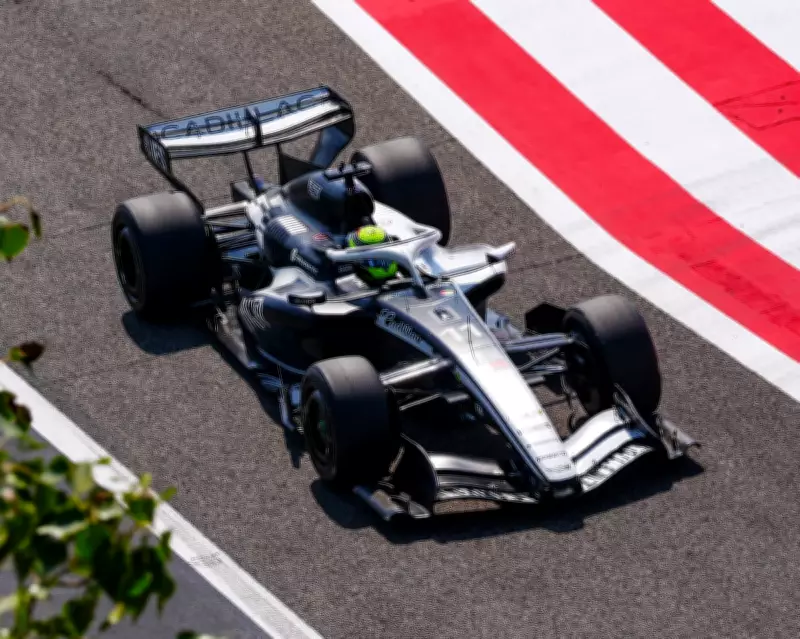
Cadillac's F1 Journey: A Miracle on the Grid
As the new Formula One season kicks off in Melbourne this Sunday, amidst the usual frenzy of anticipation, one team stands out for its sheer audacity and rapid rise. Cadillac, the newest entrant to the F1 grid, backed by General Motors, has achieved what many deemed impossible: constructing a competitive team from the ground up in just over a year. Their journey, likened by team principal Graeme Lowdon to the Apollo moon landings, began in an empty room with nothing but a screwdriver and an A4 sheet of paper.
Building from Scratch: A Herculean Effort
Unlike Audi, which took over the existing Sauber team, Cadillac is the first new constructor to enter as a startup since Haas joined a decade ago. From a provisional approval at the 2024 Las Vegas Grand Prix, the team has grown to 600 personnel, recruiting at a rate of one person per day during peak phases. With facilities in Silverstone, UK, a new headquarters in Fishers, Indianapolis, and an engine manufacturing site in Charlotte, North Carolina, the scale of this operation is staggering.
Driver Valtteri Bottas, a ten-time race winner, encapsulated the team's achievement, stating, "For us to do our shakedown in January in Silverstone was a miracle. When you put that in perspective, what an achievement for a team from a standing start." He emphasized the complexity of designing and manufacturing thousands of car components, highlighting the immense work behind the scenes that often goes unnoticed by fans.

Strategic Talent Acquisition and Long-Term Ambition
Cadillac has aggressively pursued top talent to bolster its ranks. Key appointments include Jon Tomlinson from Williams as head of aerodynamics, Nick Chester from Renault as technical director, and Peter Crolla from Haas as team manager. Notably, Pat Symonds, an F1 veteran since 1979 and former chief technical officer at F1, joined as executive engineering consultant. Symonds praised the team's foundation, noting, "There's some real front-of-the-grid stuff happening here."
General Motors has demonstrated unwavering commitment, aiming not just to participate but to become a championship-winning force. The team will use Ferrari engines until 2029, when GM plans to introduce its own power units. Lowdon's comparison to the Apollo missions underscores the fixed timeline and coordinated effort required, with countdown clocks in their facilities ticking down to the first race.
Realistic Expectations and Future Goals
Despite their rapid progress, Cadillac enters the season with tempered expectations. Currently estimated as the tenth fastest team, just ahead of Aston Martin, their initial focus is on finishing races consistently. Bottas set a clear target: "If we start from the back and we end up at the back, that's not progress. We've got to keep moving forward." Points finishes this season would be celebrated as victories, symbolizing meaningful advancement.
The team's professionalism was acknowledged during pre-season testing in Bahrain, where they completed full sessions—a feat not managed by Williams or Aston Martin. Symonds shared that senior figures from other teams and world championship drivers commended their setup, calling it "a proper professional team."
Foundation for a Championship Future
Cadillac's debut marks the beginning of a long-term project. Bottas expressed confidence in the team's commitment, saying, "There's been no compromise on quality, everything is the best you can get. That gives me the confidence that the team is really all in." While matching giants like Mercedes remains a distant goal, the foundation is being laid for future success.
As the lights go out in Melbourne, Cadillac's story is one of resilience and ambition. From an empty room to the F1 grid in a year, they have already achieved a miracle. Now, the real work begins: turning that foundation into a legacy of speed and success on the world's most prestigious racing stage.