Aston Martin and Honda: A Formula 1 Partnership Mired in Discontent and Despair
To describe the current state of the Aston Martin and Honda Formula 1 partnership as disappointing would be a monumental understatement. What began as a promising collaboration for the 2026 season has rapidly deteriorated into a saga of public disputes, severe performance issues, and genuine safety concerns for the drivers. The alliance, which was launched with considerable fanfare in Tokyo earlier this year, now finds itself languishing at the back of the grid, with the AMR26 car being the slowest in the field and mired in controversy.
A Launch of Flair Followed by Immediate Failure
The partnership was officially unveiled on January 20th in Tokyo, with executives from both Aston Martin and Honda presenting a united front, full of optimistic rhetoric about potential and high performance. This event was intended to mark Honda's grand reintroduction to Formula 1 as a power unit provider, following previous tumultuous partnerships. However, behind the polished facade, there were already signs of trouble. Aston Martin owner Lawrence Stroll appeared discontent, and in hindsight, the launch seems a premature celebration.
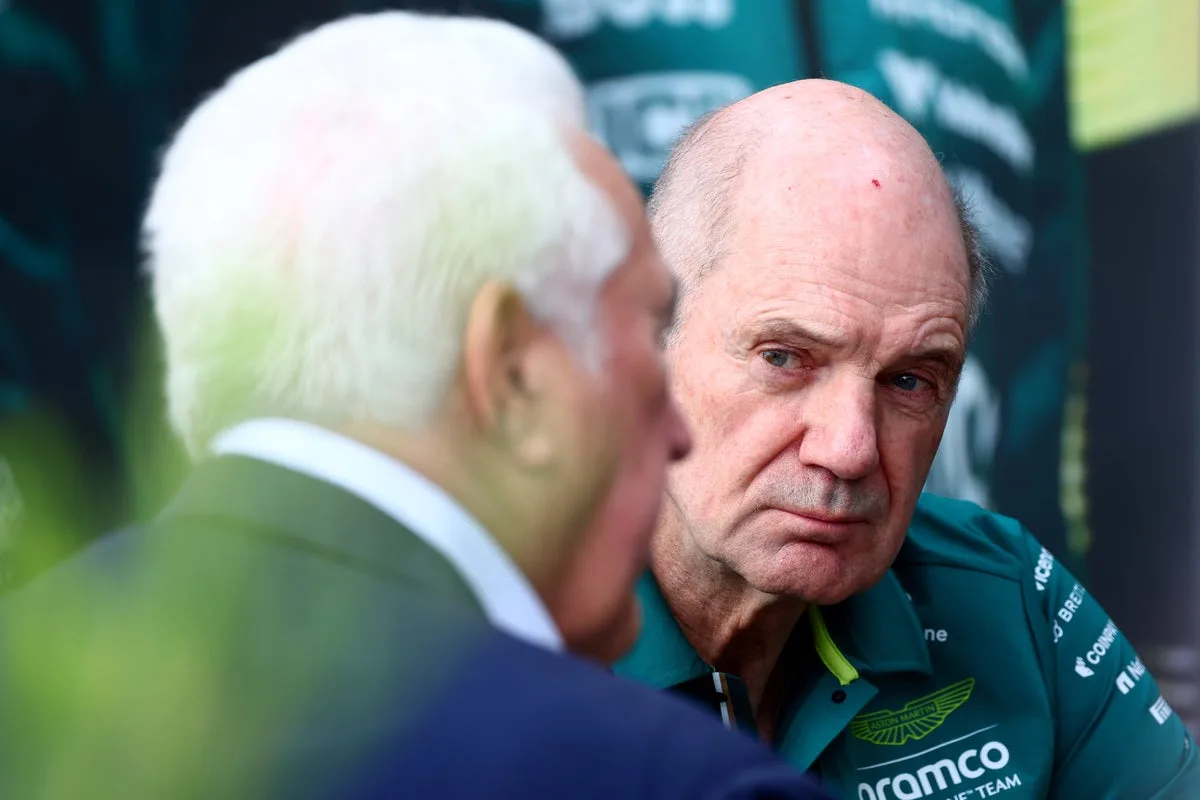
The first concrete indication of problems emerged when the Aston Martin team arrived three and a half days late for the initial pre-season test in Barcelona. Subsequent tests in Bahrain were marked by irregular timings and notable absences from the track. Yet, the most alarming revelation came just before the season opener in Australia. In a surprise media briefing, legendary team principal and designer Adrian Newey disclosed that the severe vibrations from the Honda power unit were so intense that drivers Fernando Alonso and Lance Stroll feared "permanent nerve damage" to their hands and feet. This forced the team to abandon even the basic goal of completing a race distance.
Public Blame Game and Divergent Explanations
Once on track, the performance was abysmal. The Aston Martin cars were languishing at the rear, approximately three seconds per lap slower than the frontrunners and even trailing behind the new Cadillac team. In a press conference in Melbourne, Adrian Newey expressed his frustration, revealing that Aston Martin only became fully aware of Honda's resource shortages in November of the previous year. He stated that Honda had re-entered Formula 1 with only about 30% of its original team and was struggling to catch up in the budget cap era, leaving him feeling "powerless."
This criticism did not go unanswered. Three weeks later, Honda President Koji Watanabe responded, suggesting Newey's comments were a "misunderstanding." Watanabe explained Honda's policy of regularly rotating engineers between motorsport and other advanced technology projects like aviation or hydrology. He acknowledged that rebuilding the organization took time but insisted they now possess sufficient talent and structure. This public exchange has made the division between the two partners painfully clear.
Financial Stakes and a Long Road to Recovery
The tension is exacerbated by the significant investments involved. Aston Martin has poured over £1 billion into new facilities at Silverstone, including a factory, wind tunnel, and simulator, and is paying Adrian Newey an estimated £20 million annually. Naturally, the team is eager to deflect blame onto their engine suppliers in Tokyo. Honda, still bearing the scars of its problematic partnership with McLaren in the mid-2010s, is attempting to maintain a facade of cooperation publicly. Watanabe emphasized that solving the issues requires a joint effort on both the power unit and the chassis, not just one component.
However, recent performances offer little hope. During Friday practice at the Japanese Grand Prix, Aston Martin was, on average, six-tenths of a second slower than Cadillac and nearly four seconds off the pace of the leading McLaren and Mercedes teams. This lack of progress raises serious questions about the future, particularly for two-time world champion Fernando Alonso. The 44-year-old driver, who recently became a father, has refused to confirm his plans beyond this season. Given the current dire situation, it is conceivable he might consider an early retirement before the final race in Abu Dhabi.
Searching for Solutions Amidst Deepening Crisis
For Aston Martin, which previously benefited from the now-competitive Mercedes engine, the path to redemption appears long and arduous. There are whispers that Jonathan Wheatley, following his unexpected departure from Audi, might join the team. Yet, this is not a crisis that can be resolved by a single individual or entity. The fundamental issue lies in the partnership itself. Both Aston Martin and Honda must find a way to collaborate effectively and harmoniously, addressing the technical problems in unison rather than through public recriminations. The current atmosphere of blame and discord is only stoking the fires of this deepening Formula 1 despair.