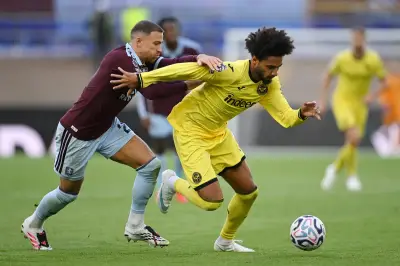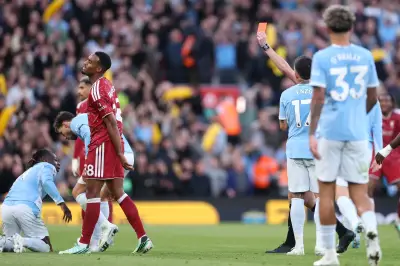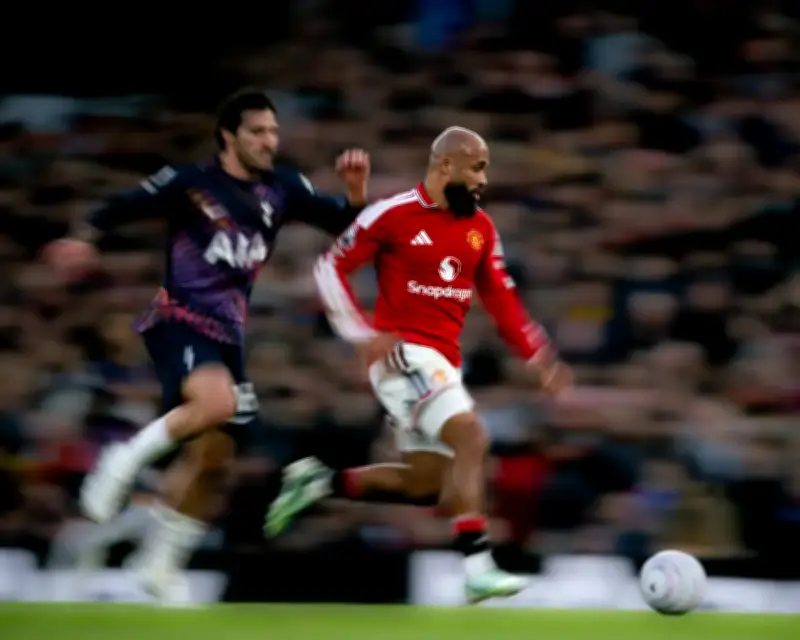
Jamie Redknapp criticised Manchester United after their draw with Tottenham, saying the stats showed Tottenham ran five kilometres more. He called running more than the opposition a "non-negotiable" in the Premier League. But is there really a link between distance covered and results?
Minimal Correlation Over a Full Season
Last season's Premier League table hardly mirrors the rankings for distance covered or high-intensity distance per game. Arsenal and Manchester City were high for overall distance, but teams finishing third to eighth had middling outputs at best.
The top-10 teams averaged 4,363km over the season; the bottom-10 averaged 4,332km, a difference of just 31km. High-intensity distance showed a 3% difference (338.7km vs 328.4km).
Overachievers and Expected Points
Ten teams that finished at least one place above their Opta supercomputer pre-season prediction averaged 4,369km, while nine teams finishing below averaged 4,308km—a 1.4% gap. Sunderland (+13 places) and Manchester United (+9 places) weren't in the top 10 for distance but exceeded expectations most, while Crystal Palace (-8) and Newcastle (-6) were in the top 10 for ground covered but underperformed.
Teams in the bottom half for distance covered exceeded their expected points by 0.38 on average, while top-half teams fell 1.88 points short. This suggests little long-term correlation between running and success.
Game-Level Insights and Expert Views
Since last season, in 86 Premier League games where one team covered at least 5km less, the lower-running team won just 10 times (11.6%). Excluding 20 games with red cards, the win rate barely improved to 12.1% from 66 matches. When the gap was between 2.5km and 4.99km, the win rate rose to 25.8%, with a loss rate of 46%.
Jürgen Klopp said early in his Liverpool reign: "We don't have to run 115km per match to be successful. You don't have to run like crazy if you have the ball. It is only the start. We must know how to turn the screws in the right moment; better thinking, better timing." Pep Guardiola added: "It's about when you have to run. Running just to run? I can go to the track and ask the marathon guys to play for us."
The data suggests that while extreme outrunning may help in isolated games, there's no strong season-long correlation. Intent and timing, not sheer volume, may matter more.