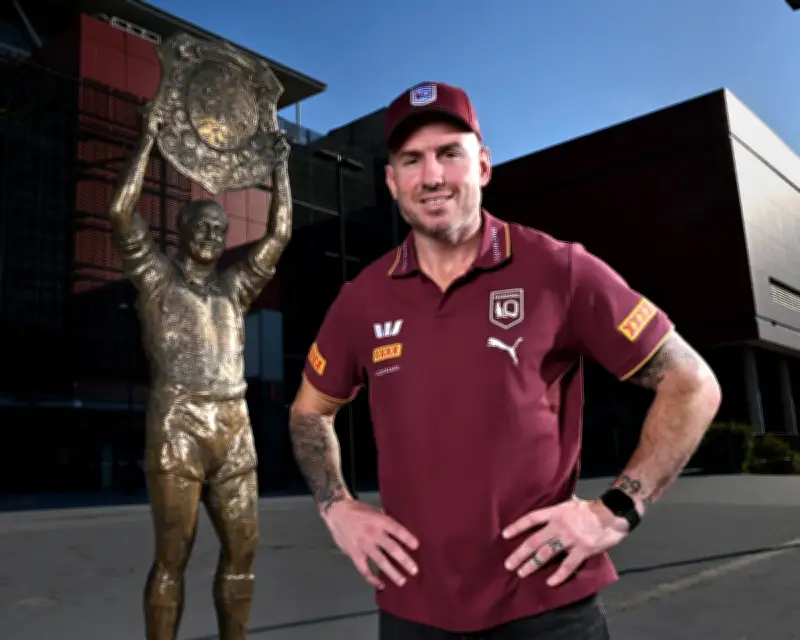
Darius Boyd has been appointed head coach of the Queensland Maroons for the next three State of Origin series, a surprise choice given his lack of NRL head coaching experience. The former Queensland player's appointment means both the Maroons and the Blues will head into the 2027 series led by individuals without a single match of NRL head coaching experience.
A shift from NRL-proven coaches
The Queensland Rugby League's decision to appoint Boyd, whose biggest coaching success is winning two matches for the Queensland Under-19s, as well as assisting Kevin Walters at the Brisbane Broncos for two years, highlights how Origin has become its own class of rugby league, disconnected from the proving ground of the NRL.
There is a long history of coaches in the Origin arena who – like Laurie Daley, Brad Fittler, Paul Vautin and Kevin Walters – are seen more as inspirational figures and less astute rugby league architects. The interstate rivals would have had just as much NRL coaching experience had Billy Slater continued for Queensland, given NSW handed the reins to longtime assistant Matt King last month.

The unique challenge of Origin coaching
Perhaps coaching in State of Origin is a unique challenge, a three-peaked mountain-scape, compared with the never-ending hills and valleys of an NRL season. Those best equipped for the summit are therefore those who have been there before, and know the unique pressures of these brief, intense Origin windows each year, rather than the attrition of NRL.
Or, on the other hand, maybe the three-match series is a mug's game, and the best coaches in rugby league see only limited agency in calling up the same couple of dozen players each year, then hoping Nathan Cleary does or does not decide to show up in a decider. People like King and now Boyd – familiar within state pathways but devoid of experience under the blowtorch only a head coach can know – are therefore left as leading candidates.
Thinning field of candidates
Powerbrokers at the NSWRL and QRL have moved away from allowing their Origin coaches to also hold NRL coaching roles, but that decision means the field of candidates has thinned. NRL-proven options were notable in their absence in speculation about the successor to Slater, which focused on the likes of Maroons assistants Ben Te'o, Matt Ballin and Nate Myles after Kevin Walters pulled out. The field thinned again when Te'o said he was not interested.
Wayne Bennett had pushed for Cameron Smith, but is now set to be tapped by Boyd for advice, reconnecting the pair after their long association during stints at the Broncos, Dragons and Knights. "He's the super coach," Boyd said. "It'd be silly not to get his advice on different things."
Boyd's journey and future outlook
In 2026, it is hard to argue even that Origin is a stepping stone for aspiring coaches. Proven NRL assistants like Cameron Ciraldo, Craig Fitzgibbon and Peter Wallace appear to be favoured by clubs looking for the next generation of coaches. Rather than Origin, aspiring NRL coaches might also want to look towards the international game, given the success this season of teams coached by Andrew Webster and Kristian Woolf, although Michael Maguire did use his experience with the Blues to help rebuild his reputation.
Slater, after his five years as Maroons coach, is held in high regard and has so far resisted Melbourne's overtures to replace Craig Bellamy. But in losing two winnable series against teams coached by Maguire and Laurie Daley, either Slater is not as effective as his reputation would suggest, or Origin may be closer to a coin-toss than its proponents would want to admit.
Boyd said he is not thinking about a possible NRL job, for now, offering a contradictory response. "Not particularly, not right now," he said. "I've got a young family, and obviously this is a big commitment. I'm thinking about this first and foremost right now."
His appointment as Queensland coach at age 39 represents a radical transformation from a player with a reputation for immaturity. He was fined $20,000 by Brisbane in 2008 for what was described then as a "nightclub incident", even if it did not lead to police charges. The following year, a petulant Boyd gave a press conference that lasted 47 seconds. In 2014, after causing damage to a hotel room, he checked himself into a mental health facility.

Boyd attributes that decision as setting him on the right path, and he has become a mental health advocate. "Going to that mental health facility … I needed to make a change, I knew that and needed some support from some key people in my life," he said. "I needed to grow my support network as well, and it didn't happen overnight.
"I went there and learned a lot about myself and needed to grow and become a man and make good decisions and do good things in the community. And that's something that I've been on that journey ever since."