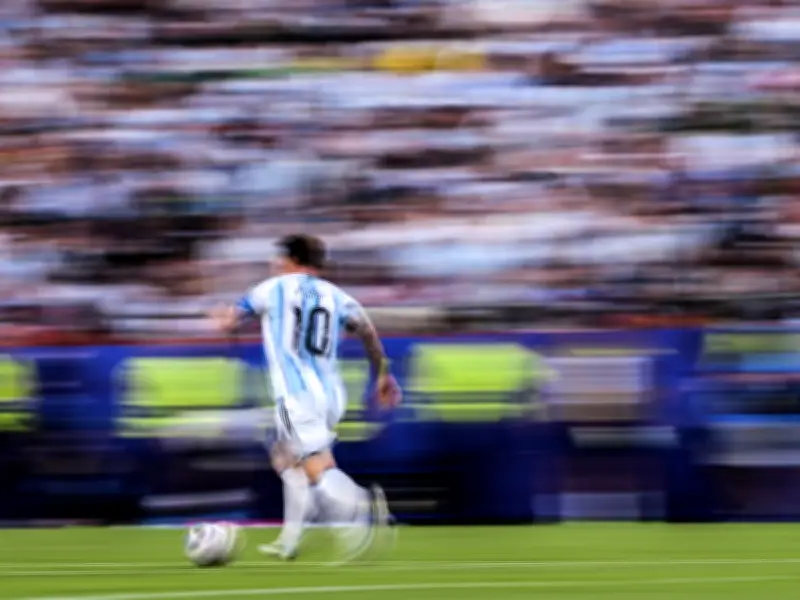
Lionel Messi's game changes dramatically depending on the quality of the opposition, data from his last 17 Argentina appearances shows. Against top-25 FIFA-ranked teams, he averages 0.54 goal contributions per 90 minutes; against weaker sides, that figure nearly triples to 1.50.
Machine Football analysed every World Cup and qualifying appearance since October 2023, revealing two distinct versions of the 39-year-old. Against elite opponents like Brazil, Uruguay, Colombia, Switzerland and Austria, Messi becomes more selective, taking fewer touches but maintaining higher efficiency.
The Numbers Behind the Two Messis
Against lower-ranked opposition (Chile, Peru, Paraguay, Bolivia, Venezuela, Egypt, Algeria, Jordan, Cape Verde), Messi's expected goals per 90 rises from 0.52 to 0.67, key passes almost triple from 0.36 to 1.06, and touches in the penalty area climb from 2.00 to 3.34. His dribble success rate actually improves against stronger teams, rising from 75.0% to 88.9%, while duel success increases from 50.0% to 54.8%.
Opta data shows Messi has covered 5.2km and 5.3km walking in two World Cup matches this tournament, the only instances a forward has exceeded 5km walking in a game. His average sprints per 90 at the World Cup is 2.7, lower than any England outfield player except John Stones.
Tuchel's Assessment Ahead of Semi-Final
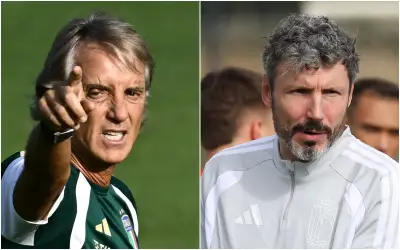
Thomas Tuchel, preparing for his first match against Messi as England manager, told reporters: "It is just incredible, how he pulls it out every single time, in so many different ways. He finds spaces, he finds moments, and I think the big thing is the whole team buys into that idea."
Tuchel added: "They buy into the idea to support Messi, to help him, and they're just ready when he bursts into action to make the difference. We will prepare for that of course. Can you prepare for that and find a recipe and focus too much on him? No."
What to Expect Against England
England, ranked among the world's elite, are unlikely to face the dominant version of Messi that records multiple key passes and lives in the penalty area. Instead, they will encounter the patient, efficient version who averages 0.52 expected goals per 90 against top opposition but completes nearly 89% of his dribbles.
Messi's touch map at the World Cup shows a clear preference for central areas and the right half-space, doing most of his work between the central and final third. He can still hurt England even without the ball, by pulling defenders out of shape to create space for teammates like Julian Alvarez or Nahuel Molina.
Caveats and Context
The analysis is based on five matches against higher-calibre opposition, a relatively small sample. One exceptional performance—such as five goal contributions against Bolivia in October 2024—could shift the underlying numbers. The split also relies on current FIFA rankings, which may not fully capture a team's strength; Venezuela, for instance, falls into the lower-calibre group despite a strong qualifying campaign.
Nevertheless, the pattern is consistent: Messi's production changes with opponent quality, but his efficiency does not. As Tuchel noted, "Against stronger opponents, Messi simply needs fewer moments to decide a match."