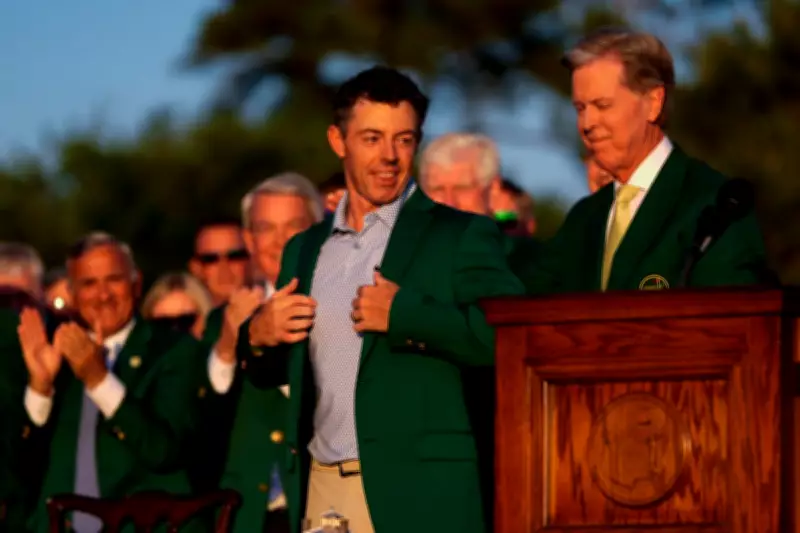
Rory McIlroy's Secret Augusta Formula: How Practice Trips Secured Back-to-Back Masters
Rory McIlroy has unlocked the hidden code to Augusta National, using frequent practice visits to transform the iconic course into his personal playground. The Northern Irish superstar's second consecutive Masters victory on Sunday revealed a preparation strategy so effective it may redefine how champions approach golf's most prestigious tournament.
The Home Course Advantage
McIlroy's unprecedented access to Augusta National between tournaments provided what he described as a decisive "home course" advantage. "I've been on this golf course so much the last three weeks," McIlroy revealed after donning his second green jacket. His preparation involved multiple day trips from his Florida base, sometimes dropping his daughter at school before flying to Augusta for practice sessions.
"I did a couple of days where I dropped Poppy to school, flew up here, played, landed back home and had dinner with her," McIlroy explained in typically frank fashion. This unconventional approach allowed him to skip three PGA Tour events leading up to the Masters, prioritizing quality practice time over competitive play.

Mastering the Details
The 37-year-old's preparation focused intensely on the short game areas where Masters tournaments are typically decided. McIlroy spent hours "chipping and putting around greens, and then just playing one ball and shooting scores and ending up in weird places that you maybe never find yourself." This meticulous attention to detail produced remarkable results during tournament play.
During Friday's round, McIlroy gained 3.1 strokes around the greens - not just the best performance of the weekend, but statistically dominant. The gap between his short game and the second-best player equaled the difference between second place and 45th position. "My scrambling, my putting and my short game are what won me this tournament," McIlroy acknowledged after his victory.
The Turning Point
McIlroy's preparation proved crucial during Sunday's dramatic final round. After a disappointing Saturday performance that saw him shoot 73, the champion retreated to the practice range as darkness fell, working specifically on rediscovering his controlled fade. This late-night dedication paid immediate dividends.
The most critical shot of Masters Sunday came on the par-3 12th hole, where McIlroy executed a perfect nine-iron fade he had rehearsed repeatedly during those practice sessions. "It was a really good golf shot at the right time, and probably a golf shot I wouldn't have been able to hit yesterday before going to the range," he reflected. The resulting birdie, followed by another on the 13th, created a decisive three-shot swing against challenger Justin Rose.
Historical Context and Future Implications
McIlroy now joins an exclusive club of back-to-back Masters winners including Tiger Woods, Sir Nick Faldo, and Jack Nicklaus. While last year's emotional victory completed his career Grand Slam, this year's triumph demonstrated a more mature, strategic approach to major championship preparation.
The champion admitted that winning his first Masters removed the psychological pressure of completing the Grand Slam, but revealed that the greater advantage came from years of experimentation with different preparation methods. "I tried a lot of different regimes as I looked to climb the mountain - arriving late, arriving early, practicing a lot, not practicing at all," McIlroy explained. This year's formula of frequent Augusta visits has now become his permanent blueprint.
The Champion's Philosophy
McIlroy's victory speech contained wisdom born from nearly two decades of Masters experience. "If you put the hours in and you work on the right things, it'll work out for you," he stated with sincerity. This philosophy guided his unconventional preparation, which included skipping tournaments he "doesn't like" to focus exclusively on Augusta-specific practice.

The champion's driving statistics during the tournament told an interesting story - while ranking just 90th in driving accuracy and missing every par-5 fairway during the first two rounds, McIlroy converted those situations into seven birdies and one par. This demonstrated his deep understanding of how to score at Augusta regardless of driving position.
As McIlroy celebrated with champagne in the Augusta National clubhouse, he reflected on the difference between his two victories. "I thought it was so difficult last year because I was trying to win the Masters and the Grand Slam but it turned out it was just really difficult to win the Masters," he laughed. Now, with his preparation formula firmly established and a second green jacket secured, golf's established hero has created a template for Masters success that may influence generations of champions to come.