World Cup 2026: A Comprehensive Guide to the 48-Team Tournament
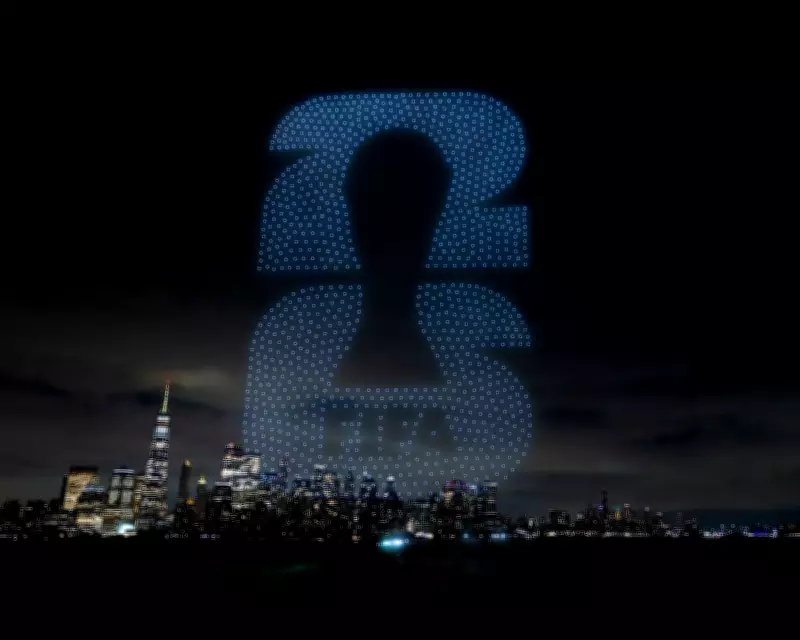
The 2026 World Cup, set to be the largest in history with 48 teams, will captivate global audiences from 11 June to 19 July across the United States, Mexico, and Canada. After Tuesday's playoff matches finalized the field, the tournament promises 104 matches, culminating in the final at MetLife Stadium in East Rutherford, New Jersey. To mark this milestone, we delve into 48 essential questions covering everything from team qualifications to political controversies.
Tournament Overview and Format
This edition expands to 48 teams, a move championed by FIFA President Gianni Infantino as a way to "open it to the world." The increase is projected to generate an additional $1 billion in revenue, with profits reinvested in member associations. The United States will host 78 matches, while Canada and Mexico each get 13, with all quarter-finals and beyond held in the U.S. The opening match features Mexico against South Africa at Estadio Azteca on 11 June, a venue steeped in World Cup lore as the only stadium where both Pelé and Diego Maradona lifted the trophy.
Qualified Teams and Favorites
Host nations the U.S., Mexico, and Canada qualified automatically, joined by powerhouses like Spain, Argentina, and France. Four debutants—Cape Verde, Curaçao, Jordan, and Uzbekistan—will make their first appearances, with Curaçao, population 165,000, becoming the smallest nation ever to compete. Spain, current European champions, are favorites to win, followed closely by England and France. Argentina aims to become the first back-to-back champion since Brazil in 1962, though Brazil and Germany remain perennial threats with their five and four titles, respectively.

Key Players and Logistics
Lionel Messi's participation is likely but not confirmed, as the 38-year-old manages injury concerns, while Cristiano Ronaldo, 41, is expected to play in his sixth World Cup. Breakthrough players to watch include France's Ousmane Dembélé, Spain's Lamine Yamal, and Portugal's Vitinha. Teams will base in various locations, such as England and Argentina in Kansas City, and the U.S. men's national team in Irvine, California. Travel distances vary, with Bosnia and Herzegovina covering 5,039km during the group stage.
Political and Social Dynamics
The tournament is not without controversy. FIFA's relationship with former U.S. President Donald Trump has drawn scrutiny, including awards and collaborations. Immigration policies may affect fans from countries like Iran, Haiti, and Senegal due to travel bans. Additionally, U.S. Immigration and Customs Enforcement (ICE) plans a significant security role, sparking legislative efforts to limit raids near venues. Despite discussions, a European boycott is unlikely, though Iran's participation remains uncertain amid geopolitical tensions.
Viewing and Ticketing Details
Fans can purchase tickets through FIFA's last-minute sales phase, with broadcasts available on Fox and Telemundo in the U.S., BBC and ITV in the UK, and various networks globally. Hydration breaks will be mandatory, potentially including commercial interruptions. Venues like Estadio BBVA in Monterrey offer stunning views, while heat concerns in southern U.S. cities may impact player safety, with many stadiums featuring air conditioning.
Historical Context and Records
This marks the first World Cup hosted by three countries, preceding the 2030 edition across six nations. Records like Just Fontaine's 13 goals in a single tournament could be challenged with an expanded format. The biggest blowout remains Hungary's 10-1 win over El Salvador in 1982. The U.S. men's team, historically semi-finalists in 1930, seeks to leverage home advantage, building on the legacy of the 1994 tournament that spurred Major League Soccer's formation.
Miscellaneous Insights
Mascots include Clutch the Bald Eagle, Zayu the Jaguar, and Maple the Moose. The official song, yet to be fully released, follows an anthem by Robbie Williams and Nicole Scherzinger. VAR will be used for refereeing decisions, and half-time shows, including a final spectacle, may extend breaks. Prize money reaches a record $50 million for winners, with FIFA distributing $727 million total. For comprehensive coverage, follow trusted sources like The Guardian for updates and analysis.