VAR Chaos at Anfield: Szoboszlai Red Card and Disallowed Goal Explained
Manchester City's crucial Premier League victory over Liverpool concluded in extraordinary and controversial scenes at Anfield, with Dominik Szoboszlai receiving a red card for denying a goalscoring opportunity, despite City actually scoring a goal from that very same opportunity. The incident has ignited widespread debate over VAR protocols and refereeing decisions in high-stakes matches.
Match Recap and Bizarre Finale
The match itself was a rollercoaster of emotions and pivotal moments. Dominik Szoboszlai initially gave Liverpool the lead with a spectacular free-kick, showcasing his technical prowess. However, Manchester City fought back, with Bernardo Silva netting an equaliser and Erling Haaland converting a late penalty in added time to secure a dramatic advantage for the visitors.
In the dying moments, Rayan Cherki believed he had sealed a wild victory with a bizarre late goal, capitalising on Alisson Becker being well out of his area. Yet, this apparent third goal was swiftly ruled out following a comprehensive VAR review, which instead led to Szoboszlai being shown a red card, adding a layer of confusion to an already chaotic finale.

The Controversial Incident and Referee's Explanation
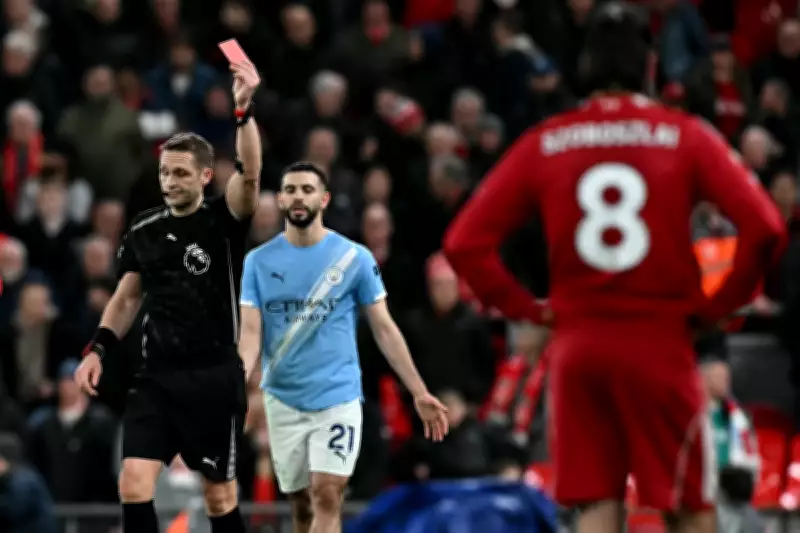
The controversy centred on a tussle between Hungarian international Dominik Szoboszlai and Erling Haaland as Cherki's shot rolled into an empty net. Initially, referee Craig Pawson allowed the goal to stand, but after consulting the pitch-side monitor, he reversed his decision. Pawson awarded a direct free-kick to Manchester City and issued a red card to Szoboszlai.
Addressing the perplexed Anfield crowd, Pawson clarified: "After review, there is a careless foul by Erling Haaland on the shirt of Dominik Szoboszlai. Prior to that, Szoboszlai commits a holding offence that denies an obvious goalscoring opportunity. The final decision is a direct free-kick to Manchester City and a red card." This explanation highlighted the sequential nature of the fouls, with Szoboszlai's infraction deemed to have occurred first, thus negating the subsequent goal and warranting the dismissal.
Implications and Ongoing Discussions
This incident underscores the complexities and subjective interpretations inherent in VAR decisions, particularly in fast-paced scenarios where multiple infractions occur. The ruling has sparked intense discussions among fans, pundits, and officials regarding the consistency and application of the laws of the game. As more details emerge, this match is likely to be remembered not only for its thrilling football but also for the contentious VAR intervention that defined its conclusion.