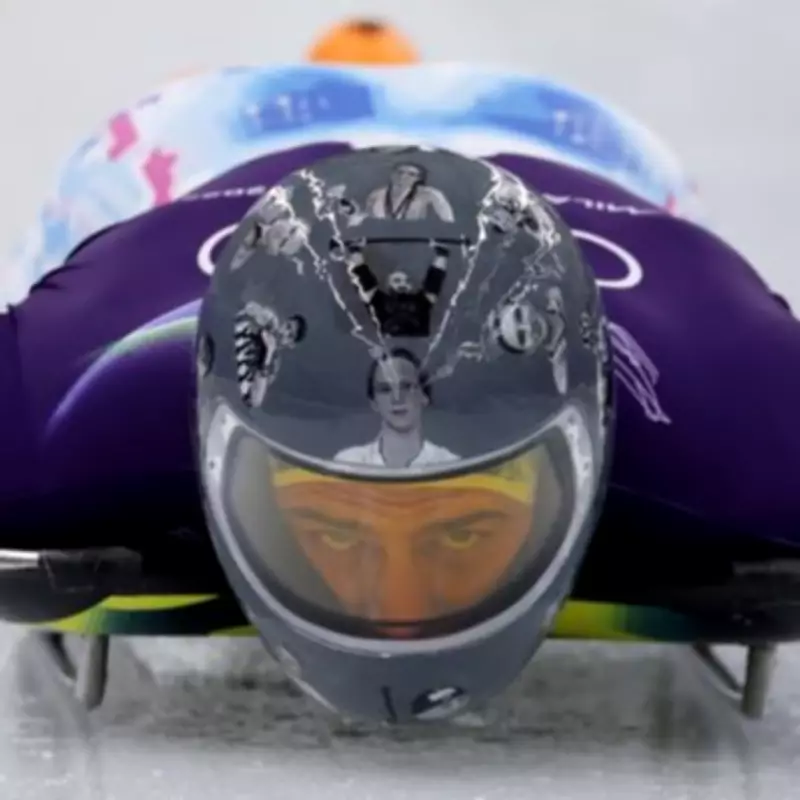
Ukrainian Skeleton Star Expelled from Winter Olympics Over War Memorial Helmet
Ukrainian skeleton racer Vladyslav Heraskevych has been dramatically expelled from the Milano Cortina 2026 Winter Olympic Games after refusing to remove a helmet featuring images of war victims from his home country. The 26-year-old athlete has accused the International Olympic Committee (IOC) of "playing along with Russian propaganda" following his disqualification.
Defiant Stand Against Olympic Rules
Heraskevych met with IOC President Kirsty Coventry on Thursday morning at the Cortina Sliding Centre but remained steadfast in his decision to wear the controversial helmet. The headgear displays photographs of Ukrainian athletes who have perished in the ongoing conflict, including teenage weightlifter Alina Peregudova, boxer Pavlo Ishchenko, and ice hockey player Oleksiy Loginov.
The IOC immediately declared that the helmet contravened Rule 50.2 of the Olympic Charter, which prohibits "political, religious or racial propaganda" in Olympic venues. Heraskevych was disqualified less than sixty minutes before his scheduled competition, despite having recorded the fastest training time just one day earlier.

Accusations of Propaganda and Double Standards
"I believe this Olympic Games is playing along with Russian propaganda," Heraskevych stated emphatically. He pointed to numerous Russian flags displayed around the Games and referenced Russian media coverage that celebrated his disqualification. The athlete specifically mentioned comments from Olympic champion Alexander Tikhanov, who reportedly claimed Ukraine "does not exist as a nation."
Heraskevych further accused the IOC of hypocrisy, noting that other athletes compete with decorated helmets featuring national symbols without facing similar scrutiny. He referenced American figure skater Maxim Naumov, who recently displayed a photograph of his deceased parents during competition without penalty.
Emotional Meeting with IOC President
IOC President Kirsty Coventry made an unscheduled visit to plead with Heraskevych personally, suggesting he wear a black armband during competition instead. Photographs captured Coventry leaving the meeting visibly emotional. "I was not meant to be here, but felt that it was really important to come and talk to him face-to-face," she explained. "I think this is a difficult situation that we are all in."
Heraskevych described feeling "emptiness" following the encounter but remained convinced of his position. "Many people told me don't do it, and that I have proved my point, but I can't betray others," he declared. "I want peace in my country, and I believe we should honour people who sacrificed their lives."
Appeal and Additional Demands
The Ukrainian athlete has announced his intention to appeal the decision to the Court of Arbitration for Sport. Beyond reinstatement, Heraskevych has demanded that the IOC publicly apologize for the stress caused and provide electrical generators for Ukrainian sports facilities damaged by Russian attacks.
"I was at many funerals when I was in Ukraine, and it's truly, truly terrible tragedy," Heraskevych recounted. "Young people in such a young age was killed by the state. I believe for nothing, they were killed for nothing."
International Reaction and Olympic Context
Great Britain's Matt Weston, who leads the skeleton competition, expressed sympathy for his rival. "On a personal level, I'm really sad that he's missed out on being able to compete. I think that's gutting for anyone," Weston commented. "I chat to him all the time and he's kind of a big personality within the circuit."
The IOC maintains that athletes may "express grief with dignity and respect" at multi-faith centres within Olympic villages. The organization clarified that the disqualification decision was made by the International Bobsleigh and Skeleton Federation jury based on non-compliance with competition rules.
This controversy unfolds against the backdrop of Russia's continued exclusion from the Olympics following their invasion of Ukraine nearly four years ago. Thirteen Russian athletes are competing under a neutral flag at these Games, adding further complexity to the geopolitical tensions permeating the sporting event.