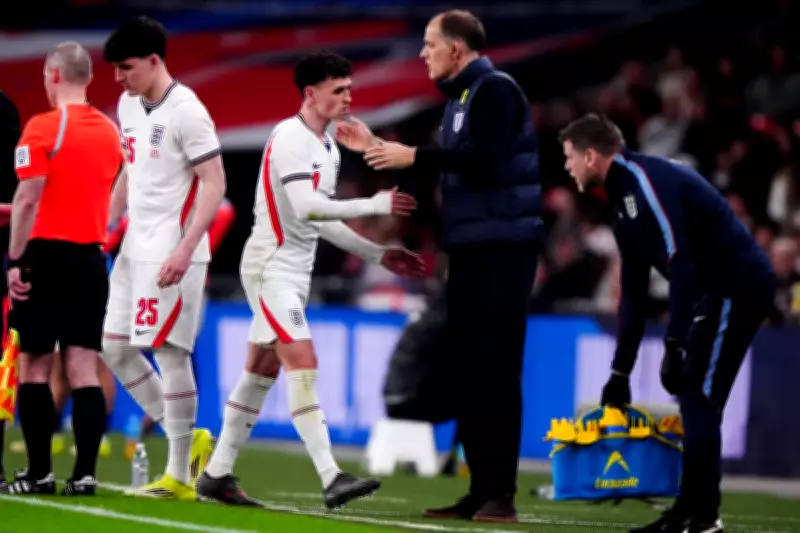
England manager Thomas Tuchel has publicly expressed reservations regarding Phil Foden's guaranteed place in the national team's World Cup squad, following the Manchester City forward's underwhelming performances during March's international friendlies.
Foden's Audition Falls Short
The 25-year-old attacking midfielder was afforded a prime opportunity to impress, starting both matches in England's final camp before World Cup selection. Deployed initially as a number 10 in the 1-1 draw against Uruguay, Foden was later utilised as a false nine in the subsequent 1-0 defeat to Japan. Despite this significant show of faith from the coaching staff, his impact on both occasions was minimal, particularly in the latter match where he failed to adequately fill the void left by the absent Harry Kane.
Training Brilliance Fails to Translate
When questioned directly about whether Foden had seized his opportunity, Tuchel responded after a thoughtful pause, "He tried everything. I would say he was excellent in camp but, yeah, he struggles to show it on the pitch." The manager elaborated, highlighting a recurring theme for the player: "Obviously he didn't have a lot of minutes for City recently, then he came to camp with the brightest smile and was so good in training. And I thought he will just surprise us and will play with the same verve and excitement but, yeah, he struggles to have the full impact."

This disconnect between training ground prowess and matchday output is not a new phenomenon for Foden at international level. Even during England's run to the Euro 2024 final, a period where he was collecting both the PFA and FWA Player of the Year awards for his club form, he rarely replicated that dominance for his country.
Intense Competition and Club Form Dip
The timing of this dip in form is particularly inopportune. Foden now faces intense competition for a limited number of attacking spots in the World Cup squad, compounded by a recent reduction in both his performance levels and playing time at Manchester City. This confluence of factors led Tuchel to be posed a blunt question: can he select a player who is struggling to perform on the pitch?
"I can, I can," Tuchel replied with a laugh, before adding the crucial caveat, "The question would be if we will." Pressed on whether this placed doubts over Foden's inclusion, the England boss was unequivocal: "Well, it's not a guarantee that he will come."
Tuchel's Ruthless Selection History
This stance is consistent with Tuchel's tenure as England manager, where he has demonstrated a willingness to make tough, headline-grabbing omissions. The most notable example remains the continued absence of Real Madrid's Trent Alexander-Arnold. With eight weeks remaining until final squad decisions must be made, Tuchel stated that the March camp provided "more clarity" regarding the composition of his World Cup party, describing it as a continuous learning process.
"I learn all the time," Tuchel explained. "I learn from every training session, and I learn from how the squad is together and I learn from how the players react to the gameplan and how they adapt. How quick they can learn and how quick they can adapt and how they can put it on the pitch. Everything is a learning."
Broader Context of England's Preparations
Tuchel sought to downplay the significance of the March results—a draw and a loss—insisting they "will not define us" and that the team "will not start doubting." He contextualised the camp as always being a challenging one due to player fatigue, injuries, and the quality of opposition. However, the results did provide a sobering reality check; England have yet to secure a victory against a side inside FIFA's top 20 under his management, a concerning statistic for a team widely considered among the favourites for the World Cup.

Despite this, Tuchel's ambition remains undimmed. "We will not let go of our dream, we will not let go of the question 'why not?'" he asserted, reiterating his previous description of the team as World Cup "underdogs." The immediate focus now shifts to the players' club commitments. "Now the most important thing is that the players reintegrate with their clubs, have a good end of the season, and then we have them in pre-camp and prepare them properly and take steps from there." For Phil Foden, those final club matches of the season have taken on critical, career-defining importance.