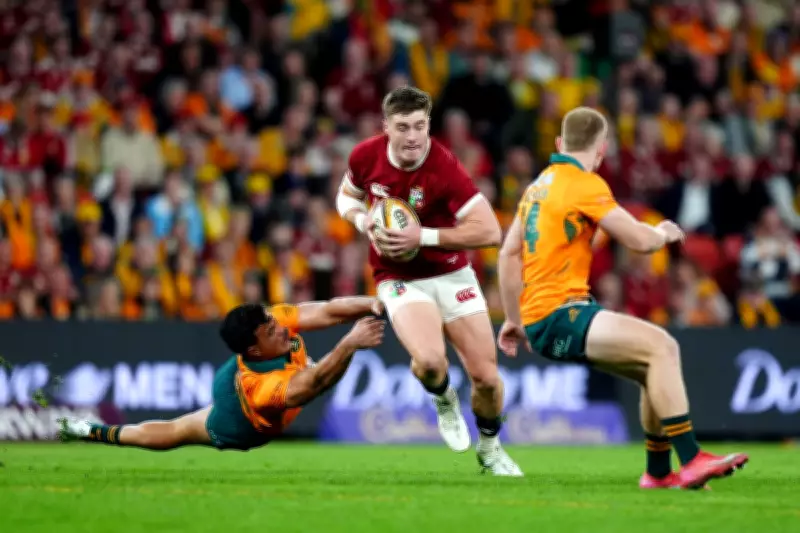
England centre Tommy Freeman has candidly revealed that he experienced a significant mental struggle following the British and Irish Lions tour to Australia, a challenge he initially failed to recognise himself. The 24-year-old, who started all three Tests in the Lions' 2-1 series victory that concluded on August 2, found himself grappling with unseen psychological effects as the new season commenced.
Coaches Spot Hidden Struggle
While Freeman's physical condition had been restored by the mandatory five-week rest period after the tour, Northampton Saints director of rugby Phil Dowson and head coach Sam Vesty detected subtle signs that something was amiss. They observed that Freeman's "mental state wasn't in the best spot" despite his outward appearance of readiness.
"I struggled without realising it," Freeman admitted. "I had the five weeks off, body felt good, but my mental state wasn't in the best spot. When you go on tours and go away for a long time, when you come back it's almost 'right, you're done'. I get ill sometimes because of the stress and then all of a sudden it being off you and the relief. It was just a mixture of all that."

Targeted Intervention
The Northampton coaching staff took proactive measures, pulling Freeman aside to check on his wellbeing. "Phil and Sam just pulled me to the side and asked if I was all right," Freeman recalled. "I had probably been in denial and was saying 'I'm fine, I'm fine', but they pulled me from bits and bobs of training and then a few games, which was really good."
This careful management enabled the young centre to navigate the early stages of the 2025-26 season successfully, eventually participating in England's autumn campaign until a minor hamstring issue interrupted his progress.
Post-Tour Recovery Challenges
Freeman reflected that his approach to post-tour recovery might have contributed to his difficulties. Following the demanding Lions tour, which came after 34 games of rugby, he embarked on a holiday that included visits to Universal Studios and Disney World in Florida.
"I could probably have managed my time off better and not gone on as many rollercoaster rides and things like that, probably just sat in the sun," he acknowledged. "Without realising it, I think I was tired. My body felt like I was OK to go but I just think mentally it was a bit more of a struggle."
The England international described the experience as difficult to articulate: "I can't really explain the feeling, if I'm honest, it was just a mix of up and downs, really. It took an extra two weeks to feel all right."
Positional Transition Continues
Looking ahead, Freeman is expected to continue his centre partnership with Northampton teammate Fraser Dingwall, a combination that received its fourth Test outing in Saturday's 31-20 defeat by Scotland. As Ireland prepare to visit Allianz Stadium in the next Guinness Six Nations fixture, Freeman acknowledges his transition from wing—where he earned the majority of his 24 caps—remains ongoing.
"There's loads to learn still," he said of the centre position. "With centre, you get to experience loads of different things. What you've got to realise is that every game doesn't look the same. Every centre offers something different."
Freeman's experience highlights the often-overlooked psychological demands of elite rugby, particularly following intensive international tours. His willingness to discuss these challenges openly contributes to growing conversations about mental health in professional sports.