Sweden's Unconventional Path to the World Cup Ignites Controversy
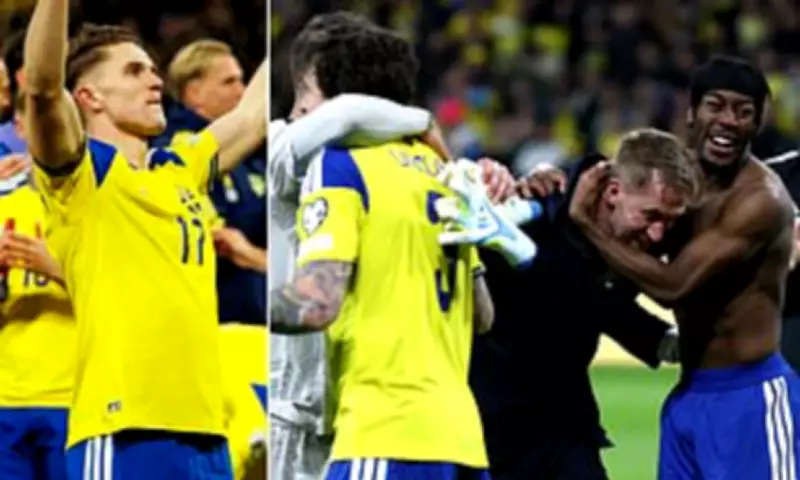
In modern football, there exists more than one route to secure a place at the World Cup, as Sweden dramatically demonstrated this week. The Swedish national team, under manager Graham Potter, erupted in jubilation after a tense victory over Poland on Tuesday night. A late 88th-minute winner from striker Viktor Gyokeres sealed their fate, sending the squad into ecstatic celebrations.
Potter, visibly elated, remarked, 'We weren't perfect, but who cares? We're going to the World Cup, baby. Wow.' This triumph, however, masks a startling reality. During the traditional qualifying phase, Sweden's performance was dismal, accumulating a mere two points from six matches. With four defeats and two draws, they finished at the very bottom of their group, making the prospect of competing in North America seem distant.
The Nations League Lifeline
Enter the UEFA Nations League, which provided Sweden with a critical second chance. By winning their Nations League group, Sweden positioned themselves for an alternative qualification pathway. The rules stipulate that the four highest-ranked Nations League group winners, based on an interim ranking, who failed to qualify directly or via play-offs, would gain entry. Sweden met this exact criterion.

Consequently, Sweden qualified for the World Cup through the play-offs, despite not securing a single victory in their official qualifying campaign. Viktor Gyokeres and Graham Potter masterminded this unlikely achievement, edging out nations like Kosovo, who had superior qualifying records.
Sweden ranked 10th among the 14 Nations League group winners. However, with powerhouses such as Spain, Germany, Portugal, France, England, and Norway qualifying directly, and Wales and Czechia entering the play-offs, spaces opened for Romania, Sweden, North Macedonia, and Northern Ireland to claim the remaining slots.
Questioning the Qualification Integrity
This scenario raises fundamental questions about the purpose and fairness of World Cup qualification. Why should Kosovo, who amassed 11 points in Sweden's group and defeated them twice, miss out due to a play-off loss, while Sweden, with nine fewer points, advances? Is the Nations League intended as an incentive for competitive matches, or merely a mechanism to expand the play-off pool? The latter seems more plausible, though its ethical standing remains debatable.
The format has attracted significant criticism. Italy's manager, Gennaro Gattuso, whose team will miss a third consecutive World Cup, voiced strong objections in 2025. He stated, 'In my day, the best runners-up went straight to the World Cup, now the rules have changed. Italy's record of six wins? You'd have to ask the people who make the groups and the rules.'
Gattuso highlighted disparities in continental allocations, noting, 'In 1990 and 1994, there were two African teams, now there are nine. If we look at South America, where six out of 10 teams go directly and the seventh enters a play-off with Oceania, that gives you regrets. The system needs to change in Europe.' His argument underscores a broader issue: stronger European sides may be excluded due to regional competition intensity.
Fan Discontent and Future Implications
Public reaction has been mixed, with many fans expressing disillusionment. One social media user commented, 'The look of this is just sad and disappointing,' while another added, 'It leaves a sour taste.' This sentiment reflects concerns that World Cup qualification should be solely based on traditional qualifying performance, without Nations League interference.
As the first World Cup with 48 teams, adjustments to the qualification process are anticipated in future tournaments. However, this offers little consolation to nations like Kosovo and Italy, who now face exclusion. They must look ahead, hoping for systemic reforms or improved performances.
Ultimately, Sweden's qualification exemplifies the evolving and often contentious nature of international football. While it provides drama and opportunity, it also sparks vital debates about equity and the sport's governing principles. That, as they say, is football.