Shakhtar Donetsk's Extraordinary 1,000-Mile 'Home' Journey in European Football
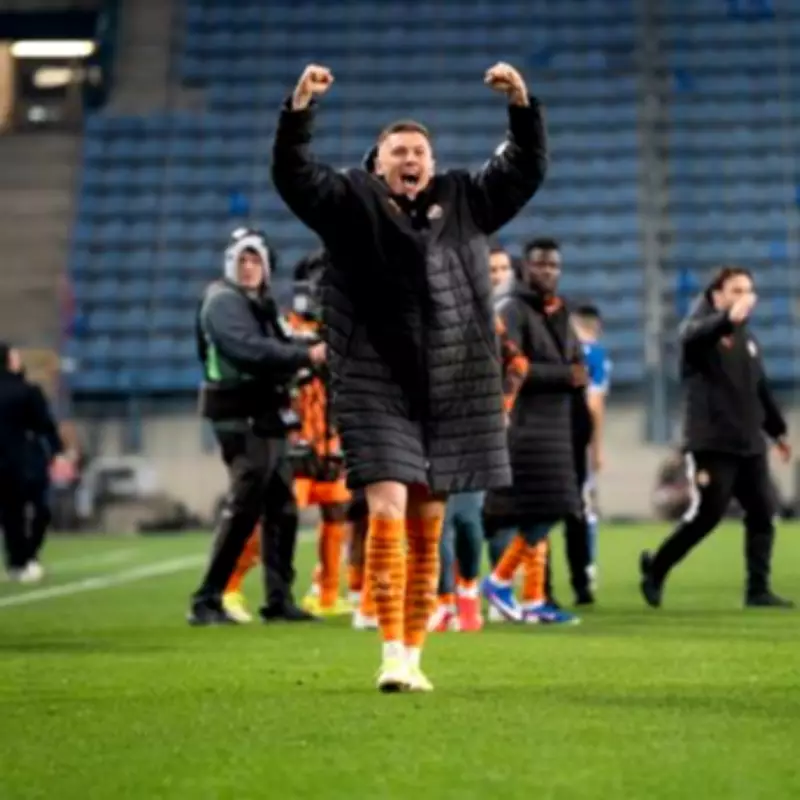
When Shakhtar Donetsk take to the field against AZ Alkmaar in the UEFA Conference League quarter-finals this Thursday, they will be competing as the nominal home side in a stadium located nearly 1,000 miles from their actual home city. This remarkable situation underscores the profound challenges faced by Ukrainian football clubs amidst the ongoing war.
A Decade of Displacement and Current Adversity
It has been twelve long years since Shakhtar Donetsk last played a match within their home city, a consequence of the conflict in the Donbas region. The club's administrative offices and training facilities were relocated to Kyiv, some 460 miles away, with home matches subsequently staged in Lviv, approximately 800 miles from Donetsk.
Since Russia's full-scale invasion of Ukraine, the situation has intensified dramatically. The wider Ukrainian homeland remains under constant threat, with cities across the nation facing nightly drone attacks. For Shakhtar's squad, air travel is not a viable option, forcing them to undertake gruelling overland journeys for their European fixtures this season, including trips to Krakow, Poland, and arduous return voyages.

Logistical Nightmares and Unparalleled Resilience
Shakhtar CEO Sergei Palkin provided a stark illustration of the club's reality. "On April 9, we are playing AZ Alkmaar in Krakow. On April 11, we are playing the Ukrainian Championship in Cherkasy. By bus it's up to 18 hours. Can you imagine?" Palkin told Mirror Football.
He elaborated on the punishing schedule: "When we arrive in Cherkasy, we need to go back to Alkmaar in Holland after the game because we need to play the second leg in the Conference League. It's 18 hours on a bus plus a two-hour flight. Can you imagine the mentality and the physical condition our players come to Alkmaar in to compete on a European level? Extraordinary people can survive this kind of extreme time."
Palkin emphasised that these conditions render his team inherently less competitive before a ball is even kicked. "I would like European football to understand that when we arrive to play our opponent, we are already much, much less competitive," he stated, highlighting a recent contrast where an opposing president noted a 45-minute travel time compared to Shakhtar's 10-hour journey.
Survival Strategy: Rethinking Transfers and Talent Development
European success and savvy talent development have become existential imperatives for Shakhtar. Stripped of their home city, stadium, training ground, and fanbase, the club's mission is now to 'grow in extreme conditions'.
Historically famed for blending Ukrainian grit with Brazilian flair, nurturing stars like Willian and Fernandinho, Shakhtar has been forced to adapt its model. The war and heightened competition for South American talent have created significant hurdles.
"At this moment it's very difficult for us to compete and it's very difficult to sign new players because when we are signing new players, we are not selling them comfort," Palkin explained. "We are selling them a career trajectory because they understand that our club is the fastest way to jump into the top level of European football."
This strategy has seen promising talents like Kevin move to Fulham after just 18 months, and others like Mykhailo Mudryk secure a high-profile transfer to Chelsea. "This situation completely pushed us to rethink our strategy and all of our steps inside of the club," Palkin admitted.
A Stern Message for FIFA and a Plea for Support
The club's challenges were compounded by FIFA's Annex 7 ruling at the war's outset, which allowed foreign players to unilaterally suspend contracts with Ukrainian clubs. Shakhtar estimates this cost them over £50 million, with no compensation offered for outstanding transfer debts.
After losing a subsequent case at the Court of Arbitration for Sport, Shakhtar and Palkin have been vocal critics of FIFA's perceived failure to support Ukrainian football. "I asked FIFA how I can pay back this debt if you have stolen all our players. I cannot sell them. I cannot put them on loan. How can I operate? Their reaction was 'your problem'," Palkin recounted.

He now advocates for the creation of a dedicated support fund. "If you did not do good things, you should create a fund to help Ukrainian football, to support Ukrainian football. Support financially, support with infrastructure. If you always issue your slogans that we are one football family, you must prove it, you can not let Ukrainian football stay alone."
More Than a Game: Providing Hope and Raising Awareness
Despite the immense difficulties, Shakhtar's European campaign offers a beacon of hope. They are now just two matches away from a European final, with a potential semi-final against Premier League side Crystal Palace on the horizon.
This journey transcends mere trophy chasing. Palkin recognises the profound emotional significance for a nation besieged by negativity. "At a time where '95 per cent of information issued in Ukraine is negative information', Palkin knows the value of 'some kind of positive emotion for our people, for our population, for our soldiers'.
Furthermore, it serves as a crucial platform to maintain global awareness. "Europe and the rest of the world is already tired sometimes from this war," Palkin observed. "It is our role to mention what is going on at this moment because football cannot live in an isolated world. Football should live in an area with specific and positive values and principles. Our role is to mention every day, especially during our European competitions, that war continues, we are surviving."
As Shakhtar Donetsk prepare for their 'home' leg in Krakow, their story is one of extraordinary resilience, strategic adaptation, and an unwavering plea for solidarity from the footballing world they continue to compete within, against all odds.