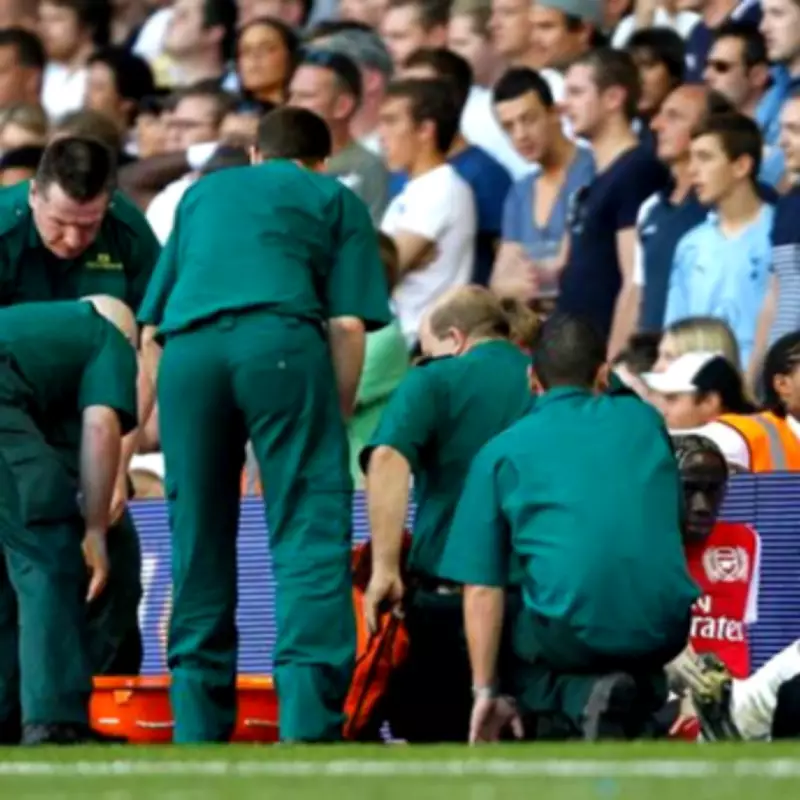
North London Derby Injury Nightmare for Arsenal Defender
The fierce rivalry between Arsenal and Tottenham is renowned for its high intensity and emotional volatility, often producing unforgettable moments on the pitch. This was starkly evident during the 2011-12 Premier League season, when Arsenal's right-back Bacary Sagna suffered a devastating leg break in a heated October clash against Spurs.
A Costly Encounter at White Hart Lane
During that fateful derby match, Sagna landed awkwardly after challenging Tottenham left-back Benoit Assou-Ekotto, resulting in an immediate fracture. The injury forced his early substitution, compounding a difficult day for Arsenal as they fell to a 2-1 defeat. Rafael van der Vaart had given Spurs the lead before Aaron Ramsey equalized, only for Kyle Walker to secure victory with a long-range strike for the hosts.
Manager Arsene Wenger later confirmed the severity of the injury, stating, "It is a broken fibula. He was kicked on it, it has not happened alone. When he was kicked, he has broken the leg." The incident occurred during a turbulent period for Arsenal, who were languishing in 15th position after heavy losses to Blackburn and Manchester United earlier in the season.

Second Fracture and International Absence
Tragically, Sagna's injury woes continued when he sustained another broken leg in May 2012 during a match against Norwich City. This second fracture, affecting the same limb, ruled him out of representing France at the European Championships that summer. Wenger noted the similarity to the earlier injury, emphasizing the physical nature of the challenge that caused it.
Despite these personal setbacks, Arsenal's season narrative took a dramatic turn. The team rallied in the final weeks, narrowing the gap with Tottenham and setting up a tense conclusion to the campaign.
Champions League Qualification Drama
By the season's end, Arsenal had climbed to third place in the Premier League table, with Tottenham finishing just behind in fourth. Under normal circumstances, both positions would have guaranteed Champions League qualification. However, Chelsea's unexpected triumph in the Champions League final that year, where they defeated Bayern Munich, altered the landscape.
European regulations at the time awarded the defending champion an automatic berth, which Chelsea claimed despite finishing sixth domestically. This decision effectively displaced Tottenham from the competition, allowing Arsenal to secure the final qualifying spot. Thus, the Gunners exacted a measure of revenge for their earlier derby defeat and Sagna's injury, turning a season of adversity into a bittersweet success.
The 2011-12 campaign remains a poignant chapter in north London football history, illustrating how individual misfortune and team resilience can intertwine to shape dramatic outcomes. Sagna's courage in recovering from two serious injuries, coupled with Arsenal's late-season surge, underscores the unpredictable nature of elite football rivalries.