The Newcastle United Supporters Trust (NUST) have said they 'strongly oppose' the decision to impose mandatory coach travel on Sunderland fans attending December's Tyne-Wear derby.
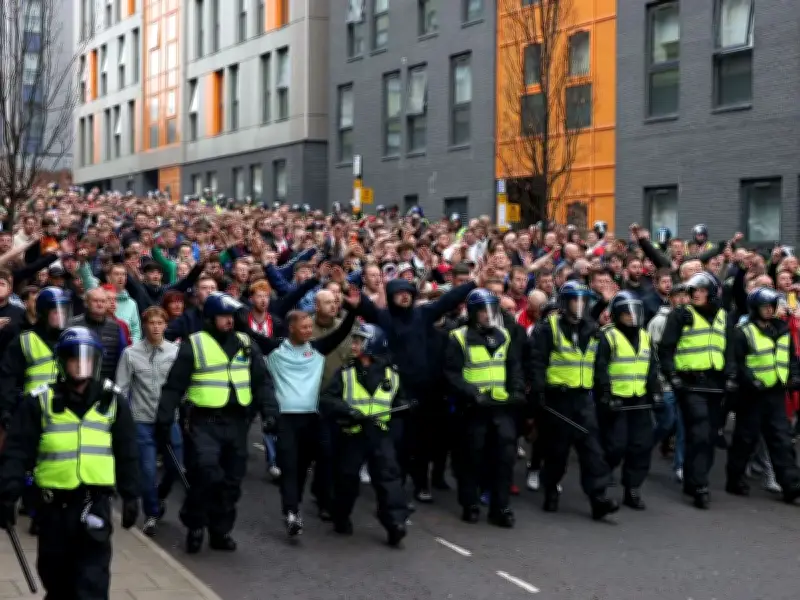
A Newcastle United statement on Monday confirmed that away fans will be bussed in from Wearside for the first derby clash of the season on Sunday, December 6, with supporters attending the fixture only being permitted to travel by official transport services from the Stadium of Light.
It is a shift in direction from last season's fixtures, with Northumbria Police confirming in the aftermath of the Magpies' 2-1 defeat to the Black Cats that 'the policing operation around the match between Newcastle United FC and Sunderland AFC passed largely without incident'.
NUST statement on mandatory coach travel
The decision to make this season's Tyne-Wear derby a 'bubble fixture' has prompted a strong reaction, with Sunderland Supporters' Group The Red and White Army branding it an 'absolute disgrace', while the Fan Supporters' Association have said they have 'historically opposed' bubble matches.
Now the NUST have issued their own statement, adding their opposition to the announcement and calling on the Safety Advisory Group, Newcastle City Council and Northumbria Police to justify the reasons behind the decision.
"Newcastle United Supporters Trust (NUST) strongly opposes the decision to impose mandatory coach travel on Sunderland supporters attending the Tyne-Wear derby at St. James' Park on 6 December 2026.
"We are extremely disappointed that such a restrictive measure has been introduced without meaningful consultation with the supporter groups representing those directly affected.
"We understand the decision to impose mandatory coach travel has not been made by Newcastle United Football Club; the club were made aware of the requirement following the recommendation from the independent Safety Advisory Group (SAG), chaired by Newcastle City Council, acting on advice from Northumbria Police.
"Responsibility for explaining and justifying this decision must rest with all parties involved in the process, the Safety Advisory Group, Newcastle City Council and Northumbria Police."
Calls for evidence and consultation
The NUST statement highlighted that recent Tyne-Wear derbies have taken place without such blanket travel restrictions. Following the derby at St. James' Park in March, Northumbria Police reported that the policing operation had passed 'largely without incident', while acknowledging the overwhelmingly positive behaviour of the vast majority of supporters.
"So what has changed? Has there been new intelligence or evidence that now justifies removing the freedom of thousands of law-abiding football supporters to make their own travel arrangements? If so, this should be shared with supporter groups for discussion and explanation," the statement said.
The trust also questioned why the response is to impose additional restrictions on supporters rather than address the shortcomings in the planning and management of these fixtures, and why supporters are being subjected to increasingly restrictive arrangements rather than those responsible demonstrating that they can effectively manage one of English football's biggest fixtures.
"If the issue is the ability to safely manage the movement of visiting supporters from Newcastle Central Station to St. James' Park, then surely the responsibility lies with the police and relevant authorities to develop an effective policing and crowd-management operation.
"Football supporters should not be treated as a collective problem to be contained simply because a fixture presents additional policing challenges."
Supporters excluded from discussions
The NUST acknowledged the importance of public safety and accepted that the Tyne-Wear derby requires careful planning and appropriate policing. However, they argued that restrictions must be proportionate, evidence-based and justified, and that the actions of a small minority should never be used to impose unnecessary restrictions on the overwhelming majority who simply want to attend a football match.
The trust also expressed concern that supporter representatives appear to have been excluded from the discussions that led to this decision, asking why these arrangements were allowed to progress without meaningful dialogue with supporters from either club.
"Supporters are the people most directly affected by these arrangements, yet their views have seemingly been considered an afterthought. Consultation should be a fundamental part of the decision-making process, not something that happens once restrictions have already been imposed."