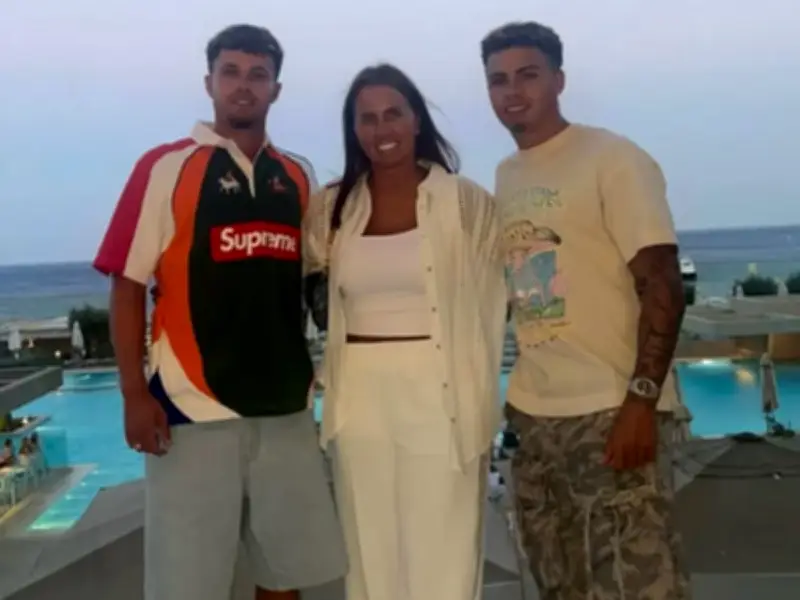
Keelan Williams, the younger brother of Wales international Neco Williams, has been forced to retire from football at the age of 22 after being diagnosed with heart failure.
Williams, who previously represented Liverpool and Burnley at academy level and captained Wales' youth sides, saw his career end following two open-heart operations and two pacemaker implants. The former Bala Town and Denbigh Town player had hoped to follow in the footsteps of his older brother, now a Premier League regular with Nottingham Forest and a key figure for Wales.
Diagnosis and Treatment
Williams was initially diagnosed with a bicuspid aortic valve, a condition where one of the heart's valves has two flaps rather than the usual three, during a routine medical examination while on international duty with Wales Under-16s. At the time, he was showing no symptoms and was permitted to continue playing, progressing through Liverpool's academy before joining Burnley at age 16.
He later returned to Welsh football, signing for Bala Town in January 2024 before moving to Denbigh Town. However, a routine medical appointment towards the end of 2024 revealed that the leak in his heart valve had deteriorated significantly, leaving surgery as the only option.
In January 2025, Williams underwent an operation to repair his aortic root and was subsequently fitted with a pacemaker. His recovery was complicated by sepsis, a collapsed lung and respiratory failure, resulting in an 11-day stay in intensive care. A second heart operation followed in September 2025, with Williams still hopeful of resuming his career.
Setback and Retirement
Upon returning to the pitch, Williams struggled with breathlessness and fatigue. Tests showed his left ventricular ejection fraction was 37%, compared with the typical healthy range of 50% to 70%. Despite being prescribed five tablets a day and having his pacemaker upgraded, his condition showed little improvement. A subsequent scan revealed his ejection fraction had increased by just one percentage point to 38%, ultimately forcing him to stop playing.
Speaking to the BBC, Williams said: "It's sad and disappointing that I've had to make the decision to retire and step away from playing because of a cardiac condition." He added: "When I got back, I couldn't perform at 100%. I would sprint up the pitch, and I'd feel gassed, out of breath, and my legs were heavy. Initially, I thought it was my fitness after returning from a second heart surgery. But I had heart failure. My ejection fraction percentage was only 37%, meaning my heart was not pumping as well as it should be."
Looking Forward
Williams considers himself "lucky" because, had he not played the game, he may never have discovered the leak in his heart valve. He is now hoping his experience will encourage other footballers, particularly those outside the professional game, to undergo regular heart screenings.
"To anyone out there, I would 100% get your heart checked to be on the safe side. You want to find it as soon as possible, as I did," he said. "Football is all about setbacks and how you respond. I've had to stop playing completely, which is more extreme, but you have to look at the positives."