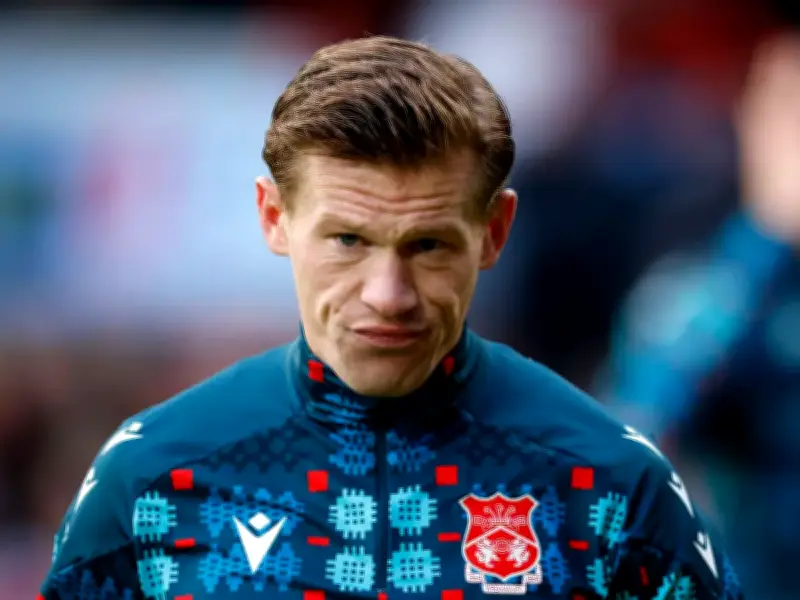
James McClean's recent comments dismissing therapy as a sign of weakness have ignited a debate about mental health in football, prompting a response from former Scotland defender Michael Devlin, who is now working to break down stigma within the game.
McClean's Controversial Comments
The Derry City player stated he would not use therapy, saying "as a man I would see that as a weakness," while promoting his autobiography. His remarks have been widely condemned, with his own wife Erin among those distancing herself from the statement.
McClean's comments highlight the kind of stigma that Devlin, now Head of Projects with PFA Scotland, is trying to tackle within the Scottish game. Devlin, who battled injuries throughout his career and sought help during his time at Aberdeen, acknowledges that there is still a "macho, bravado mask worn by players" who are struggling.
Devlin's Response and Personal Experience
Devlin, a Scotland cap, believes McLean is entitled to his own view but, having used therapy to his own benefit, he does not think anyone should be discouraged from accessing support. "James is entitled to view that and treat it as he sees fit," he said.
"From my own experience, as someone who has used therapy and used counselling throughout the course of some of my challenges and has really, really found the benefit of it, it’s not something that I would discourage anyone from doing."
"It’s a resource, it’s a tool, like many other ways of trying to understand and deal with any mental struggles that any individual is having. I think it can be hugely beneficial, and it has been hugely beneficial - not just for me, but for many, many people."
The Macho Culture in Football
Devlin stressed the need to explore all available tools, noting that mental health is "already quite a stigmatised subject - more so in football, rather than wider society." He added: "In football, in particular on the male side of the game, it’s still a kind of macho, bravado mask worn by players - I think we need to take that down and create an environment where players feel safe to express how they feel."
He called on all stakeholders to recognise the correlation between well-being and performance, saying: "We want to have constructive and productive, and most importantly positive conversations about people who seek help. We want to break down the stigma of asking for help, and not see it as a weakness. That is the experience I have had in accessing that support."
Devlin's Own Struggles
At 27, Devlin was firmly in Steve Clarke's Scotland plans and a regular at the heart of the Pittodrie backline before a series of injuries and subsequent surgeries derailed his progress. During that time, he noticed a change in himself as he shape-shifted to fit into the dressing room while privately isolating himself.
"Injuries were probably the catalyst," he said. "I think being limited time and time again from what I wanted to do, which is play football, and dealing with the disappointment or set back after set back eventually takes its toll. I noticed a change in myself."
He described experiencing isolation, social withdrawal, and mask-wearing, trying to be the version of himself he thought others needed in the changing room. "It wasn’t reflected, I was struggling massively," he said. "A lot of time alone in the gym, a lot of surgeries latterly at Aberdeen. That over a course of time changed who I was, and I felt was robbing me of my hope and optimism, and reset my baseline."
Devlin explained that he began to predict the worst-case scenario, which put him into survival mode, leading to distance from people and a lack of motivation. "You kind of become a shapeshifter within that, to try and not give people the impression that you are not coping with it very well," he added.
New Role with PFA Scotland
At the age of 32, Devlin retired after a career that included 274 games for Hamilton Accies, Stenhousemuir, Aberdeen, Fleetwood Town, Hibs, Livingston, and Ayr United, as well as three caps for his country.
Since then, he has stepped into a new role as Head of Projects with PFA Scotland, travelling across the country to help players in the SPFL and SWFL. He aims to improve medical care and psychological support for footballers, with a clear message: "It can get better, and it will get better. Talk about it, reach out for help."
"We have resources, PFA Scotland have Sporting Chance as our well-being partner which you can access at any point, 24/7," he said. "Despite how tough the moment is in your life, there is a way through."
He emphasised that acknowledging the need for help takes courage, adding: "Often we are not taught the tools to navigate it ourselves. We can try to be brave and courageous and navigate it ourselves, but sometimes we need the support. And there is no shame in that, and in fact it takes a lot of courage and resilience to take that step."
Sporting Chance offers a 24/7 helpline at 07500 000 777, and an online referral form can be submitted for those seeking support.