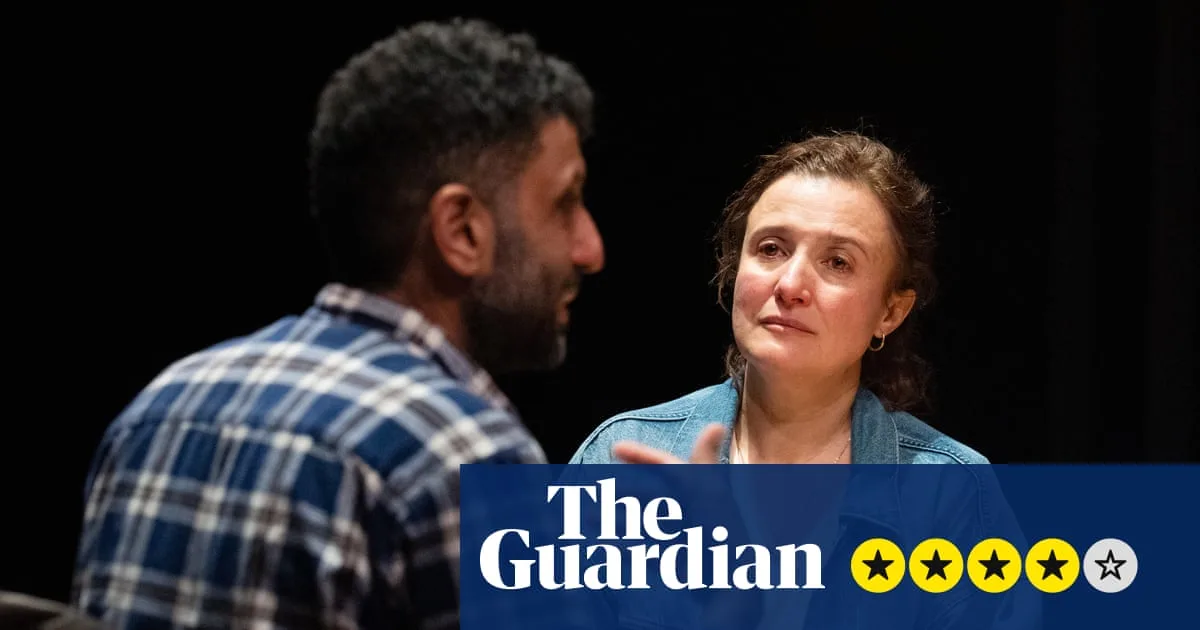
Fran Kranz's play Mass, adapted from his 2021 film, is now staged at London's Donmar Warehouse in a production directed by Carrie Cracknell. The drama centres on two sets of parents meeting in a church backroom after a high-school shooting, their encounter a painful exercise in restorative justice.
Gail (Lyndsey Marshal) and Jay (Adeel Akhtar) are the parents of Evan, one of ten children killed by teenage shooter Hayden. The shooter's parents, Richard (Paul Hilton) and Linda (Monica Dolan), sit opposite them, grappling with guilt and seeking understanding. The play explores the couple's struggle to separate their son's identity from his actions.
Anna Yates's set presents two office-style storeys across the stage, underscoring the stark, unflinching treatment of the subject. Kranz's script avoids debates on gun violence, focusing instead on personal grief and the emotional messiness of forgiveness. A charged moment from Linda recalls a threatening memory of her son, echoing the tension of Lionel Shriver's We Need To Talk About Kevin.
Performances are praised for their sensitivity. Hilton is described as brittle and sunken with apology, while Dolan appears whey-faced and shaky. Akhtar brings anger and edge, contrasting with Marshal's softness. The play builds intensity slowly, with no respite from the claustrophobic room, unlike the film which offered reflective spaces.
Mass works as a drama of forgiveness and polarisation, asking what might happen if people sat down with those at the furthest ideological extreme. For the characters, listening becomes a pathway to empathy, even amid desires for vengeance. By the end, they are all parents grieving sons lost in different ways.