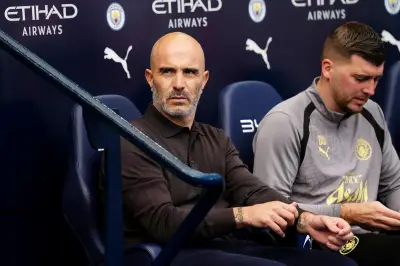
Manchester City travel to Anfield on Sunday for their first match since being found guilty on 114 charges relating to financial misconduct by an independent commission. The verdict has overshadowed the club's perfect start to the season under new manager Enzo Maresca, who won every game in all competitions following the departure of legendary boss Pep Guardiola.
The start echoed Liverpool's own transition when Jurgen Klopp left after nine years, with replacement Arne Slot winning 11 of his first 12 games en route to the Premier League title in his debut campaign. But the scale of City's sanctions threat has quickly taken a backseat to the carnage unfolding off the pitch.
City's potent attack
Despite the current climate, there is no getting around the efficiency of City's football in the run of fixtures from the start of the season leading up to the international break. Maresca was chosen as successor for his similarities to Guardiola, having worked under the Catalan as assistant manager during the treble-winning season 2022/23, but there are subtle differences.
Like his predecessor, Maresca is focused on positional discipline and creating overloads in the attacking third. At City, that has often been Matheus Nunes, converted to right-back by Guardiola after signing from Wolves as a midfielder. The Portuguese international inverts in deeper positions to allow more freedom for new £125m signing Enzo Fernandez. Centre-back Marc Guehi is also adept at stepping into midfield, while at left-back, Josko Gvardiol and Nico O'Reilly are equally capable, even at times getting forward and threatening the box – while also chipping in with plenty of crosses for No. 9 Erling Haaland.
Crossing has notably become more prevalent for City with the change in the dugout. Last season, City and Liverpool both averaged 4.4 crosses per 90 minutes – this season, City on average are crossing the ball 5.2 times per 90, more than all but three sides in the league. O'Reilly and Phil Foden have each averaged 1.64 successful crosses per 90 this season, underlining the pragmatism with which Maresca is seeking to adjust City's style.
That more pragmatic approach suits the big man in the middle. Even in a more physical Premier League, Haaland is capable of beating most centre-backs in the air (winning 52.9% of his aerial duels this season), though City will still look to reach the byline and cut the ball back for him wherever possible. Crosses into Haaland can also lead to knock-downs for City's other attackers, predominantly Rayan Cherki or whoever features at No. 10 – in possession, this player stays close to Haaland in a front two shape.
As you'd expect, Maresca's side have had no trouble keeping the ball this season, averaging 63.1% possession – a 2.6% increase on last season – while expected goals (xG: 2.1) and big chances (3.4) per 90 have seen an uptick, too, even as fewer average touches in the opposition box (30.8) compared to last season (37.1) reflect a slightly more direct approach in the final third.
But Liverpool also have a new string to their bow this season. The profile of the Reds' defenders has been significantly beefed up by the arrivals of Jeremy Jacquet and Ronald Araujo, who can point to 76.9% and 72.0% aerial win rates in the league this season, with the captain Virgil van Dijk (71.4%) also remaining elite in this respect. Should City look to attack as they have for the majority of this season to date, Liverpool should feel confident of dealing with the majority of those deliveries into the box.
Dealing with Cherki, though, is an entirely different prospect. City's creator-in-chief is the joint-third top goalscorer in the league with three and has created the most chances (12) for the Manchester club this season. The home midfield will need to stay switched on to cut out the service into the Frenchman, while whoever features at right-back will need to be wary of Cherki's well-timed runs into the channels.
With the way that Iraola instructs his centre-backs to press man-to-man, Jacquet or Araujo will likely be tasked with dealing with the No. 10 before he can turn. That could prove troublesome if Cherki drops deep into the midfield to evade the aggressive centre-back press, potentially opening up space in behind Liverpool's defence for Antoine Semenyo or Iliman Ndiaye to exploit.
Liverpool's direct threat
The main difference with Liverpool on the ball this season since the arrival of Iraola has been the speed with which they look to move the ball through the lines of attack – and linked to that is the aggression with which they look to win the ball back to sustain attacks. Jacquet and Alexis Mac Allister both rank in the top 15% of Premier League players in their position for line-breaking passes per 90, and Jacquet's composure from the back allows his well-timed interventions (he also ranks in the top 15% for tackles and interceptions) to become creative situations.
Though Liverpool are actually winning possession in the final third less often (3.6 times per 90) than last season (4.1), they are winning it more often in midfield (19.2 times per 90, compared to 18.5 last season). That is a result of Iraola's man-to-man press compressing the pitch and offering opponents less time and space on the ball. With ball-playing centre-backs like van Dijk and Jacquet in the side, their ability to win the ball in these positions becomes an opportunity to attack in transition.
As with Cherki and Haaland, Florian Wirtz will push up alongside Alexander Isak in possession to give Liverpool more central passing options when on the attack, and – at least in theory – provide both of the Reds' expensive attackers with more space in which to do their best work. Wirtz has struggled at times this season, and Isak could miss out with an injury picked up on international duty, leaving uncertainty around who lines up in attack – but there should be no shortage of quality from the players tasked with delivering the ball to those attackers as quickly as possible.
Line-breaking passes are a strength of City's, too – no player in the Premier League has averaged more per 90 than Elliot Anderson's 22.8 – but City have looked vulnerable when defending against direct, central attacking moves as they continue to adapt to Maresca's tactical tweaks for his midfielders and full-backs.
Part of this is due to the raft of changes in City's midfield – more on that later – but City's backline has looked far from watertight. Though the back four has predominantly been made up of players who featured regularly last season – Guehi arguably the most consistent, despite having joined in January – the adjusted responsibilities of the full-backs has at times led to confusion. While Nunes, Gvardiol, O'Reilly and Rico Lewis are all tactically-versatile players, none are defence-first options without obvious weaknesses. The two most likely to start against Liverpool are Nunes and Gvardiol, though centre-back Abdukodir Khusanov has also been used at right-back.
Nunes can be vulnerable in one-v-one situations. He makes a respectable average of 1.21 tackles per 90, but is dribbled past 0.85 times per 90 (44th percentile) – not the worst numbers you'll see, but below what might be expected of the starting right-back for a top team. Gvardiol is a stronger one-v-one defender on the opposite side, making nearly double the number of tackles (2.28) while being dribbled past half as often (0.41), but has struggled at times with more physical tasks, winning just 45.8% of his aerial duels.
He is also prone to lapses in concentration when it comes to positioning and marking, allowing Brian Brobbey to tap the ball into the net for his hat-trick unmarked against Sunderland and enduring a performance he will be desperate to forget in England's 7-0 thrashing of Croatia during the international break. The gaps between the full-backs on both sides and their respective centre-backs were exploited relentlessly by Sunderland in City's 5-3 win before the break.
Another strength of Liverpool's corresponds with a notable weakness of City's – long balls. The Reds are second in the league behind Sunderland for successful long balls this season (28.6 per 90), and Brobbey's third was not the only goal City have conceded after a long ball this season. Marcus Tavernier's goal for Bournemouth in their 2-1 defeat at the Etihad in August came after Dias and Khusanov failed to deal with a long ball played quickly after winning it back, much as former Bournemouth boss Iraola is now coaching Liverpool to do.
A general lack of height and physicality plays its part here. Of their regular outfield starters (O'Reilly excluded, who is a doubt to feature against Liverpool), only Haaland is taller than 6'1", and that has also seen them struggle to deal with set pieces this season. In fact, City are ranked 18th in the league for xG conceded from set pieces (2.1), and can count themselves lucky to have only conceded once from such situations this season – Coventry coming the closest to adding to that having given them a scare with a simple long-throw routine in City's 1-0 win at the Etihad last month.
This is a potential game-winning condition for Liverpool given the height and aerial ability in Iraola's side, particularly if Jacquet and Araujo both start. The Reds are yet to score from a set-piece in the league this season, but have created chances worth 2.0 xG so far.
Midfield teething troubles
Both Liverpool and City have had strikingly similar issues in adapting their midfield setups to a new tactical system so far this season. For City, adaptation was always going to be necessary after Rodri's departure to Barcelona, and Fernandez offers one of the more intriguing examples of Maresca's innovation.
Fernandez has typically started in a deeper role alongside Anderson, before pushing up to support the attack to the right of Cherki. The standout trait he brings to City's midfield, like Anderson, is his passing through the lines – completing an average of 13.52 line-breaking passes per 90 (97th percentile), the former Chelsea midfielder is elite in this respect. His competitive edge is also well-established. Fernandez is in the top 25% of Premier League attacking midfielders for duels won, duel and aerial duel percentage won and interceptions per 90. He puts his foot in...
However, Fernandez has so far showed a fragility in the other aspects of his defending at City. Le Fee was able to waltz between him and Anderson to set up Brobbey for Sunderland's first equaliser, with Fernandez showing a concerning lack of urgency in trying to win the ball back. Indeed, Fernandez has only made an average of 0.99 tackles per 90 (18th percentile) this season, but has been dribbled past 1.65 times per 90 (7th percentile). Bypassed too often, Fernandez is prone to frustration, and has committed a high number of fouls per game (1.98 – 11th percentile) since joining City.
When City are in sustained possession, this has presented less of a problem as one of the full-backs is always available to support Anderson and provide a base from which to win the ball back if it breaks. But when City switch to their 4-4-2 defensive block, or find themselves in transition back towards the more defensive shape, Fernandez is a weak link that can be exploited should the Reds focus their attacks centrally.
Liverpool, meanwhile, have encountered a similar issue with Dominik Szoboszlai, who more often than not this season has been tasked with operating in a deeper role as part of a double pivot with Mac Allister. Szoboszlai, however, is a player with attacking instincts, and constantly looks to make runs ahead of the ball or get into wider areas to utilise his crossing ability.
The Hungary captain is capable of moments of genius – look no further than his goal against Tottenham in the Carabao Cup – but his freer role has seen him go completely absent from the midfield battle in too many games this season. Szoboszlai, despite his obvious work rate, ranks in just the 31st percentile of Premier League midfielders for tackles per 90 and the 49th percentile for interceptions, along with winning a meek 33.3% of his duels.
To counter this obvious weakness, Iraola appears to be instructing one of his full-backs to hold back when the other goes forward, meaning the Reds have another player in reserve to press an opponent when receiving the ball. Liverpool's press, then, is a whole-team endeavour, and Iraola's side have already scored after winning the ball in such situations – such as Szoboszlai's goal against Atletico Madrid after Milos Kerkez left a man free out wide to tackle Lee Kang-in in a central position.
This isn't quite the same as Maresca's use of a fully-inverted full-back in possession but, in theory at least, it helps mitigate the shortage of players in central positions when Szoboszlai leaves his post. Nevertheless, it is a risky tactic, and if City's technicians are able to evade the press it could come undone.
Why tactics do matter
Whether they like it or not, after the verdict, City are the pantomime villains of the Premier League – and few supporter bases have as much right to feel aggrieved as Liverpool's. Given the maelstrom they are set to walk into on Sunday, then, with Anfield whipped up into a hostile, one-off atmosphere, it is worth asking the question – do tactics even matter?
Well, in short, yes. City are, on paper at least, the better team, and their opponents are far from bulletproof. If Liverpool are to beat them, they still need to find a route to a goal, and likely more than one goal. If any player refuses to be cowed by the jeers, it feels likely to be Haaland, and the Norwegian international only needs one chance to make his presence felt.
Having said that, this game – and the timing of this game – feels like it might play into Iraola's hands very well. If Isak is not fit to start, it could be harder to make long balls stick, but Sunderland and Bournemouth have already demonstrated how a direct style of football can cause City a raft of problems – especially for the Sky Blues' unfamiliar midfield.
Set-pieces, too, will provide opportunities to score if Liverpool can earn enough of them. With Szoboszlai's delivery among the best in the league, and van Dijk, Jacquet and Araujo probably the strongest trio of defensive aerial threats in the league, the Reds have tools the quality of which City have not yet had to face this season.
On top of that, the mental and emotional state of City's players is bound to have an effect on the game. Indeed, it would be a valid question to ask what significance this game really has at all for City, given sanctions could yet see their results rendered irrelevant. But Liverpool's players cannot afford to allow themselves to dwell on such questions. To coin the LFC marketing slogan, this game really does mean more for their supporters – and it will be fascinating to see how Iraola's side respond to being handed the initiative in such a unique set of circumstances.
*All statistics used are from Fotmob unless otherwise stated.