Liverpool's Striking Crisis: A Deep Dive into the Forward Line's Underperformance
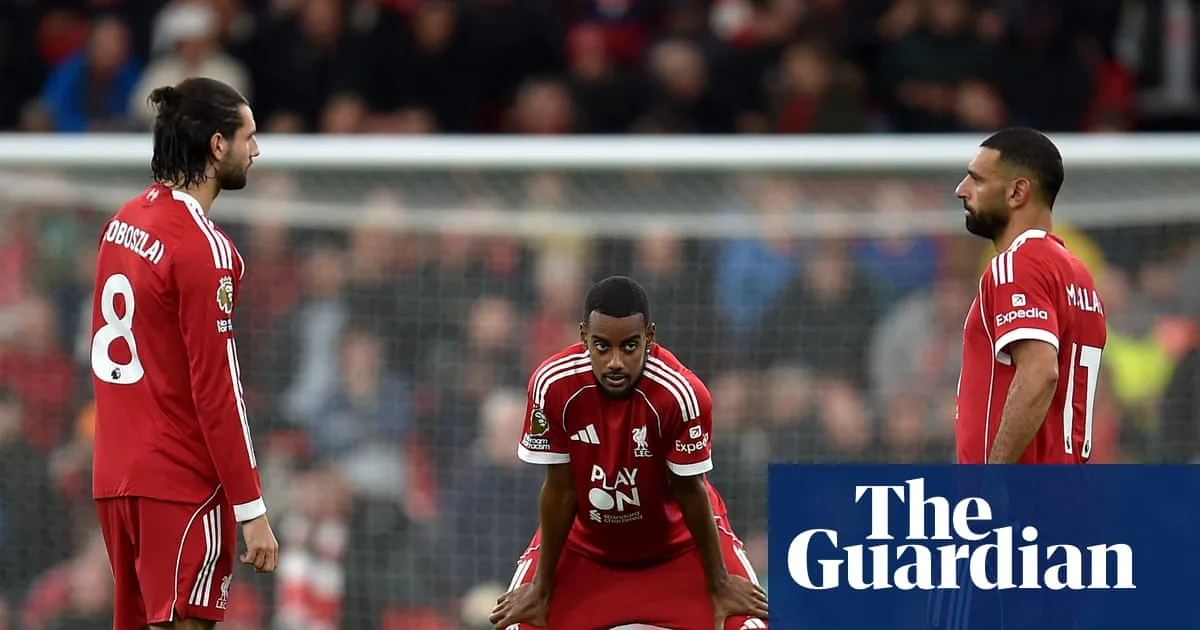
Liverpool manager Arne Slot delivered a blunt assessment of his team's attacking output recently, stating plainly that the number of league goals from his forwards "is not enough." While a 5-2 victory over West Ham United offered a temporary reprieve, with Hugo Ekitike and Cody Gakpo finding the net, the underlying statistics reveal a concerning trend that threatens the Reds' ambitions.
The Stark Numbers: A Halving of Goal Output
After 28 Premier League matches last season, Liverpool's six primary forwards—Mohamed Salah, Luis Diaz, Cody Gakpo, Diogo Jota, Darwin Nunez, and Federico Chiesa—had amassed an impressive 51 goals. Fast forward to the same stage this campaign, and that figure has plummeted to a mere 26, representing a drop of almost 50%.
The breakdown of scorers tells a revealing story:
- 2024-25 (first 28 games): Mohamed Salah (25), Luis Diaz (9), Cody Gakpo (8), Diogo Jota (5), Darwin Nunez (4), Federico Chiesa (0).
- 2025-26: Hugo Ekitike (11), Cody Gakpo (6), Mohamed Salah (4), Federico Chiesa (2), Alexander Isak (2), Rio Ngumoha (1).
Including summer signing Florian Wirtz, who has operated in advanced roles, only marginally improves the current tally to 30 goals. The core issue, however, can be traced directly to two high-profile individuals.
The Central Culprits: Salah and Isak's Dramatic Decline
Mohamed Salah's fall from grace has been particularly startling. Last season, the Egyptian icon was in electrifying form, averaging a goal every 99 minutes and contributing 17 assists in the league's first two-thirds. Although his pace slowed towards the end of that campaign, he still finished as the PFA Player of the Year and Footballer of the Year.
This season, however, presents a different picture. Salah has his lowest goal return at the start of March since joining Liverpool. He has now gone four months without a Premier League goal, a period interrupted by bench appearances and the African Cup of Nations. His expected goals (xG) per 90 minutes have halved from 0.73 to 0.36, and he is underperforming his xG by 2.78.
Alexander Isak's struggles are equally significant. Acquired for a substantial fee last summer, the Swedish striker was expected to shoulder the goalscoring burden as Salah aged. Last season with Newcastle United, he had 19 goals at this stage, averaging one every 109 minutes. For Liverpool, however, injuries and poor form have limited him to just two Premier League goals in 519 minutes, with a broken leg currently sidelining him.
Contextual Factors and Mixed Evidence Elsewhere
Manager Arne Slot has pointed to Liverpool's lack of penalty kicks as a contributing factor. Last season, the team was awarded nine spot-kicks (joint most in the division), whereas this term they have received only two (joint fewest), with Dominik Szoboszlai missing one.
Elsewhere in the attack, the evidence is mixed. Federico Chiesa and Rio Ngumoha have overperformed their xG but have only one league start between them. Hugo Ekitike, despite being Liverpool's top scorer with 11 goals, is actually underperforming his expected goals. Cody Gakpo, who ended his own goal drought against West Ham, also falls into this category.
A year ago, Liverpool's attacking metrics—both actual goals and expected goals—were the best in the league. Now, they rank around fourth in most key indicators. Chance creation has also suffered; the six main forwards have only 15 assists this season, compared to Salah's 17 alone last term, with others adding 11 more.
Conclusion: Slot's Verdict Stands Despite Recent Win
While the 5-2 victory over West Ham provided a positive response, with goals coming from Ekitike and Gakpo, the broader narrative remains unchanged. Mohamed Salah's rapid transition from unstoppable to unproductive, combined with Alexander Isak's injury woes and ineffectiveness, are primary drivers behind Liverpool's striking crisis.
Even with Ekitike's respectable tally, Arne Slot's original analysis holds true. Twenty-six goals from a forward line that cost £200 million last summer is simply insufficient for a club with title aspirations. The recent win offers hope, but the underlying data suggests a systemic issue that requires urgent attention if Liverpool are to rediscover their potent attacking threat of old.